ConflictSeptember 480 BC

Battle of Salamis

In 480 BC the Greek fleet led by Themistocles defeated Xerxes’ Persian fleet in the straits of Salamis.
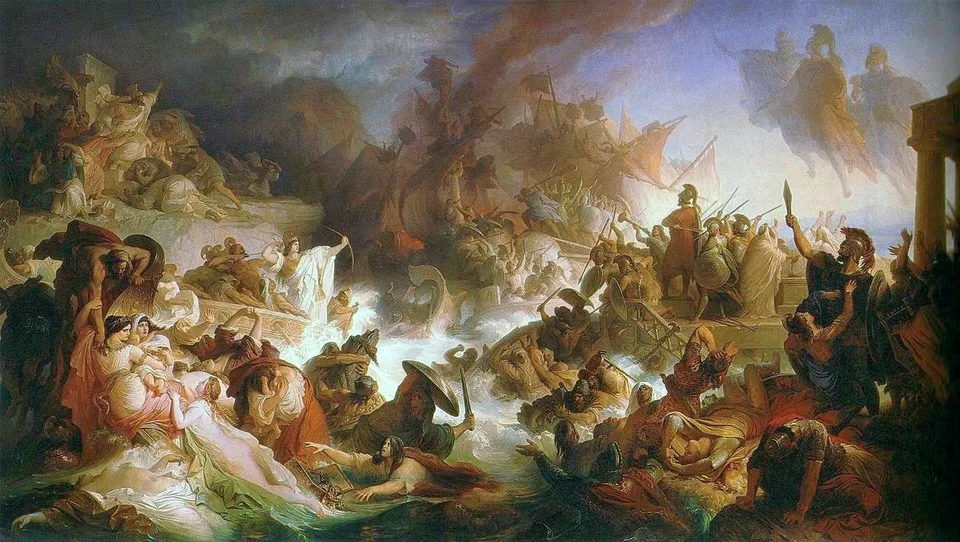
The Battle of Salamis — painting by Wilhelm von Kaulbach, 1868

Wilhelm von Kaulbach · Public domain · Source

Themistocles had used silver from the mines of Laurion to build a large fleet of triremes, turning Athens into a naval power. When Xerxes’ army broke through at Thermopylae in 480 BC and bore down on Athens, the citizens abandoned the city and took refuge on Salamis and elsewhere.

Themistocles lured the Persian fleet into the narrow straits of Salamis, where its greater numbers could not manoeuvre, and the Greek triremes rammed their way to a decisive victory. Xerxes returned home leaving part of his army behind, and the Persian land army was defeated at Plataea the next year. Because the poor citizens who rowed the ships had won the battle, their voice in the Athenian democracy grew.

The map in 480 BC

OpenFreeMap © OpenMapTiles © OpenStreetMap contributors

States at the time
Greek city-states · victor
Achaemenid Empire · defeated

People

  • Themistocles

    commander · Athenian statesman and general who built up the navy and defeated the Persian fleet at Salamis in 480 BC

  • Xerxes I465 BC

    monarch · King of Achaemenid Persia (r. 486–465 BC), son of Darius I, who invaded Greece in 480 BC and was defeated at Salamis

Before and after

Earlier
490 BC Battle of Marathon

Themes that include this event

  • Greece and Rome2000 BC – AD 476

    From the Aegean civilisation to the fall of the Western Roman Empire — the classical civilisation built by the democracy of the polis and the Roman republic and empire