Conflict of the Orders: the Tribunes and the Twelve Tables
Also called: Struggle of the Orders
Plebeians who bore the burden of war pressed the patricians for rights, winning tribunes of the plebs and the written Twelve Tables; in 287 BC the Hortensian law made the plebeian assembly’s resolutions binding law.
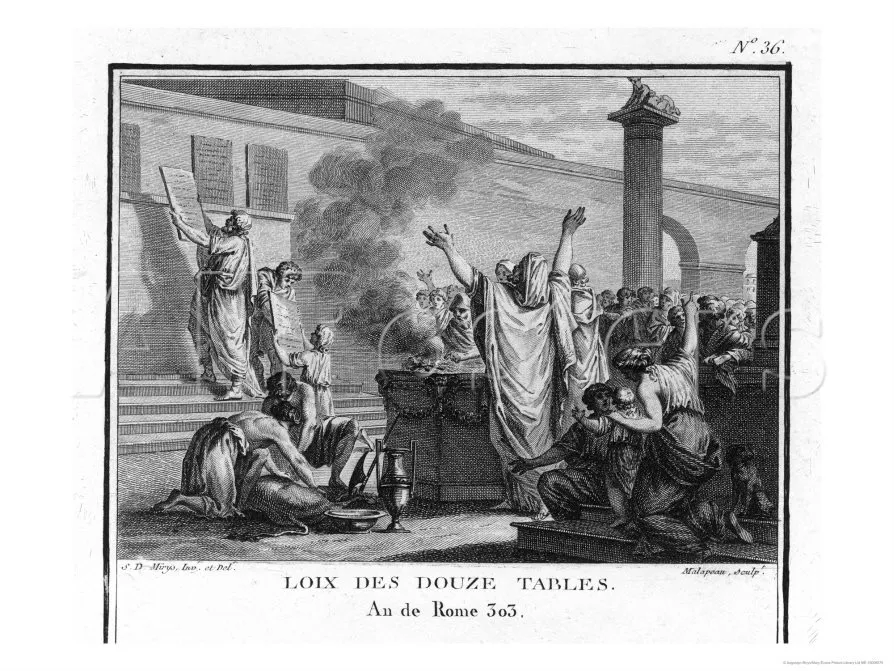
Drawing by Silvestre David Mirys (1742-1810). Engraved by Claude-Nicolas Malapeau (1755-1803). · Public domain · Source
As Rome fought war after war with its neighbours, the plebeians who fought as hoplites mattered more and more. In 494 BC they withdrew to the Sacred Mount and refused military service, and so won their own assembly and the tribunes of the plebs, who protected plebeians and could veto magistrates’ decisions.
Around 450 BC the customary law that patricians had interpreted at will was written down and displayed in the Forum as the Twelve Tables, Rome’s first written law and the foundation of later Roman law. The Licinian–Sextian laws of 367 BC opened one consulship to plebeians and limited holdings of public land. The Hortensian law of 287 BC made resolutions of the plebeian assembly binding on all Romans without the Senate’s approval.
Patricians and plebeians were now equal in law. In practice, though, a new elite (the nobiles) of patricians and wealthy plebeians led the Senate.