Aegean Civilisation: Crete and Mycenae
Also called: Minoan civilisation, Mycenaean civilisation
Around 2000 BC the Minoan civilisation centred on the palace of Knossos arose on Crete, followed by the Mycenaean civilisation of fortress kingdoms on the Greek mainland — the forerunners of Greek civilisation.
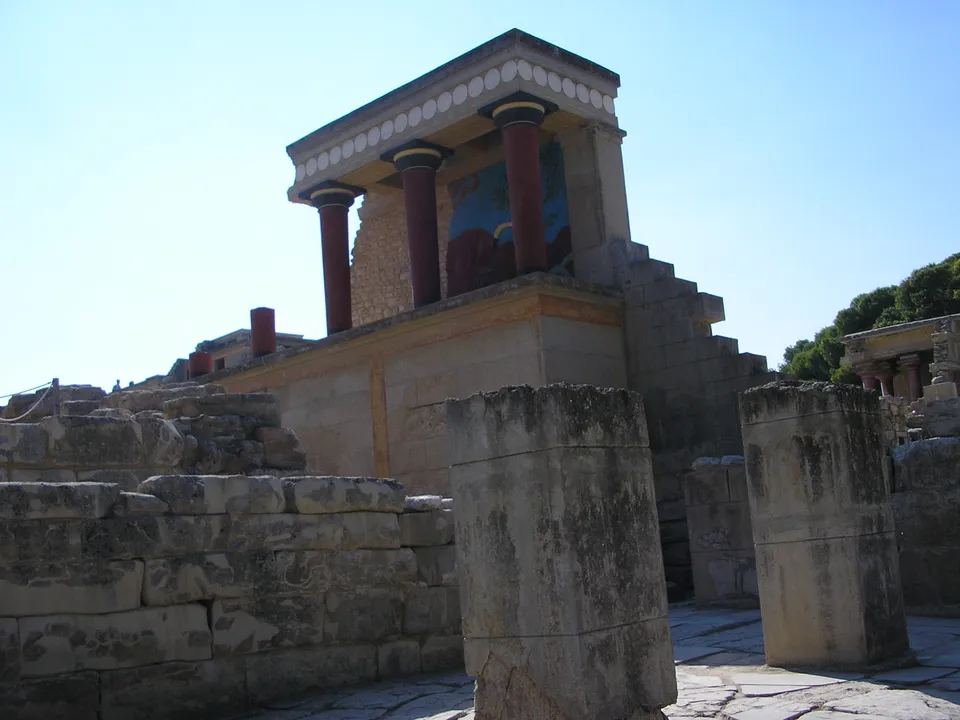
Corvax · Public domain · Source
A Bronze Age civilisation grew up around the Aegean, trading by sea with the Near East and Egypt. From around 2000 BC sea trade flourished on Crete around the palace of Knossos, traditionally the palace of King Minos (the Minoan civilisation). Its unwalled palaces and bright frescoes of sea creatures and people suggest an open culture. Arthur Evans excavated the site from 1900.
From around 1600 BC Greeks on the mainland built massive citadels at Mycenae, Tiryns and elsewhere and created the Mycenaean civilisation ruled by warrior aristocrats. They took over Crete and wrote Greek in Linear B. The Trojan War of Homer’s epics is thought to draw on events of this time, and Heinrich Schliemann excavated Troy and Mycenae. Mycenaean civilisation collapsed around 1200 BC, and after a dark age of several centuries without writing Greece entered the age of the polis.