Reforms of the Gracchi
The tribunes Tiberius and Gaius Gracchus tried to revive the small farmers by limiting large landholdings, but both were killed in the face of senatorial opposition.
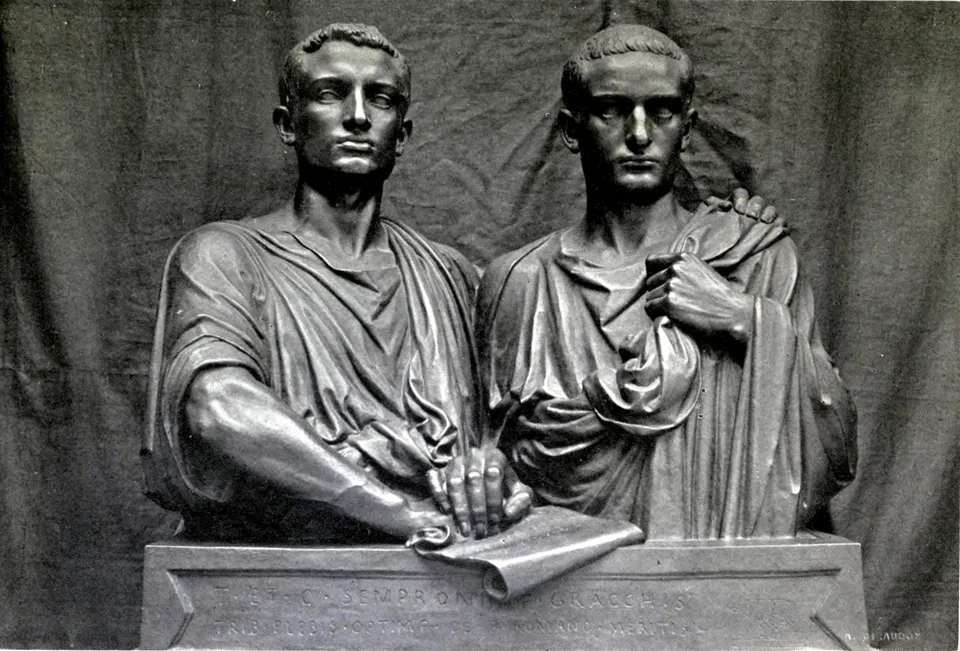
Jean-Baptiste Claude Eugène Guillaume · Public domain · Source
After the Punic Wars Rome’s powerful men took over public land to expand slave-worked latifundia, while dispossessed small farmers drifted to Rome as the landless poor. Since small farmers were the backbone of the army, Rome’s military strength suffered too.
In 133 BC the tribune Tiberius Gracchus passed a land law limiting how much public land one person could hold and distributing the surplus to poor citizens, but he and his supporters were killed by angry senators. His brother Gaius, tribune from 123 BC, continued the reforms with measures such as cheap grain for citizens, but died in 121 BC in a clash with the Senate.
After the reforms failed, Roman politics split between the optimates, who backed the Senate, and the populares, who appealed to the assemblies. Marius’ reform of the army, enlisting landless volunteers, made soldiers loyal to their generals, and after the struggle between Marius and Sulla came an age of civil wars among generals competing for power.