World history776 BC – 202435 events
Summer Olympics
From the ancient festival at Olympia to Paris 2024 — how the modern Games revived by Coubertin came through wars, boycotts and division
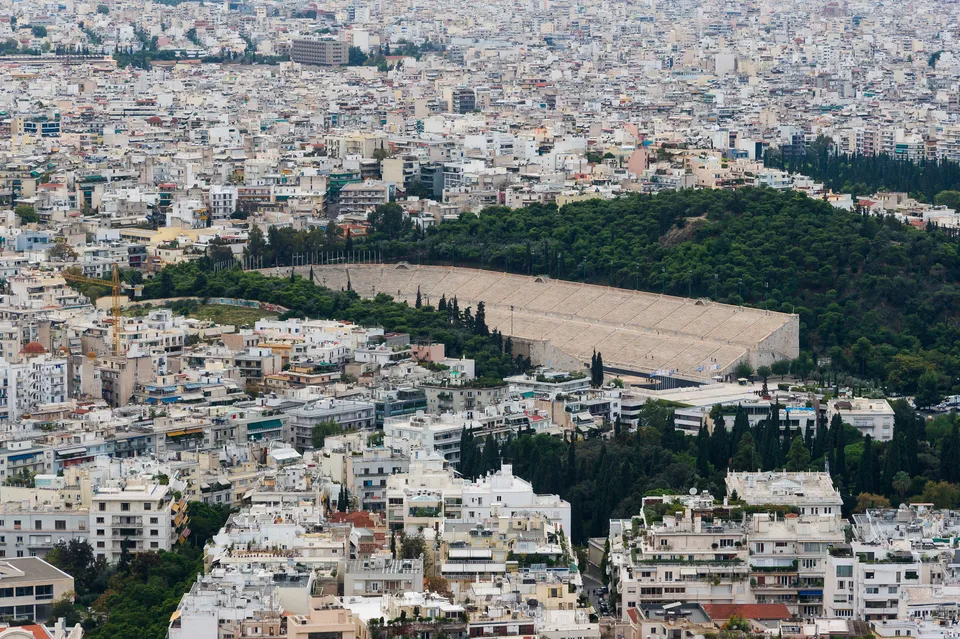
From the ancient festival at Olympia to Paris 2024 — how the modern Games revived by Coubertin came through wars, boycotts and division
| Games | Host | Notable for |
|---|---|---|
| 1896 (I) | Athens | First modern Games, first marathon |
| 1936 (XI) | Berlin | Nazi showcase, first torch relay, Owens and Sohn |
| 1948 (XIV) | London | First post-war Games, Korea’s debut as KOREA |
| 1964 (XVIII) | Tokyo | First Games in Asia, live satellite broadcast |
| 1968 (XIX) | Mexico City | Black Power salute on the podium |
| 1972 (XX) | Munich | Massacre of the Israeli team |
| 1980 (XXII) | Moscow | Boycott by some 60 Western-aligned nations (Afghanistan) |
| 1984 (XXIII) | Los Angeles | Eastern Bloc boycott, start of the commercial Games |
| 1988 (XXIV) | Seoul | East and West reunited, Korea fourth |
| 1992 (XXV) | Barcelona | First post-Cold War Games, Hwang Young-cho’s marathon |
| 2000 (XXVII) | Sydney | Joint Korean march, taekwondo debut |
| 2020 (XXXII) | Tokyo | Postponed a year by COVID-19, no spectators |
In the 8th century BC city-states (poleis) arose across Greece. Though each governed itself, they gathered for the festival of Zeus at Olympia and shared a sense of being Greeks.
After Theodosius I, who had made Christianity the state religion, banned pagan sacrifices, the Olympic festival at Olympia, held for more than a thousand years, came to an end around 393.
An international congress at the Sorbonne in Paris, called at Coubertin’s urging, resolved to revive the Olympic Games and founded the International Olympic Committee, choosing Athens for the first Games in 1896.
The first modern Olympic Games were held at the Panathenaic Stadium in Athens. 241 male athletes from 14 nations competed in nine sports, and the marathon was won by the Greek runner Spyridon Louis.
The second Olympics were held as a sideshow of the Paris World’s Fair, spread over more than five months. Women competed for the first time, and the British tennis player Charlotte Cooper became the first female Olympic champion.
The first Olympics held outside Europe, staged alongside the Louisiana Purchase Exposition. The long journey meant most athletes were American. Gold, silver and bronze medals were awarded for the first time.
London stepped in when Rome withdrew after the eruption of Vesuvius. Teams marched in by nation, and the 42.195 km marathon distance dates from these Games.
With 28 nations taking part, the Stockholm Games introduced electronic timing and photo-finish judging and gave the modern Olympics their shape. Japan competed for the first time. The next Games, Berlin 1916, were cancelled by the First World War.
The first post-war Games, held in Belgium, which had suffered heavily in the First World War. The Olympic flag with its five rings flew for the first time, and the athletes’ oath and the release of doves began. The defeated powers were not invited.
The last Games Coubertin presided over as IOC president. Forty-four nations took part and an Olympic Village was provided for the first time. Finland’s Paavo Nurmi won five gold medals.
An Olympic flame burned on the stadium tower for the first time, and women’s athletics events were held for the first time. Germany returned after sixteen years, and Japan won Asia’s first gold medal, in the triple jump.
The Depression and the long journey meant only some 1,300 athletes from 37 nations took part. The first Olympic Village for men was built, and medal ceremonies with a podium and flag-raising began.
Games that Nazi Germany turned into a showcase for its regime. The first torch relay was held. The American Jesse Owens won four gold medals, and Sohn Kee-chung won the marathon for Japan.
Printing photographs of Sohn Kee-chung, winner of the Berlin Olympic marathon, the Dong-a Ilbo and the Joseon Jungang Ilbo erased the Japanese flag from his chest. The Government-General suspended the Dong-a Ilbo indefinitely and arrested its journalists.
The “Austerity Games”, held after a twelve-year gap during which two Games were lost to the Second World War. Korea, about to establish its government, competed for the first time under the name KOREA and its own Taegukgi flag, winning two bronze medals.
The Soviet Union competed for the first time, starting the Cold War medal race. Czechoslovakia’s Emil Zátopek swept the 5,000 m, 10,000 m and marathon. South Korea, in the middle of the Korean War, also sent a team.
The first Olympics held in the Southern Hemisphere. Several nations stayed away in protest at the Hungarian Revolution and the Suez Crisis. South Korea won its first silver medal, through the boxer Song Sun-chun.
Ethiopia’s Abebe Bikila won the marathon running barefoot, the first gold medal for a black African athlete. After the Games the first Paralympics were held in the same city.
The first Summer Olympics held in Asia. The Shinkansen bullet train opened just before the games.
The first Olympics in Latin America. On the medal podium the black American sprinters Tommie Smith and John Carlos raised black-gloved fists in protest against racial discrimination.
Olympics staged by West Germany as “cheerful Games” to dispel the shadow of Berlin 1936. But during the Games the Palestinian militant group Black September attacked the Israeli team, and all eleven hostages died.
Members of the Palestinian militant group Black September took the Israeli team hostage in the Munich Olympic Village. A botched rescue attempt by West German police ended with all eleven hostages dead.
Some twenty African nations stayed away over an issue tied to South African apartheid. The wrestler Yang Jung-mo won South Korea’s first Olympic gold medal since liberation.
The first Olympics held in a socialist country. Some sixty nations led by the United States stayed away in protest at the Soviet invasion of Afghanistan, among them South Korea, Japan, West Germany and China.
Fifteen communist nations led by the Soviet Union stayed away. Run without government money and funded by corporate sponsors and broadcast rights, the Games made a profit and opened the era of the commercial Olympics. South Korea finished tenth with six gold medals.
The 24th Summer Olympics were held in Seoul, bringing both Cold War blocs together after years of boycotts.
The first Games after the Cold War held without a boycott, with a unified Germany and a Unified Team of former Soviet republics. Hwang Young-cho won the marathon, the first Korean Olympic marathon victory since Sohn Kee-chung 56 years before.
The centennial Games of the modern Olympics, attended by all 197 IOC member nations. During the Games a bomb exploded in Centennial Olympic Park, killing two people.
At the opening ceremony the athletes of South and North Korea marched in together behind the Korean Unification Flag for the first time since division. Taekwondo, which originated in Korea, became an official Olympic sport.
After 108 years the Olympics returned to the city of the first Games. The shot put was held in the ancient stadium at Olympia, and the marathon followed the old route from Marathon to the Panathenaic Stadium.
The first Olympics hosted by China. They opened at 8 p.m. on 8 August 2008, and China topped the gold medal table. Michael Phelps won eight golds, and Usain Bolt set world records in the 100 m and 200 m.
London became the first city to host the Summer Olympics three times. For the first time every participating nation sent women athletes. South Korea finished fifth with thirteen gold medals.
The first Olympics held in South America. A Refugee Olympic Team of athletes who had lost their homelands competed for the first time, and revelations of state-sponsored Russian doping caused a major controversy.
Postponed by a year because of the COVID-19 pandemic—the first postponement in Olympic history—the Games were held in 2021 under the name “Tokyo 2020”, mostly without spectators.
Paris hosted its third Olympics, a century after its second. For the first time the opening ceremony was held outside a stadium, with teams sailing along the Seine, and for the first time places were divided equally between men and women.
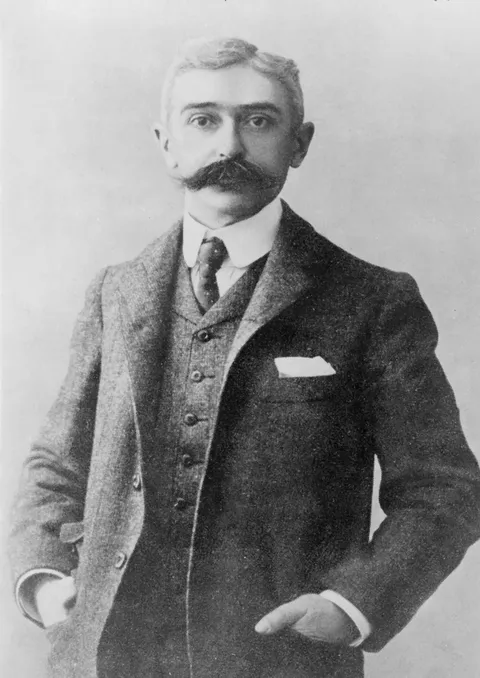
French educator who founded the International Olympic Committee in 1894 to revive the Olympic Games and served as its president from 1896 to 1925
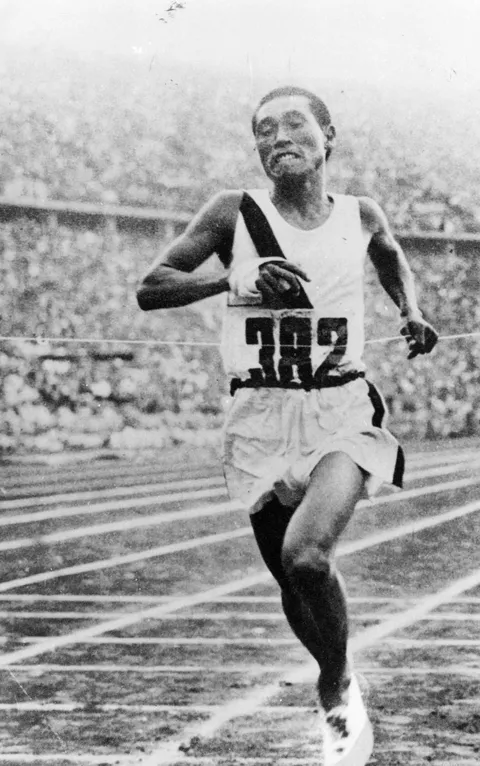
Korean marathon runner under Japanese rule who won the 1936 Berlin Olympic marathon for Japan but bowed his head on the podium; the photograph led to the Japanese flag erasure incident
Last emperor to rule the whole Roman Empire (r. 379–395), who made Christianity the state religion and divided the empire between his two sons at his death
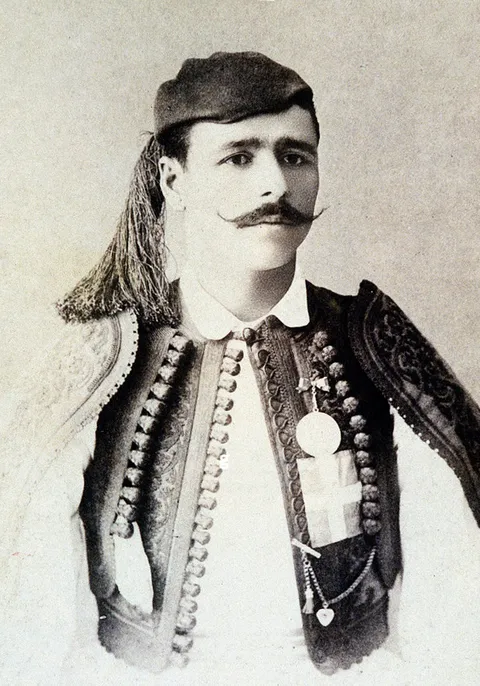
Greek runner who won the first Olympic marathon at the 1896 Athens Games and became a national hero
Nazi leader and Führer of Germany (1934–1945) who started the Second World War and perpetrated the Holocaust; he killed himself as Berlin fell
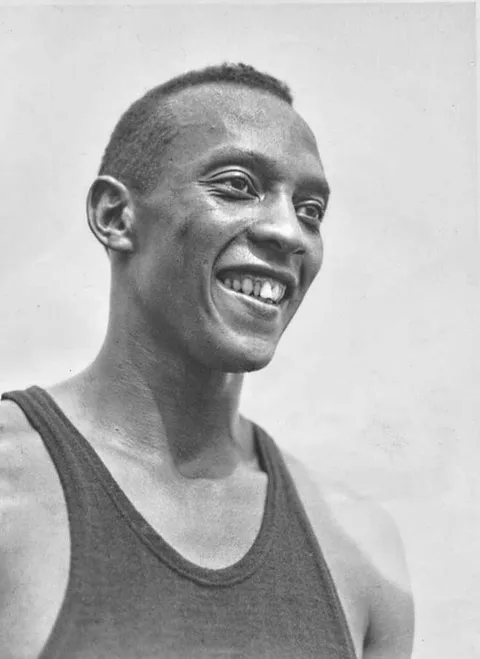
American sprinter and long jumper who won four gold medals (100 m, 200 m, long jump and 4 × 100 m relay) at the 1936 Berlin Olympics, an African American whose victories became a symbol against Nazi racism
Founded the New Korea Youth Party in Shanghai and in 1944 the underground Korean Founding League at home
Soviet leader (1964–1982) who crushed the Prague Spring (the Brezhnev Doctrine) and presided over both détente and the invasion of Afghanistan
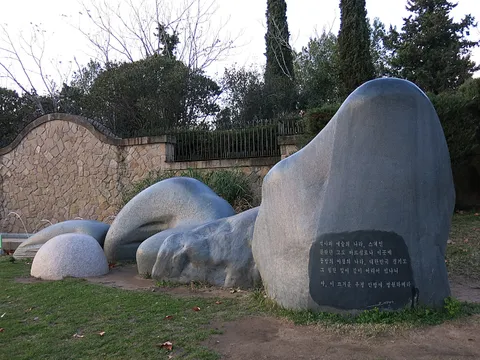
South Korean marathon runner who won the marathon at the 1992 Barcelona Olympics, the first Korean Olympic marathon champion since Sohn Kee-chung 56 years earlier