1984 Los Angeles Olympics
Also called: Games of the XXIII Olympiad, Los Angeles 1984, LA 1984
Fifteen communist nations led by the Soviet Union stayed away. Run without government money and funded by corporate sponsors and broadcast rights, the Games made a profit and opened the era of the commercial Olympics. South Korea finished tenth with six gold medals.
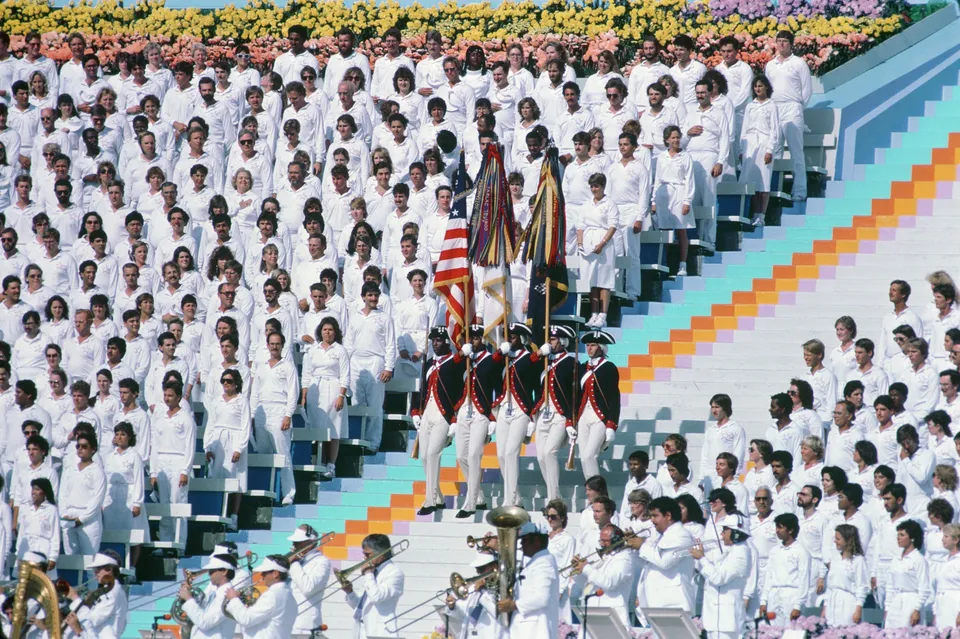
unknown, U.S. Air Force · Public domain · Source
In May 1984 the Soviet Union announced it would not attend, saying it could not guarantee its athletes’ safety, and East Germany, Cuba, North Korea and others followed, fifteen communist nations in all. Romania, however, took part, and the People’s Republic of China returned to the Summer Games for the first time since 1952, winning its first gold through the shooter Xu Haifeng. The Games ran from 28 July to 12 August with 140 nations.
After Montreal’s debts, Los Angeles was the only city to bid. The organising committee under Peter Ueberroth took no government money, reused existing venues and earned a surplus of more than 200 million dollars from sponsorship, television rights and ticket sales, setting the Olympics on the path to commercialisation. The American Carl Lewis won four events in athletics. South Korea won golds through the judoka Ha Hyung-joo and Ahn Byeong-keun, the wrestlers Yoo In-tak and Kim Won-ki, the archer Seo Hyang-soon and the boxer Shin Joon-sup, finishing tenth overall.