End of the Ancient Olympic Games
Also called: Abolition of the ancient Olympics
After Theodosius I, who had made Christianity the state religion, banned pagan sacrifices, the Olympic festival at Olympia, held for more than a thousand years, came to an end around 393.
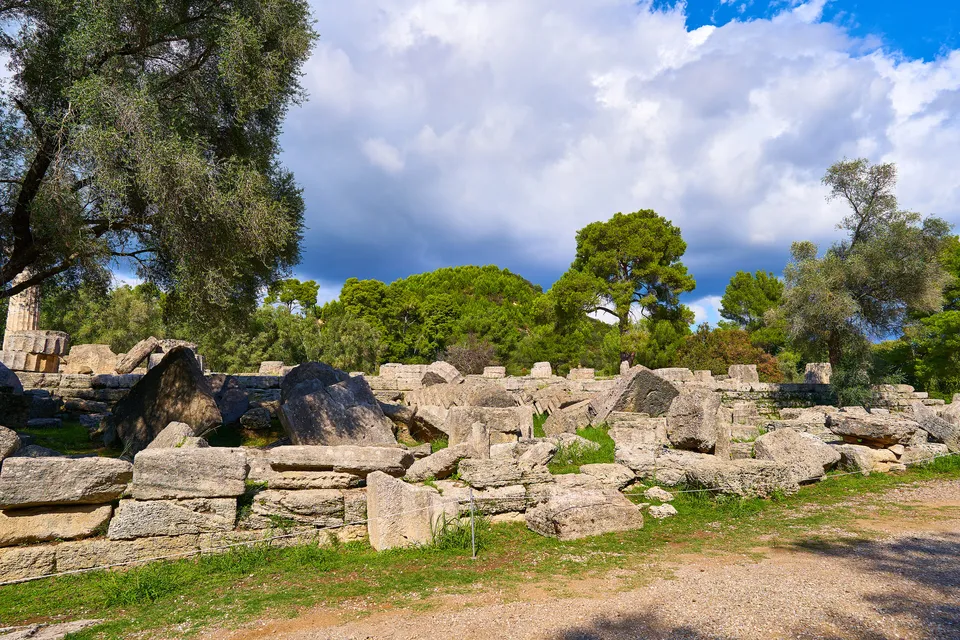
George E. Koronaios · CC BY-SA 4.0 · Source
The Olympic festival was a religious celebration in honour of Zeus. It continued under Roman rule, and the emperor Nero even competed in person. But when Theodosius I, who had made Christianity the state religion, issued a series of edicts in 391–392 banning sacrifices at pagan temples, the festival of Zeus lost its place.
The last recorded festival was the 293rd Olympiad in 393, usually taken as the end of the ancient Games, though some scholars think they lingered on a smaller scale into the early fifth century. The temples were later destroyed and the sanctuary buried by earthquakes and floods; interest in the festival revived only when German archaeologists excavated Olympia in the late nineteenth century.