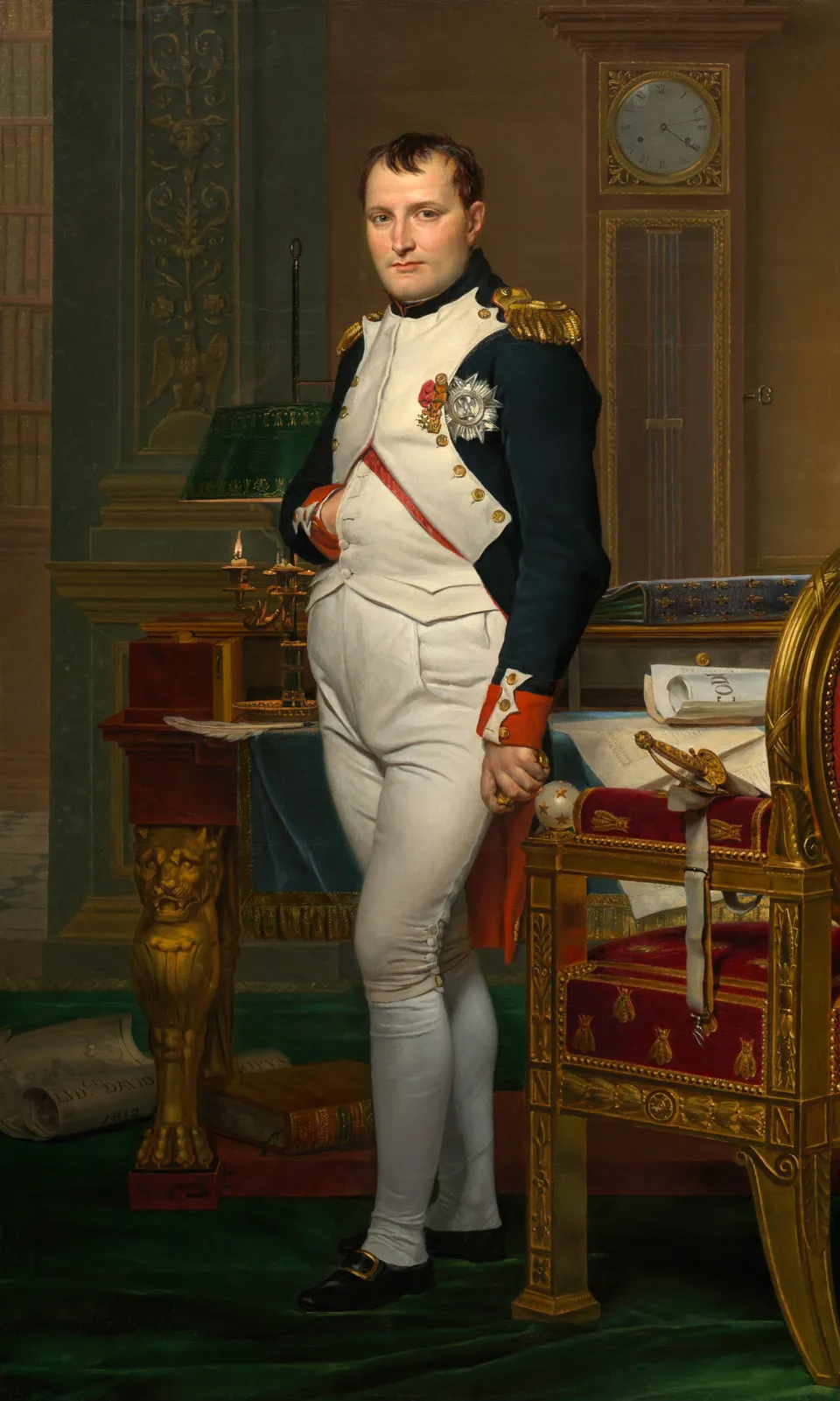
Jacques-Louis David · Public domain · Source
Person1769 – 1821
Napoleon Bonaparte
Revolutionary general, later Emperor of the French
Jacques-Louis David · Public domain · Source
Revolutionary general, later Emperor of the French
A popular revolution overthrew the absolute monarchy and founded a republic, spreading the ideals of liberty, equality and fraternity.
Enslaved Africans in French Saint-Domingue rose up, destroyed slavery and won independence as Haiti in 1804 — the first state founded by a slave revolt and the first independent country in Latin America.
The wars between Napoleon's France and coalitions of Britain, Austria, Russia and Prussia. France came to dominate most of the Continent but collapsed after the failed invasion of Russia.
Having seized power in a coup, Napoleon became emperor with the approval of a plebiscite and was crowned in Notre-Dame Cathedral (the First Empire). The same year he issued the Napoleonic Code.
With the Berlin Decree Napoleon banned trade between continental Europe and Britain, hoping to bring down by economics the country he could not defeat at sea.
Napoleon led a vast army to punish Russia for breaking the Continental System and reached Moscow, but scorched-earth tactics and the winter cold destroyed most of his army on the retreat.
Napoleon, who had escaped Elba and become emperor again, was defeated at Waterloo in Belgium by Wellington’s Anglo-allied army and Blücher’s Prussians. The Hundred Days and the Napoleonic era came to an end.
Dramatized works (films, dramas, novels) may differ from the historical record.
Arthur Wellesley, British general and statesman who drove the French out of the Iberian Peninsula and defeated Napoleon at Waterloo in 1815; later prime minister
Emperor of Russia (1801–1825) who defeated Napoleon's invasion, attended the Congress of Vienna in person and proposed the Holy Alliance
Russian field marshal who fought Napoleon's army at Borodino in 1812, gave up Moscow and then pursued and shattered the retreating French
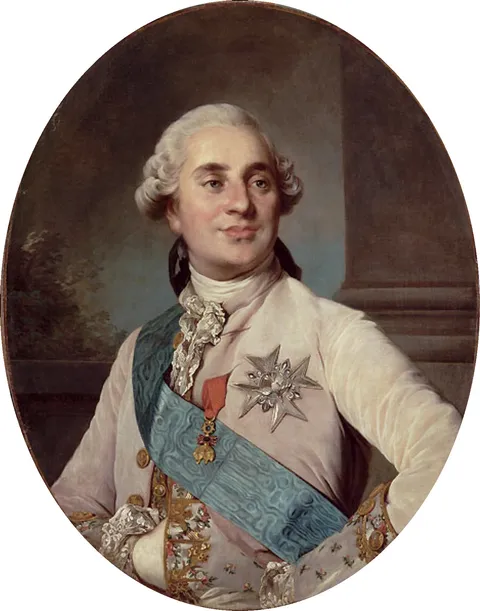
Formerly enslaved leader of the Haitian Revolution who took control of Saint-Domingue but was seized by Napoleon's expedition and died in a French prison
Three centuries in which the Ottomans of Suleiman I, the Mughals of Akbar and the Safavids of Abbas I flourished and then faltered, while across the Atlantic the slave trade and colonies transformed the Americas, leading to American independence
The Scientific Revolution from Copernicus to Newton, parliamentary government in England won through the Puritan and Glorious Revolutions, and the Enlightenment that sought to remake society by reason — the groundwork of the civic revolutions and the Industrial Revolution
From the Declaration of Independence to the German Empire — a century in which liberalism and nationalism toppled the old order in Europe and the Americas and built nation-states