Person1777 – 1825
Alexander I of Russia
Emperor of Russia (1801–1825) who defeated Napoleon's invasion, attended the Congress of Vienna in person and proposed the Holy Alliance
Emperor of Russia (1801–1825) who defeated Napoleon's invasion, attended the Congress of Vienna in person and proposed the Holy Alliance
The wars between Napoleon's France and coalitions of Britain, Austria, Russia and Prussia. France came to dominate most of the Continent but collapsed after the failed invasion of Russia.
Napoleon led a vast army to punish Russia for breaking the Continental System and reached Moscow, but scorched-earth tactics and the winter cold destroyed most of his army on the retreat.
After the Napoleonic Wars the European powers met in Vienna and agreed to restore the pre-revolutionary order. The conservative system led by Metternich (the Vienna system) suppressed liberal and nationalist movements.
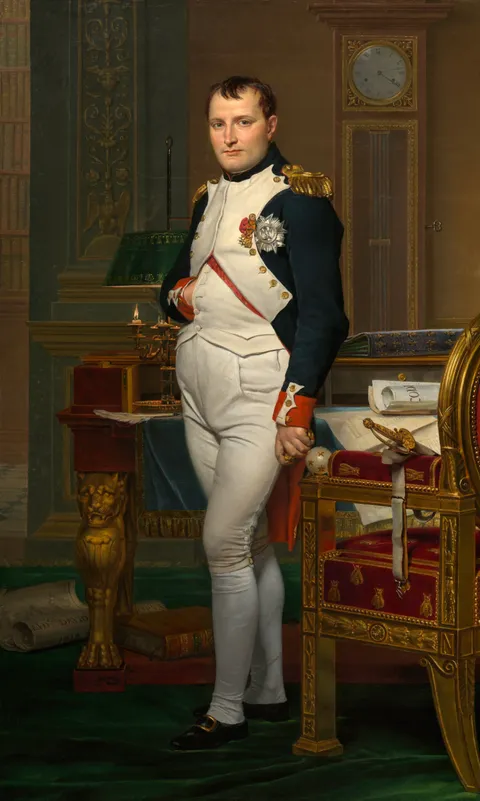
Russian field marshal who fought Napoleon's army at Borodino in 1812, gave up Moscow and then pursued and shattered the retreating French
Arthur Wellesley, British general and statesman who drove the French out of the Iberian Peninsula and defeated Napoleon at Waterloo in 1815; later prime minister
Austrian foreign minister and chancellor who presided over the Congress of Vienna and suppressed liberal and nationalist movements (the Vienna system) until the 1848 revolution drove him out
From the Declaration of Independence to the German Empire — a century in which liberalism and nationalism toppled the old order in Europe and the Americas and built nation-states