The American Civil War
From the Compromise of 1850 to Lincoln’s assassination — a nation divided over slavery fought four years of civil war, preserving the Union and ending slavery
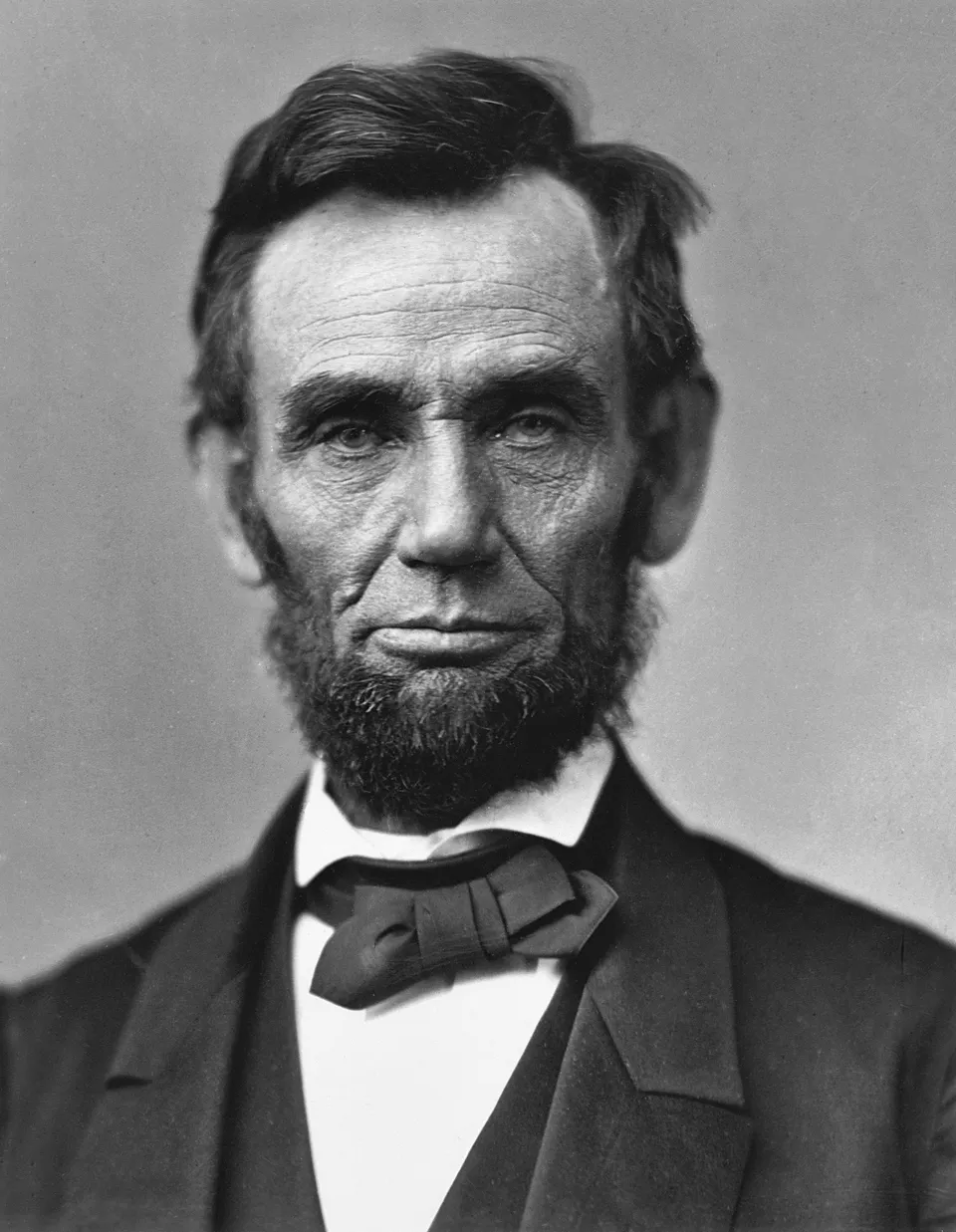
Alexander Gardner · Public domain · Source
From the Compromise of 1850 to Lincoln’s assassination — a nation divided over slavery fought four years of civil war, preserving the Union and ending slavery

Alexander Gardner · Public domain · Source
As North and South clashed over slavery in the lands won from Mexico, Congress compromised in five laws, admitting California as a free state but passing a harsher Fugitive Slave Act.
Harriet Beecher Stowe published her novel of the cruelties of slavery as a book; selling some 300,000 copies in the United States in its first year, it greatly strengthened anti-slavery feeling in the North.
By leaving slavery in the Kansas and Nebraska territories to their settlers, the act erased the Missouri Compromise line; bloodshed followed in Kansas and the Republican Party was born to oppose the spread of slavery.
The Supreme Court ruled that Black Americans could not be citizens and that Congress could not ban slavery in the territories, further narrowing the room for compromise over slavery.
The abolitionist John Brown seized the federal armory at Harpers Ferry to start a slave uprising, but was overpowered by Marines, captured and hanged that December.
With the Democrats split between North and South, Abraham Lincoln of the Republican Party, which opposed the spread of slavery, swept the Northern states and won the presidency.
Beginning with South Carolina, seven Southern states left the Union and in February 1861 founded the Confederate States of America at Montgomery, choosing Jefferson Davis as president.
A civil war between the North and South, divided over slavery and the Union. The North under Lincoln won, preserving the Union and abolishing slavery.
Confederate guns shelled the federal Fort Sumter in Charleston Harbor for 34 hours and forced its surrender; Lincoln’s call for 75,000 volunteers began the Civil War.
Marching on Richmond, the Union army was beaten by the Confederates on Bull Run creek near Manassas, Virginia, and fled back to Washington; hopes of a short war collapsed.
A day after the Confederate ironclad Virginia smashed the Union’s wooden warships, she fought the Union ironclad Monitor — the world’s first battle between ironclads, signalling the end of wooden navies.
Confederates surprised Grant’s army camped at Pittsburg Landing on the Tennessee River, but reinforced the next day, the Union drove them back; the two days cost more than 23,000 casualties.
McClellan’s Union army stopped Lee’s invasion of the North at Sharpsburg, Maryland; with some 23,000 casualties it was the bloodiest single day in American history.
Lincoln declared the enslaved people in the rebelling Confederate areas forever free; freeing the slaves became a war aim, and Black soldiers joined the Union army.
Lee defeated Hooker’s Union army, more than twice his size, with a daring division of his forces; but Stonewall Jackson was shot by his own men and died.
Lee’s army, invading Pennsylvania, fought Meade’s Union army for three days and lost when Pickett’s Charge collapsed — the largest battle of the war and its turning point.
Grant’s army besieged the Mississippi River fortress of Vicksburg for 47 days and forced its surrender; the Union gained control of the Mississippi, cutting the Confederacy in two.
At the dedication of the national cemetery at Gettysburg, Lincoln defined the war in a speech of little more than two minutes as a new birth of freedom and the defence of “government of the people, by the people, for the people”.
Sherman’s Union army took Atlanta, the South’s rail hub, then marched across Georgia to Savannah on the Atlantic, destroying railways, farms and supplies along the way.
Congress passed a constitutional amendment banning slavery and involuntary servitude, which took effect on ratification by the states in December 1865, ending slavery throughout the United States.
Driven from Richmond, Lee surrendered the Army of Northern Virginia to Grant at Appomattox Court House, effectively ending the Civil War.
Five days after Lee’s surrender, the Confederate sympathiser John Wilkes Booth shot Lincoln at Ford’s Theatre in Washington; Lincoln died the next morning and Vice President Andrew Johnson became president.
16th US president (1861–1865) who preserved the Union in the Civil War and issued the Emancipation Proclamation; assassinated just after the war ended
Confederate general who led the Army of Northern Virginia to many victories, lost at Gettysburg and surrendered at Appomattox in 1865
Union general who took Vicksburg, became general-in-chief in 1864 and received Lee’s surrender; 18th US president (1869–1877)
Democratic senator from Illinois who championed popular sovereignty, wrote the Kansas–Nebraska Act and lost the 1860 election to Lincoln
Born enslaved in Maryland, he escaped to become the leading abolitionist orator and writer, and recruited Black soldiers for the Union
Mississippi politician, former US secretary of war and senator, and the only president of the Confederacy (1861–1865)
Confederate general who earned the name “Stonewall” at First Bull Run and was mortally wounded by his own men at Chancellorsville
Union general who took Atlanta in 1864 and marched across Georgia to the sea, destroying the South’s means of making war
Abolitionist who advocated armed struggle; he fought in Kansas and in 1859 raided the Harpers Ferry armory, for which he was hanged
Kentucky statesman, the “Great Compromiser”, who shaped the Missouri Compromise (1820) and the Compromise of 1850
American writer whose novel Uncle Tom’s Cabin (1852), depicting the cruelty of slavery, roused anti-slavery opinion
Enslaved man who sued for his freedom because he had lived in a free state and a free territory; the Supreme Court rejected his claim in 1857