Emancipation Proclamation
Lincoln declared the enslaved people in the rebelling Confederate areas forever free; freeing the slaves became a war aim, and Black soldiers joined the Union army.
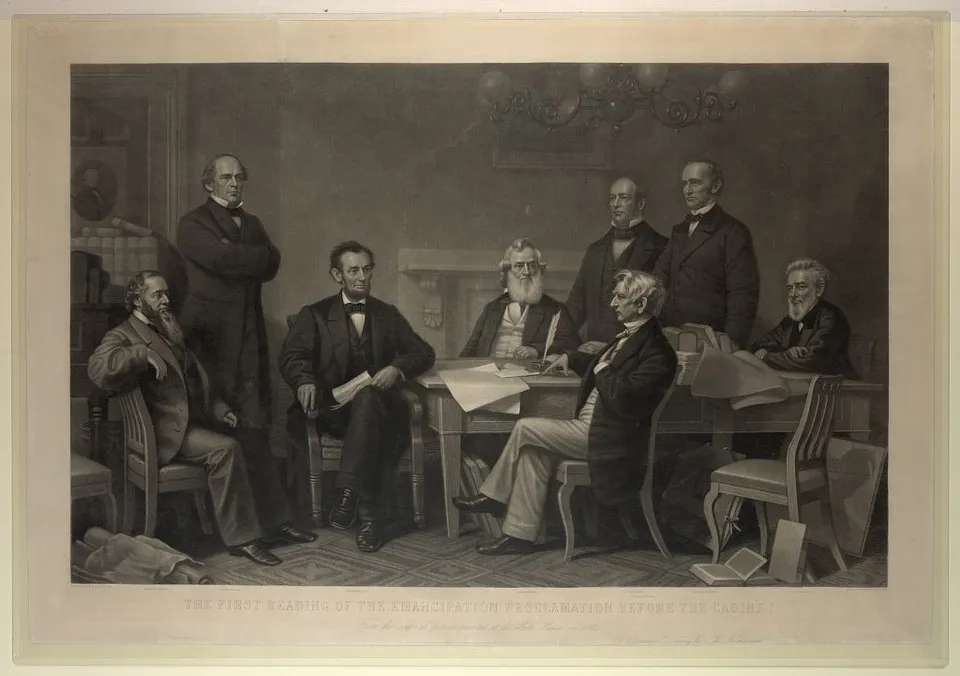
Ritchie, Alexander Hay, 1822-1895, engraver; Carpenter, F. B. (Francis Bicknell), 1830-1900, artist · Public domain · Source
Lincoln issued a preliminary proclamation on 22 September 1862, five days after Antietam, and the final one on 1 January 1863. Because it rested on his war powers as commander-in-chief, it did not apply to the loyal border states or to areas already under Union control, and few people were freed by the proclamation alone. But wherever the Union armies advanced, the enslaved became free.
It opened the Union army to Black men, and some 180,000 Black soldiers fought by the war’s end. Britain and France, where anti-slavery opinion was strong, found it harder to recognise the South. The proclamation’s limits were closed by the Thirteenth Amendment, which abolished slavery nationwide in 1865.