Person1827 – 1849

Heonjong

Twenty-fourth king of Joseon, enthroned at eight while the Pungyang Jo and Andong Kim clans fought for power; the 1839 persecution took place in his reign

Sunjo's grandson and the son of Crown Prince Hyomyeong, he reigned under the regency of his grandmother Queen Sunwon. In the Gihae Persecution of 1839 the French bishop Imbert and many believers were executed, and in 1846 Kim Dae-geon, the first Korean priest, was martyred. Western ships appeared ever more often in this period.
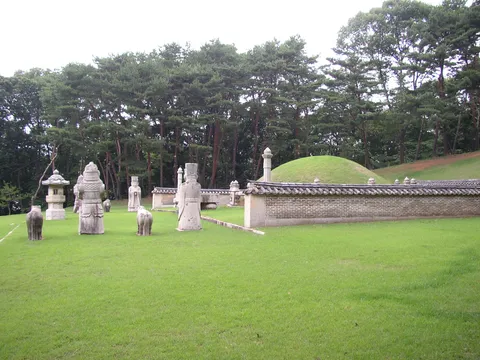
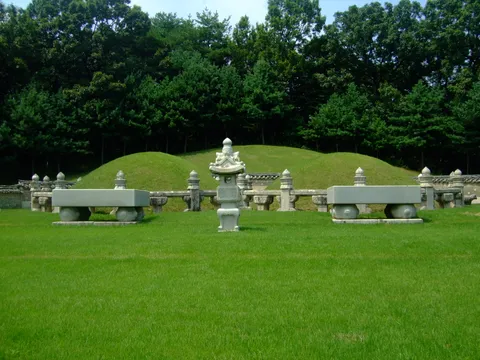
Where they went

OpenFreeMap © OpenMapTiles © OpenStreetMap contributors

3 related events

  1. 1

    For some sixty years after Jeongjo, through the reigns of Sunjo, Heonjong and Cheoljong, royal in-law clans such as the Andong Kim and Pungyang Jo monopolized power; the three taxes became corrupt and peasant revolts followed.

  2. 2

    Under Heonjong the Pungyang Jo regime executed three French priests who had entered secretly, along with many Korean Catholics, and issued a royal edict condemning Catholicism.

  3. 3

    Painted by the exiled Kim Jeong-hui for his student Yi Sang-jeok, who kept sending him books — pines and cypresses in winter as a symbol of unchanging loyalty.

People who appear alongside

  • Kim Jo-sun1765 – 1832

    Andong Kim father-in-law of King Sunjo whose hold on power began the era of in-law (sedo) government

  • Sunjo1790 – 1834

    Twenty-third king of Joseon, whose reign under in-law clan rule saw the Hong Gyeong-nae rebellion

  • Cheoljong1831 – 1863

    Twenty-fifth king of Joseon, raised on Ganghwa and placed on the throne by the Andong Kim clan; after the 1862 uprisings he set up an office to reform the three taxes

  • Queen Jeongsun1745 – 1805

    Regent for the young Sunjo who launched the 1801 persecution of Catholics

  • Laurent-Joseph-Marius Imbert1796 – 1839

    French bishop of the Paris Foreign Missions Society who entered Korea secretly in 1837 and was executed with Fathers Maubant and Chastan in 1839

  • Kim Dae-geon (Andrew Kim Taegon)1821 – 1846

    First Korean Catholic priest, trained in Macau and ordained in Shanghai, executed in the Byeongo Persecution of 1846

  • Kim Jeong-hui (Chusa)1786 – 1856

    Epigrapher and calligrapher who created the Chusa style, identified the Bukhansan stele as King Jinheung’s, and painted Sehando in exile on Jeju

Themes this person appears in

  • Factional Politics in Joseon1498 – 1863

    From the literati purges to in-law government — how Sarim factions moved from coexistence and checks to purges and one-faction rule, then through Tangpyeong to the dominance of a few clans

  • Changes in TaxationAD 755 – 1894

    From land tax, tribute and labour to cash taxes in the Gabo Reform — burdens shifting from people and households to land

  • The Course of Korean PaintingAD 450 – 1897

    From Goguryeo tomb murals to Jang Seung-eop — daily life and guardian deities, Goryeo Buddhist painting, early Joseon landscapes, true-view landscapes and genre painting, literati and folk painting

  • Jeju Island1270 – 1948

    From Tamna to Jeju — the Sambyeolcho’s last stand, Yuan horse ranches, castaways and exiles, and the island of April 3