In-law Government (Sedo Politics)
For some sixty years after Jeongjo, through the reigns of Sunjo, Heonjong and Cheoljong, royal in-law clans such as the Andong Kim and Pungyang Jo monopolized power; the three taxes became corrupt and peasant revolts followed.
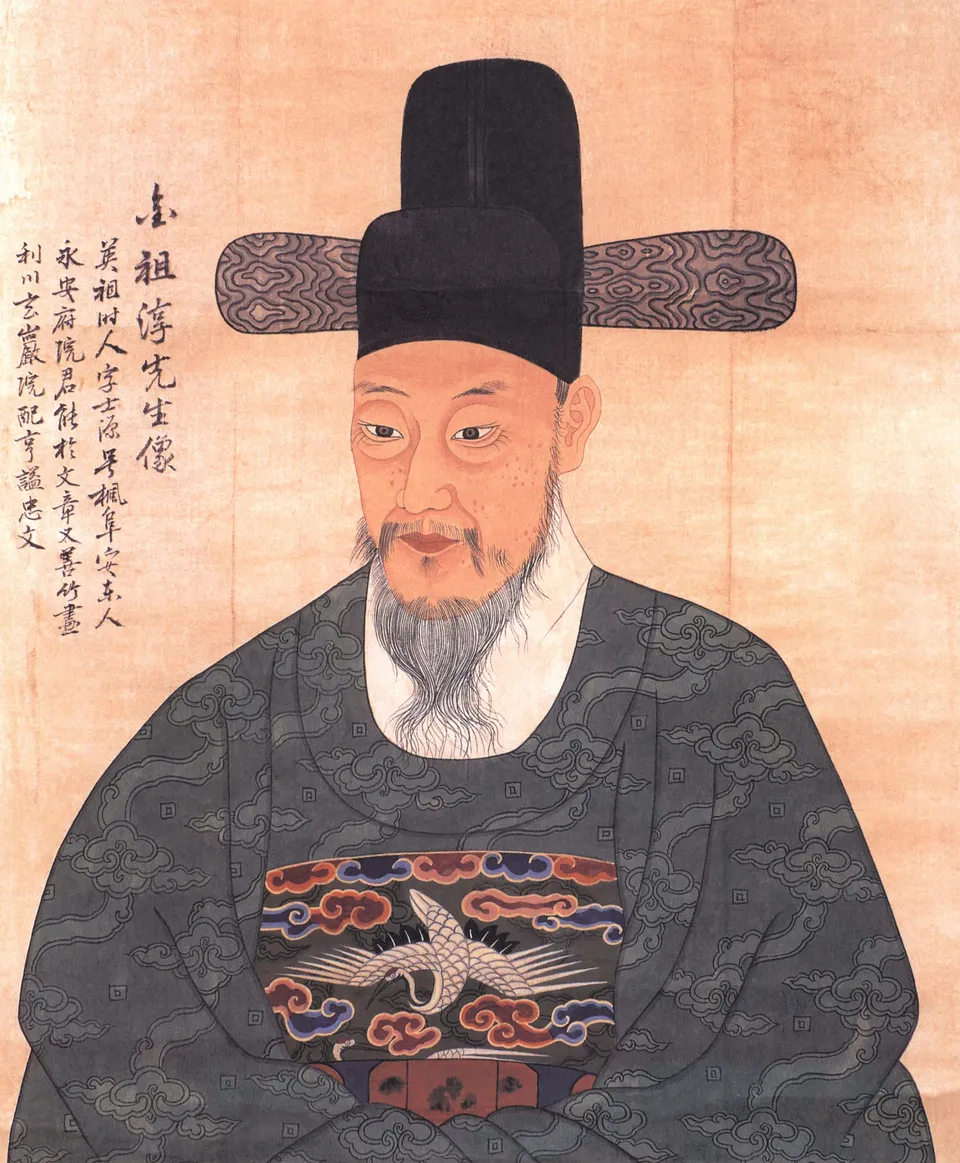
Unknown author · Public domain · Source
When the eleven-year-old Sunjo came to the throne, Queen Dowager Jeongsun ruled as regent; then the Andong Kim clan of his father-in-law Kim Jo-sun took power. Under Heonjong the Pungyang Jo, and under Cheoljong the Andong Kim again, controlled the Border Defence Council and with it the government. Examination fraud and the sale of offices spread, and magistrates who had bought their posts plundered the people.
The “three administrations” decayed: the land tax gathered surcharges; the military cloth tax was levied on the dead, on infants, and on neighbours and kin of absconders; and the grain-loan system became forced usury, with sand mixed into the rice — the worst abuse of all.
As unrest grew, prophetic books such as the Jeonggamnok — foretelling that the Yi dynasty would fall and a Jeong would found a new dynasty at Gyeryongsan — spread widely, along with faith in the coming of the Maitreya Buddha to open a new world and shamanist beliefs. Catholicism and Donghak also spread in this climate. Hong Gyeong-nae’s Rebellion (1811) and the 1862 uprisings followed; Cheoljong set up an office to reform the three taxes but soon abolished it. In-law rule ended when Gojong came to the throne in 1863 and Heungseon Daewongun took power.