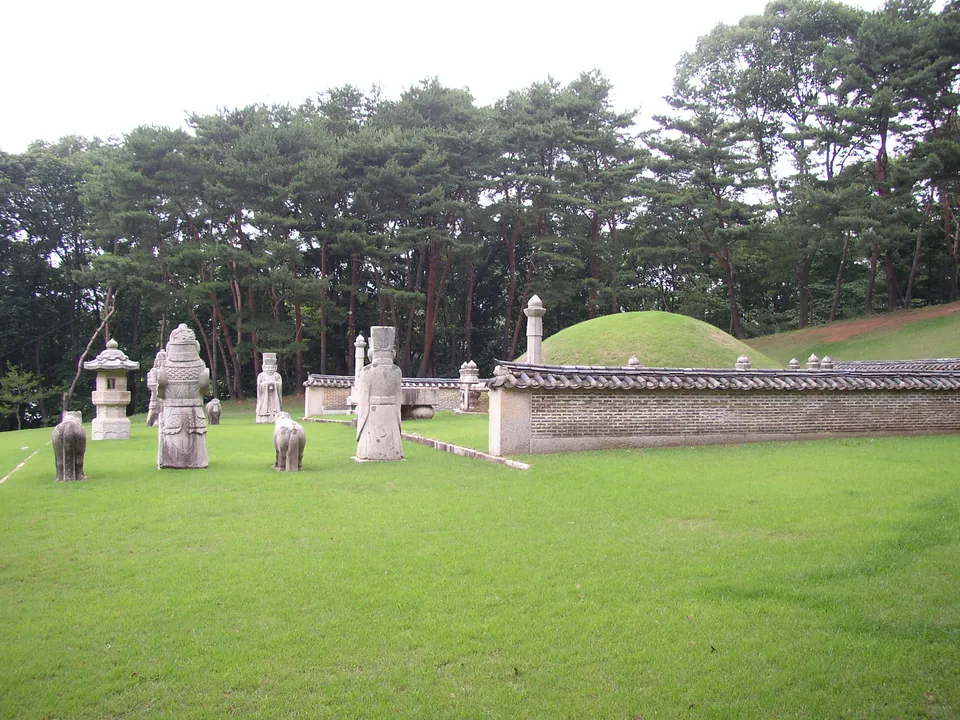
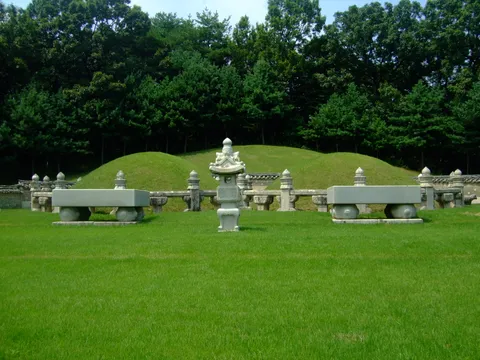
Inneung, the tomb of King Sunjo, Seocho-gu, Seoul

Nichetas · CC BY-SA 3.0 · Source

Person1790 – 1834

Sunjo

Twenty-third king of Joseon, whose reign under in-law clan rule saw the Hong Gyeong-nae rebellion

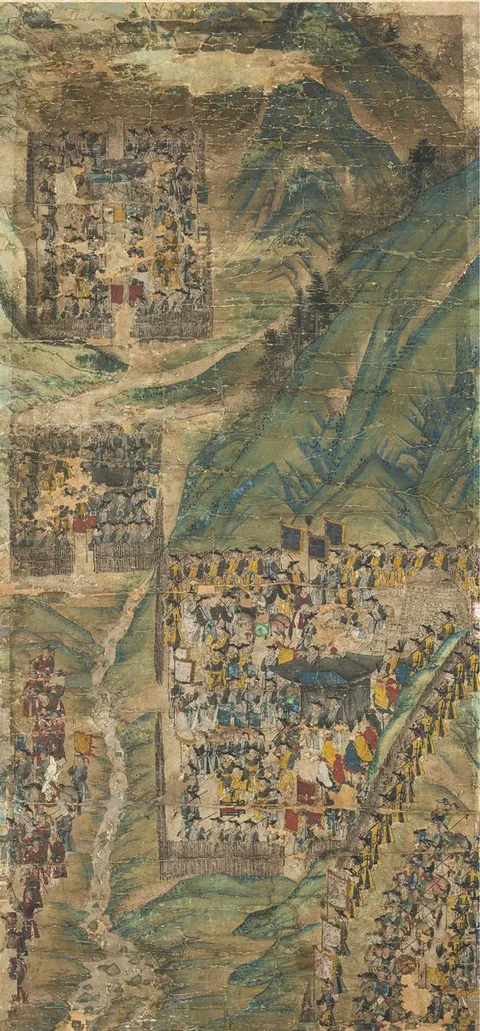
He came to the throne at 11, and during Queen Jeongsun's regency the Catholic Persecution of 1801 broke out and government slaves were freed the same year. After the regency ended, his father-in-law Kim Jo-sun's Andong Kim clan took power, beginning in-law government. Hong Gyeong-nae's Rebellion broke out in 1811. In his last years he had his son Crown Prince Hyomyeong act as regent.
Where they went

OpenFreeMap © OpenMapTiles © OpenStreetMap contributors

4 related events

  1. 1

    For some sixty years after Jeongjo, through the reigns of Sunjo, Heonjong and Cheoljong, royal in-law clans such as the Andong Kim and Pungyang Jo monopolized power; the three taxes became corrupt and peasant revolts followed.

  2. 2

    Queen Jeongsun banned Catholicism and had Yi Seung-hun and about a hundred believers executed; Jeong Yak-yong and his brother were exiled.

  3. 3

    Sunjo freed some 66,000 slaves belonging to the royal household and central government offices — a sign of the late-Joseon loosening of status.

  4. 4
    1811 – 1812Hong Gyeong-nae Rebellionmonarch

    Hong Gyeong-nae rose against discrimination toward Pyeongan Province and in-law clan rule; the rebels swept the north but were crushed after holding Jeongju for four months.

People who appear alongside

  • Queen Jeongsun1745 – 1805

    Regent for the young Sunjo who launched the 1801 persecution of Catholics

  • Kim Jo-sun1765 – 1832

    Andong Kim father-in-law of King Sunjo whose hold on power began the era of in-law (sedo) government

  • Heonjong1827 – 1849

    Twenty-fourth king of Joseon, enthroned at eight while the Pungyang Jo and Andong Kim clans fought for power; the 1839 persecution took place in his reign

  • Cheoljong1831 – 1863

    Twenty-fifth king of Joseon, raised on Ganghwa and placed on the throne by the Andong Kim clan; after the 1862 uprisings he set up an office to reform the three taxes

  • Jeong Yak-yong (Dasan)1762 – 1836

    Silhak scholar who helped design Hwaseong; exiled to Gangjin, where he wrote the Mongmin simseo

  • Yi Seung-hun1756 – 1801

    First Korean baptized a Catholic, in Beijing in 1784; he founded the first Korean Catholic community and was executed in 1801

  • Jeong Yak-jeon1758 – 1816

    Jeong Yak-yong's elder brother who, exiled to Heuksando in the Catholic Persecution of 1801, surveyed its sea life in the Jasan eobo

  • Hong Gyeong-nae1771 – 1812

    Impoverished noble who led the 1811 uprising in Pyeongan; killed at Jeongju

Themes this person appears in

  • Factional Politics in Joseon1498 – 1863

    From the literati purges to in-law government — how Sarim factions moved from coexistence and checks to purges and one-faction rule, then through Tangpyeong to the dominance of a few clans

  • Changes in TaxationAD 755 – 1894

    From land tax, tribute and labour to cash taxes in the Gabo Reform — burdens shifting from people and households to land