Minhwa (Folk Painting)
Also called: Korean folk painting, Tiger and magpie
Practical paintings by anonymous artists to decorate homes — tiger and magpie, birds and flowers, ideographs and books — full of commoners’ wishes for luck and long life.
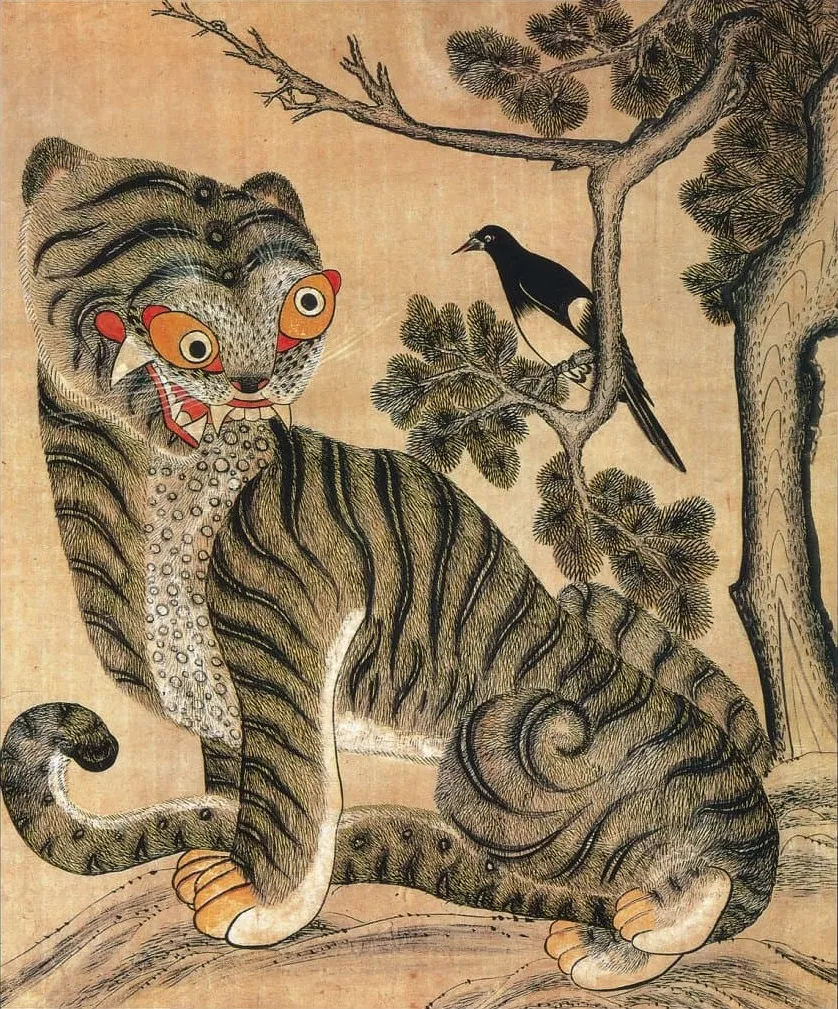
Unknown author · Public domain · Source
As commoners grew wealthier in late Joseon, more people bought paintings for their homes. Minhwa by anonymous painters decorated rooms as screens and hanging scrolls, or were pasted on doors at the New Year to ward off evil.
Subjects include the tiger and magpie that drive away evil, birds and flowers wishing marital harmony, ideograph paintings of virtues such as filial piety and loyalty, still lifes of books and stationery (chaekgeori), and the ten symbols of longevity. They are free, simple, humorous and boldly coloured.