Taekkyeon
Also called: Taekkyon
A traditional martial art that trips and topples the opponent with kicks and sweeps from a fluid footwork (pumbapgi). Popular in late Joseon, it became in 2011 the first martial art on the list of Intangible Cultural Heritage of Humanity.
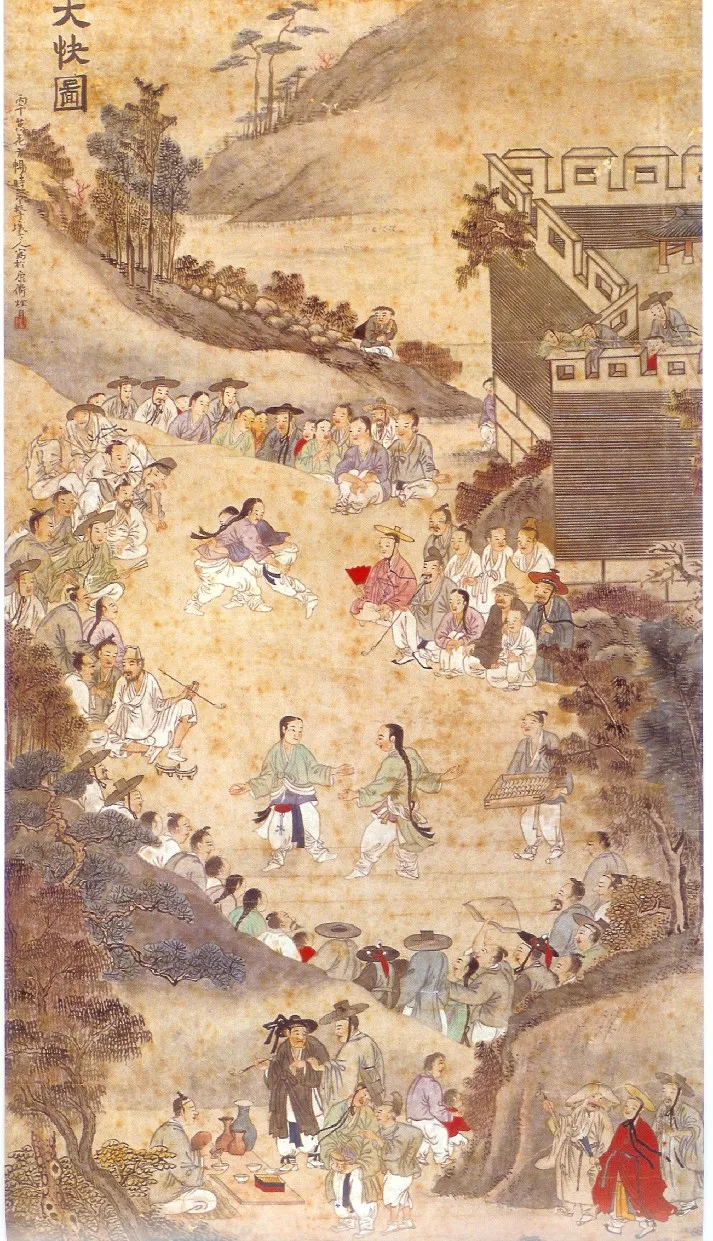
Hyesan Yu Suk (유숙)(1827–1873) · Public domain · Source
Taekkyeon was a martial art and game enjoyed by common people in Seoul and elsewhere in late Joseon. Players sway rhythmically with pumbapgi, stepping in a triangle, and win by kicking, hooking or pushing the opponent off balance. Soft, curving movements release sudden force, and not injuring the opponent was valued. Yu Suk’s painting Daekwaedo (1846) shows a taekkyeon bout alongside ssireum.
Nearly lost under Japanese rule, it was kept alive by Song Deok-gi and others and in 1983 became the first martial art designated an Important Intangible Cultural Property. In 2011, together with jultagi (tightrope walking) and Hansan ramie weaving, it was inscribed by UNESCO as Intangible Cultural Heritage of Humanity, the first martial art on the list.