Culture1844

Kim Jeong-hui’s Sehando (Winter Scene)

Also called: Sehando, Winter Scene

Painted by the exiled Kim Jeong-hui for his student Yi Sang-jeok, who kept sending him books — pines and cypresses in winter as a symbol of unchanging loyalty.
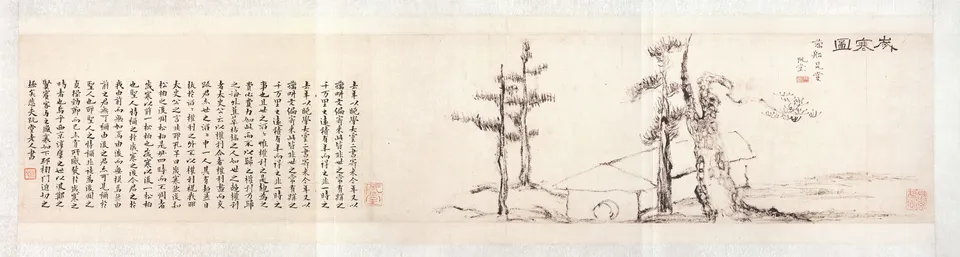
Kim Jeong-hui’s Sehando (1844), painted in exile on Jeju for his student Yi Sang-jeok

Kim Jeong-hui · Public domain · Source

Kim Jeong-hui painted it in 1844 while in exile at Daejeong on Jeju. His student Yi Sang-jeok, an interpreter, had not forgotten his fallen teacher and kept obtaining rare books for him in Qing China. Kim praised his fidelity with a line from the Analects: “Only when the year grows cold do we know that the pine and cypress are the last to fade.”

A lonely house and a few pines and cypresses are drawn tersely with a dry brush. It is a masterpiece of literati painting, revealing the painter’s mind and learning rather than outward likeness. Yi took it to Beijing and had sixteen Qing scholars add their comments. A National Treasure, it was donated in 2020 by its owner Son Chang-geun and is in the National Museum of Korea.

The map in 1844

OpenFreeMap © OpenMapTiles © OpenStreetMap contributors

States and rulers at the time
Joseon — Heonjong

People

  • Kim Jeong-hui (Chusa)1786 – 1856

    creator · Epigrapher and calligrapher who created the Chusa style, identified the Bukhansan stele as King Jinheung’s, and painted Sehando in exile on Jeju

  • Heonjong1827 – 1849

    monarch · Twenty-fourth king of Joseon, enthroned at eight while the Pungyang Jo and Andong Kim clans fought for power; the 1839 persecution took place in his reign

Before and after

Earlier
1839 Gihae Persecution
Later
1850 Arirang

Related works

  • Documentary: History Special Episode 87: National Treasure No. 180: The Secret of SehandoDocumentary · 2011 · KBS1

Themes that include this event

  • The Course of Korean PaintingAD 450 – 1897

    From Goguryeo tomb murals to Jang Seung-eop — daily life and guardian deities, Goryeo Buddhist painting, early Joseon landscapes, true-view landscapes and genre painting, literati and folk painting

  • Jeju Island1270 – 1948

    From Tamna to Jeju — the Sambyeolcho’s last stand, Yuan horse ranches, castaways and exiles, and the island of April 3