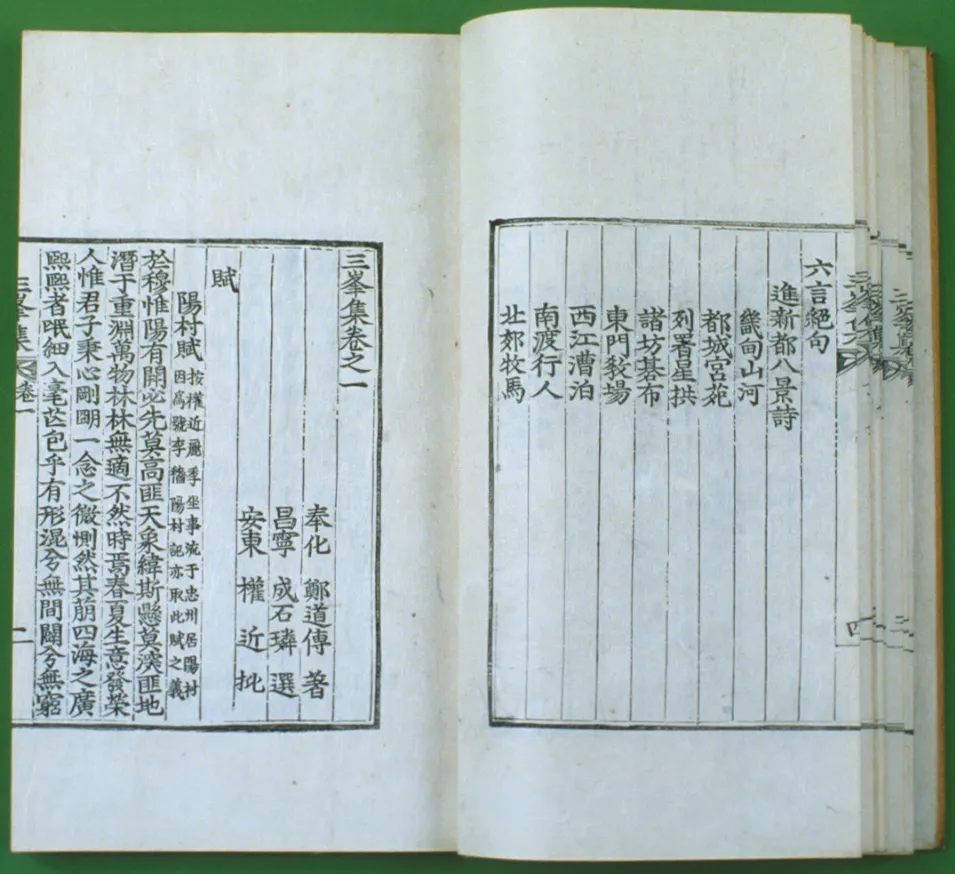
A page of the Sambongjip, the collected works of Jeong Do-jeon

Namhae Yu. Academy of Korean Studies · KOGL Type 1 · Source

Person1342 – 1398

Jeong Do-jeon

Neo-Confucian architect of the new dynasty who named the palace and capital gates; killed in the First Strife of Princes

Known as Sambong, he worked with Yi Seong-gye to enact the Gwajeon Law and found Joseon. He wrote the Joseon gyeonggukjeon, setting out the principles of government, and attacked Buddhism in the Bulssi japbyeon. He championed government led by ministers rather than the king, and his plans to attack Liaodong and abolish private armies brought him into conflict with Yi Bang-won.


Where they went

OpenFreeMap © OpenMapTiles © OpenStreetMap contributors

6 related events

  1. 1
    1391The Gwajeon Lawparticipant

    Yi Seong-gye and the new scholar-officials abolished the magnates’ estates and enacted the Gwajeon Law, granting officials rent rights to land in Gyeonggi only.

  2. 2
    1392Founding of Joseonparticipant

    Yi Seong-gye overthrew Goryeo and founded Joseon, moving the capital to Hanyang in 1394.

  3. 3

    King Taejo moved the capital from Gaegyeong to Hanyang, where Jeong Do-jeon laid out the shrines, palace and city walls.

  4. 4
    1395Jongmyo Shrine, Seoulrelated figure

    The royal ancestral shrine holding the spirit tablets of Joseon kings and queens. Completed in 1395 with the move to Hanyang, it became a World Heritage Site in 1995.

  5. 5
    1395Gyeongbokgung builtparticipant

    The main palace, Gyeongbokgung, was completed in the new capital; Jeong Do-jeon named it after a line in the Book of Songs.

  6. 6
    1398First Strife of Princesrelated figure

    Yi Bang-won killed Jeong Do-jeon and the crown prince and seized power; after a second strife in 1400 he became King Taejong.

Related works

  • TV drama: Jeong Do-jeonDramatizedTV drama · 2014 · KBS1
  • TV drama: Six Flying DragonsDramatizedTV drama · 2015 · SBS
  • TV episode: History Journal: The Day Episode 151: The Truth about the Killing of Jeong Do-jeon — Is Yi Bang-won Innocent?TV episode · 2017 · Park Hyun-mo · KBS1

Dramatized works (films, dramas, novels) may differ from the historical record.

People who appear alongside

  • Taejo (Yi Seong-gye)1335 – 1408

    Founder and first king of Joseon, formerly a general who fought Japanese pirates and the Red Turbans

  • Taejong (Yi Bang-won)1367 – 1422

    Third king of Joseon, who seized power in the Strifes of Princes and strengthened royal authority

  • Jo Jun1346 – 1405

    New Confucian official who drafted the Gwajeon land reform and helped found Joseon

  • King Gongyang1345 – 1394

    Last king of Goryeo, placed on the throne by Yi Seong-gye’s faction; the Gwajeon Law was enacted in his reign

Themes this person appears in

  • Song, Ming and Samurai JapanAD 960 – 1500

    The age when the civil-minded Song bought peace from Liao, Western Xia and Jin while the lower Yangtze boomed and Neo-Confucianism took shape, and the Ming, having driven out the Yuan, rebuilt the East Asian order through imperial autocracy, the sea ban and tribute — as Japan passed through the Kamakura and Muromachi warrior governments into the Warring States era, and Korea from Goryeo to Joseon

  • Changes in the Land SystemAD 687 – 1950

    From nogeup to the end of office land — how the rights granted to officials shrank, and gave way to modern land ownership

  • Changes in TaxationAD 755 – 1894

    From land tax, tribute and labour to cash taxes in the Gabo Reform — burdens shifting from people and households to land

  • Changes in Architecture1200 – 1910

    From Geungnakjeon at Bongjeongsa to Seokjojeon at Deoksugung — Goryeo bracket styles, Joseon palaces, walls and multi-storey temple halls, and the Western buildings of the Korean Empire

  • Intangible and World Heritage2000 BC – 1850

    From the dolmens to Namhansanseong on the World Heritage List, from Jongmyo ritual music to ssireum on the Intangible Heritage lists — where each came from and when it was inscribed

  • GaeseongAD 901 – 2003

    From Wang Geon, lord of Songak, to the Kaesong Industrial Complex — Gaegyeong, Goryeo’s capital for five centuries, and home of the Song merchants

  • Seoul18 BC – 1988

    From Hanseong Baekje to the June Democratic Struggle — the Han River land every kingdom fought for, and Joseon’s capital for five centuries