Jongmyo Shrine, Seoul
The royal ancestral shrine holding the spirit tablets of Joseon kings and queens. Completed in 1395 with the move to Hanyang, it became a World Heritage Site in 1995.
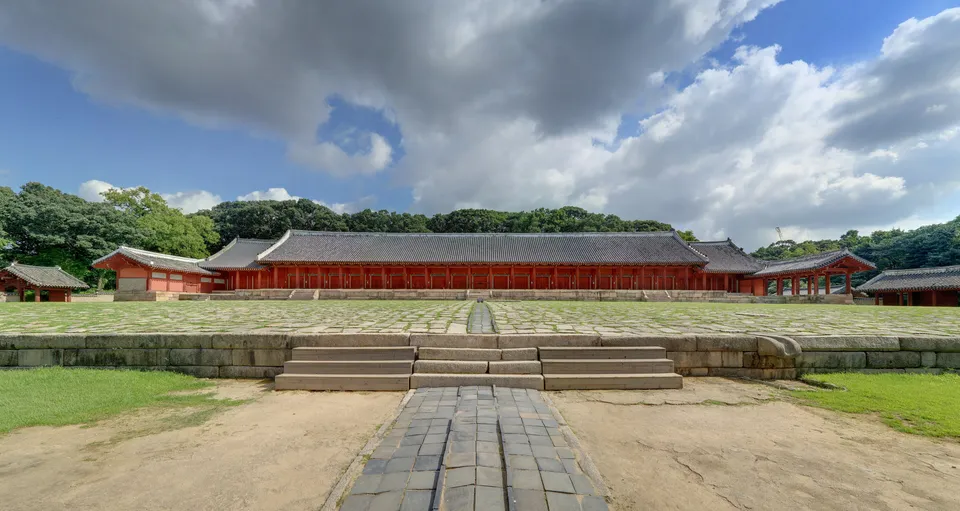
Cultural Heritage Administration · KOGL Type 1 · Source
Jongmyo is the shrine where the spirit tablets of Joseon’s kings and queens are kept and rites are held for them. Following the Rites of Zhou, Jeong Do-jeon placed the ancestral shrine to the left (east) of the palace and the altar of earth and grain (Sajik) to the right (west), and it was completed with Gyeongbokgung in 1395 (4th year of King Taejo). Together the royal ancestral shrine and the altar of the gods of land and grain stood for the state itself, hence the phrase "jongmyo sajik".
The main hall, Jeongjeon, was extended sideways whenever a new king’s tablet had to be added, giving it its plain, very long form. Under King Sejong a separate hall, Yeongnyeongjeon, was built for tablets moved out of Jeongjeon. Burned in the Imjin War, it was rebuilt under Gwanghaegun. Jeongjeon is a National Treasure.
Because it shows a Confucian ritual space where the rites are still held, it became one of Korea’s first UNESCO World Heritage Sites in 1995, with Seokguram and Bulguksa and the Janggyeong Panjeon of Haeinsa. The Jongmyo ancestral rite and its music were proclaimed Intangible Cultural Heritage of Humanity in 2001.