Local historyAD 901 – 200316 events
Gaeseong
From Wang Geon, lord of Songak, to the Kaesong Industrial Complex — Gaegyeong, Goryeo’s capital for five centuries, and home of the Song merchants
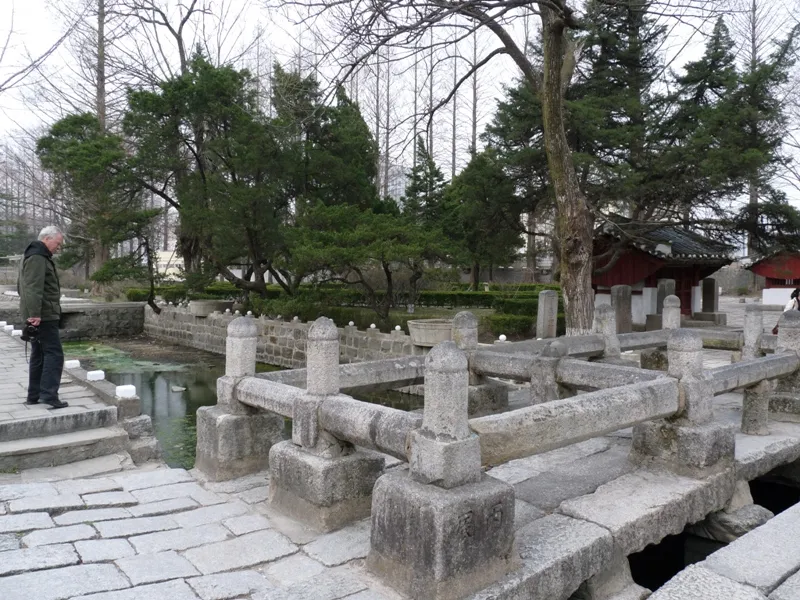
David Clayton Ellsworth · CC BY-SA 4.0 · Source
From Wang Geon, lord of Songak, to the Kaesong Industrial Complex — Gaegyeong, Goryeo’s capital for five centuries, and home of the Song merchants
David Clayton Ellsworth · CC BY-SA 4.0 · Source
| Period | Event | Key points |
|---|---|---|
| Later Three Kingdoms | Later Goguryeo founded | Gungye at Songak, 901 |
| Goryeo | Goryeo founded | Wang Geon; capital to Songak next year |
| Goryeo | Byeongnando | Port on the Yeseong; Arab merchants |
| Goryeo | Choe Chung’s academy | 12 private schools; state school weakens |
| Goryeo | Yi Ja-gyeom’s revolt | Palace burned with Cheok Jun-gyeong |
| Goryeo | Military coup | Bohyeonwon; Jeong Jung-bu, Yi Ui-bang |
| Goryeo | Manjeok’s plot | North hill of Gaegyeong; slaves seek freedom |
| Goryeo | Return to Gaegyeong | Back from Ganghwa, 1270; Yuan interference |
| Goryeo | Gyeongcheonsa pagoda | Yuan style; marble, ten stories |
| Goryeo | Red Turbans, 2nd raid | Gaegyeong falls; king flees to Andong |
| Goryeo | Tombs of Gongmin | Hyeonneung & Jeongneung; model for Joseon |
| Late Goryeo | Jeong Mong-ju killed | Seonjukgyo bridge; Yi Bang-won’s men |
| Joseon | Joseon founded | Yi Seong-gye crowned at Suchanggung |
| Late Joseon | Song merchants | Gaeseong traders; branch shops, ginseng |
| Korean War | Armistice talks | Began at Kaesong 1951 → Panmunjom |
| Kim · Roh gov’ts | Kaesong Industrial Complex | Inter-Korean cooperation after 2000 |
Gung Ye, who had risen under the warlord Yanggil and taken Gangwon, Gyeonggi and Hwanghae, founded Later Goguryeo at Songak in 901.
Hong Yu, Bae Hyeon-gyeong, Sin Sung-gyeom and Bok Ji-gyeom overthrew Gung Ye and raised Wang Geon to the throne; he named the state Goryeo with the era name Cheonsu.
Merchants from Song, the Khitans, the Jurchens, Japan and even Arabia came to Byeongnando at the mouth of the Yeseong River, carrying the name "Corea" to the West.
When the retired chief minister Choe Chung opened his Nine-Course Academy, twelve private schools flourished; as state schools declined, later kings revived them.
Yi Ja-gyeom, King Injong’s maternal grandfather and father-in-law, burned the palace with Cheok Jun-gyeong and held the king captive; Injong won Cheok over and removed Yi.
Generals including Jeong Jung-bu, Yi Ui-bang and Yi Go, long slighted by civil officials, struck at Bohyeonwon, killing civil officials and deposing King Uijong; military regimes ruled for the next century.
Manjeok, a slave of Choe Chung-heon, gathered slaves in Gaegyeong to plot their emancipation and seizure of power, but was betrayed.
Having made peace with the Mongols, Goryeo moved its capital back from Ganghwa to Gaegyeong once the military regime fell, ending a century of military rule and beginning the period of Yuan domination.
A Yuan-influenced ten-story marble pagoda was erected at Gyeongcheonsa in Gaepung; it inspired the Wongaksa pagoda of early Joseon.
The Red Turbans, Han Chinese rebels against the late Yuan, invaded Goryeo twice; in the second invasion Gaegyeong fell and King Gongmin fled to Bokju (Andong).
Twin tombs of King Gongmin and Princess Noguk. Gongmin himself built his queen’s tomb, and its zodiac retaining stones and civil and military statues became the model for Joseon royal tombs.
Jeong Mong-ju, leader of the moderate scholar-officials who defended Goryeo against a change of dynasty, was killed at Seonjuk Bridge in Gaegyeong by Yi Bang-won’s men; three months later Yi Seong-gye took the throne.
Yi Seong-gye overthrew Goryeo and founded Joseon, moving the capital to Hanyang in 1394.
In late Joseon rice transplanting spread nationwide, allowing rice–barley double cropping and large-scale farming; farmers grew cash crops such as ginseng and tobacco, and periodic markets grew to over a thousand.
After more than two years of talks, the armistice was signed at Panmunjom, fixing the Military Demarcation Line and the Demilitarized Zone.
After the June 15 Declaration, an industrial zone combining southern capital and technology with northern land and labour was built at Kaesong.

Founder and first king of Joseon, formerly a general who fought Japanese pirates and the Red Turbans
Monk said to be of Silla royal blood who rose under Yanggil, founded Later Goguryeo at Songak in 901 and renamed it Majin and Taebong; styling himself the Maitreya Buddha, he ruled harshly and was overthrown
Songak magnate who served Gung Ye, took Naju, overthrew Gung Ye to found Goryeo in 918 and reunified the Later Three Kingdoms in 935–936
Thirty-first king of Goryeo, who led anti-Yuan reforms, recovered the Ssangseong Commandery and backed Sin Don’s reforms

Third king of Joseon, who seized power in the Strifes of Princes and strengthened royal authority
Late Silla strongman of Bugwon (Wonju) under whom Gung Ye rose, and who was later defeated by him
Goryeo founding general who wore Wang Geon's armour at the Battle of Gongsan and died so that his king could escape
Chief minister turned teacher whose Nine-Course Academy led the private schools; called the "Confucius of the East"
Eleventh king of Goryeo, whose reign marked the height of the dynasty; father of Uicheon
Sixteenth king of Goryeo, who sent Yun Gwan to build the Nine Forts and revived state schooling
Head of the Gyeongwon Yi clan, father-in-law to two kings, who rebelled in 1126 and fell
General who joined Yi Ja-gyeom’s revolt, then turned on him at the king’s urging