Local history57 BC – 186015 events
Gyeongju
Silla’s capital for a thousand years — tombs, pagodas, temples and bells from every age of Silla, and the birthplace of Donghak
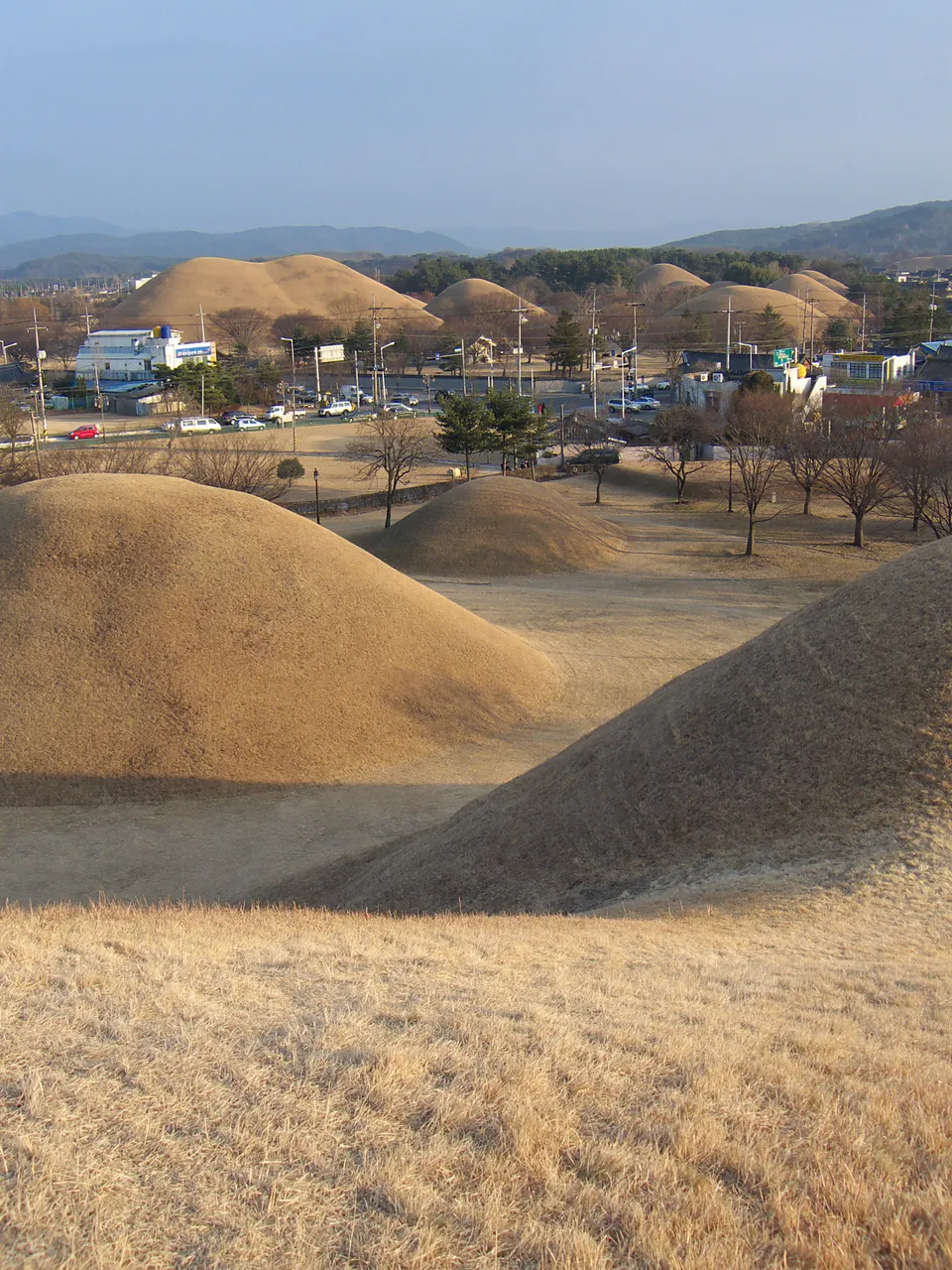
Silla’s capital for a thousand years — tombs, pagodas, temples and bells from every age of Silla, and the birthplace of Donghak
| Era | Event | Details |
|---|---|---|
| Silla | Founding of Silla (Seorabeol) | Bak Hyeokgeose; grew from Saro |
| Silla | Hwangnam Daechong | Stone-mound wooden-chamber tomb; gold crown |
| Silla | Cheonmachong | Heavenly Horse painting on a saddle flap |
| Silla, Beopheung | Ichadon’s martyrdom; Buddhism adopted | Adopted over nobles’ opposition |
| Silla, Seondeok | Cheomseongdae | One of Asia’s oldest observatories |
| Silla, Seondeok | Bunhwangsa pagoda | Stone cut to look like brick |
| Silla, Seondeok | Hwangnyongsa 9-story pagoda | Urged by Jajang; burned by Mongols |
| Unified Silla, Sinmun | Gameunsa; tomb of Munmu | Legend of the Manpasikjeok flute |
| Unified Silla | Tomb of Kim Yu-sin | Zodiac figures on the curb stones |
| Unified Silla, Gyeongdeok | Bulguksa and Seokguram | Built by Kim Dae-seong; Dabotap, Seokgatap |
| Unified Silla | Great Dharani Sutra | Found in Seokgatap; oldest extant woodblock print |
| Unified Silla, Hyegong | Divine Bell of King Seongdeok | The Emille bell legend |
| Later Three Kingdoms | Gyeon Hwon sacks Gyeongju | King Gyeongae killed at Poseokjeong |
| Later Three Kingdoms | King Gyeongsun submits | End of Silla; made sasimgwan of Gyeongju |
| Joseon, Cheoljong | Choe Je-u founds Donghak | Yongdamjeong; "Heaven within man" |
Bak Hyeokgeose was chosen king by the six villages of Seorabeol, founding the state of Saro in Jinhan.
Silla’s largest tomb, a double stone-mound wooden-chamber tomb. The northern mound held a gold crown, the southern one glass vessels from the West.
A Silla stone-mound wooden-chamber tomb excavated in 1973. It yielded a gold crown and the Heavenly Horse painting on a birch-bark saddle flap.
When the nobles resisted Buddhism, Ichadon gave his life for it, and King Beopheung recognized Buddhism as a result.
In the reign of Queen Seondeok, the stone observatory Cheomseongdae was built in Gyeongju.
Built with Bunhwangsa in 634 under Queen Seondeok. Its stones are cut and stacked like bricks, and it is the oldest surviving Silla stone pagoda.
On the monk Jajang’s advice, Queen Seondeok built a nine-storey wooden pagoda some 80 m tall at Hwangnyongsa, raised by the Baekje master builder Abiji.
King Sinmun completed Gameunsa, begun by his father Munmu; the legend of the Manpasikjeok, a flute received from the dragon of the East Sea, dates from this time.
A Unified Silla tomb said to be Kim Yu-sin’s. Its retaining stones are carved with the twelve zodiac guardians in civilian dress holding weapons.
Kim Dae-seong, chief minister under King Gyeongdeok, began Bulguksa and the Seokguram grotto on Mount Toham — the summit of unified Silla’s Buddhist art.
A sutra scroll found inside the Seokgatap pagoda of Bulguksa, counted among the oldest surviving woodblock prints in the world.
King Hyegong completed the great bell begun by Gyeongdeok in memory of his father Seongdeok; it is also known as the Emille Bell.
After Gyeon Hwon sacked Gyeongju and drove King Gyeongae to his death, Wang Geon marched to Silla’s aid but was routed by Later Baekje at Dongsu on Mount Gongsan; Sin Sung-gyeom died in his place.
Silla’s last king, Gyeongsun, after consulting his court, surrendered his kingdom to Goryeo, ending 992 years of Silla.
Choe Je-u founded Donghak (“Eastern Learning”) at Yongdamjeong near Gyeongju; its teaching that every person embodies heaven spread fast among peasants.
Twenty-seventh ruler and Silla's first queen, under whom Cheomseongdae and the nine-storey pagoda of Hwangnyongsa were built
35th king of Silla, who sinicized official titles and place names but restored the nogeup stipend villages; Bulguksa and Seokguram were begun in his reign
Songak magnate who served Gung Ye, took Naju, overthrew Gung Ye to found Goryeo in 918 and reunified the Later Three Kingdoms in 935–936
Last king of Silla, who surrendered the kingdom to Goryeo in 935 and was made sasimgwan of Gyeongju
Twenty-third king of Silla, who issued a law code, recognized Buddhism and annexed Geumgwan Gaya
Silla monk who, back from Tang, urged Queen Seondeok to build the nine-storey pagoda of Hwangnyongsa
Munmu's son and 31st king of Silla, who crushed Kim Heum-dol's revolt and strengthened royal power through the National Academy, the nine provinces and office-land grants
Thirtieth king of Silla, who destroyed Goguryeo, expelled Tang and completed unification
Silla general of Geumgwan Gaya royal descent who defeated Gyebaek and led the unification wars
Chief minister under King Gyeongdeok who, according to the Samguk yusa, began Bulguksa and Seokguram