Culture634

Brick-imitating Stone Pagoda of Bunhwangsa, Gyeongju

Also called: Bunhwangsa Mojeon Seoktap

Built with Bunhwangsa in 634 under Queen Seondeok. Its stones are cut and stacked like bricks, and it is the oldest surviving Silla stone pagoda.
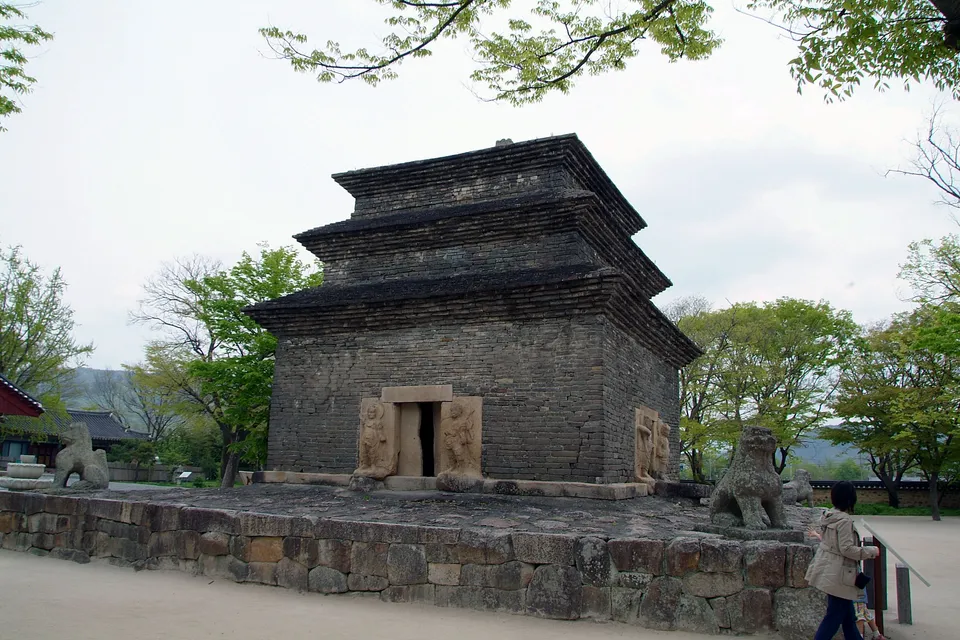
Brick-imitating stone pagoda of Bunhwangsa, Gyeongju — Silla stone cut into brick shapes

Black207 · CC BY-SA 4.0 · Source

It is thought to have been built when Bunhwangsa was founded in 634, the 3rd year of Queen Seondeok. Andesite was cut into small brick-like blocks and stacked, hence the name mojeon seoktap, a "stone pagoda imitating brick". It renders the Chinese brick pagoda in stone and is the oldest Silla stone pagoda still standing.

Only three stories remain, but it was once taller (some say seven stories, others nine). Each face of the ground story has a niche door flanked by carved guardian kings, and stone lions sit at the corners of the base. It is a National Treasure. Exams contrast it with Baekje’s Mireuksa pagoda: Korean stone pagodas began by copying timber pagodas in Baekje and brick pagodas in Silla.

The map in AD 634

OpenFreeMap © OpenMapTiles © OpenStreetMap contributors

States at the time
Silla
Places
Bunhwangsa Temple, Gyeongju

People

  • Queen SeondeokAD 647

    monarch · Twenty-seventh ruler and Silla's first queen, under whom Cheomseongdae and the nine-storey pagoda of Hwangnyongsa were built

Before and after

Earlier
AD 633 Cheomseongdae Built

Themes that include this event

  • Changes in PagodasAD 634 – 1467

    From Baekje stone pagodas copying timber ones and Silla pagodas copying brick ones, to Unified Silla three-story pagodas and stupas, Goryeo multi-sided pagodas and Yuan-influenced marble towers

  • Gyeongju57 BC – 1860

    Silla’s capital for a thousand years — tombs, pagodas, temples and bells from every age of Silla, and the birthplace of Donghak