Culture645

Nine-Storey Pagoda of Hwangnyongsa

On the monk Jajang’s advice, Queen Seondeok built a nine-storey wooden pagoda some 80 m tall at Hwangnyongsa, raised by the Baekje master builder Abiji.
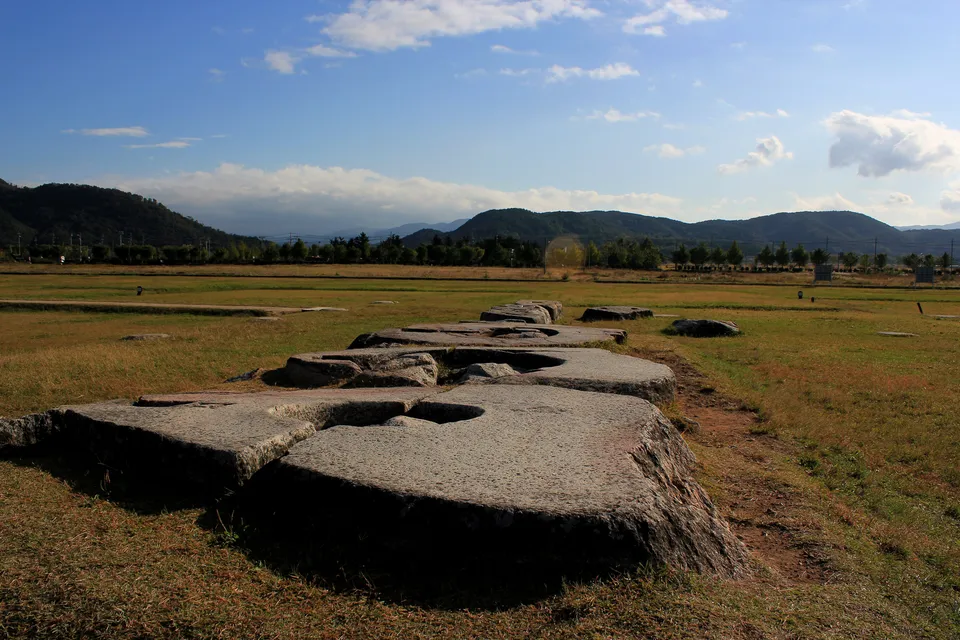
Hwangnyongsa temple site, Gyeongju — foundation stones where the nine-story wooden pagoda stood

Ronnie Dayo · CC BY-SA 4.0 · Source

The Samguk yusa says Jajang, while studying in Tang, was told that a nine-storey pagoda at Hwangnyongsa would make the neighbouring countries submit, and proposed it on his return. Queen Seondeok sent treasure to Baekje to engage the master builder Abiji. The nine storeys were said to stand for nine peoples Silla hoped to subdue.

With the temple’s great Buddha statue and King Jinpyeong’s jade belt it was counted among Silla’s Three Treasures. It burned in the Mongol invasion of 1238; only the central foundation stone and the site remain.

The map in AD 645

OpenFreeMap © OpenMapTiles © OpenStreetMap contributors

States and rulers at the time
Silla — Queen Seondeok
Places
Hwangnyongsa Temple Site

People

  • Queen SeondeokAD 647

    monarch · Twenty-seventh ruler and Silla's first queen, under whom Cheomseongdae and the nine-storey pagoda of Hwangnyongsa were built

  • Jajang

    related figure · Silla monk who, back from Tang, urged Queen Seondeok to build the nine-storey pagoda of Hwangnyongsa

Before and after

Themes that include this event

  • Changes in PagodasAD 634 – 1467

    From Baekje stone pagodas copying timber ones and Silla pagodas copying brick ones, to Unified Silla three-story pagodas and stupas, Goryeo multi-sided pagodas and Yuan-influenced marble towers

  • Gyeongju57 BC – 1860

    Silla’s capital for a thousand years — tombs, pagodas, temples and bells from every age of Silla, and the birthplace of Donghak