Founding of Silla
Also called: Hyeokgeose myth
Bak Hyeokgeose was chosen king by the six villages of Seorabeol, founding the state of Saro in Jinhan.
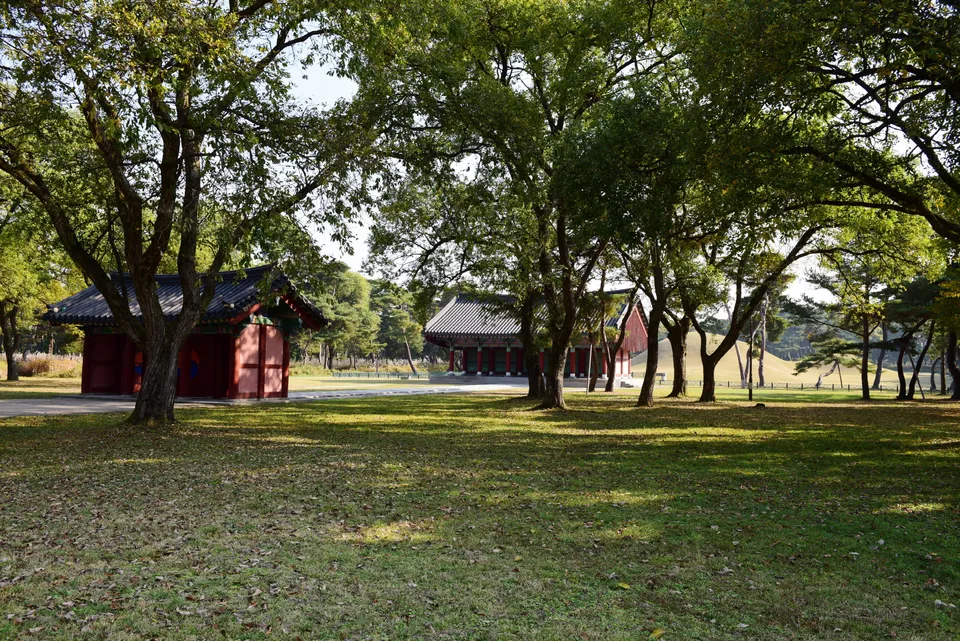
Korea Heritage Service · CC BY-SA 4.0 · Source
The Samguk sagi dates Silla’s founding to 57 BCE and records its founding story. Sobeol-gong, chief of Goheo village, saw a horse kneeling and crying in the woods beside the Najeong well at the foot of Mount Yang. When he went to look, the horse was gone and only a large egg remained; from it came a boy. Sobeol-gong raised him; the six villages, holding his birth to be miraculous, made him king at thirteen, and because the egg looked like a gourd (bak) he took the surname Bak. His queen, Aryeong, was said to have been born from the side of a dragon that appeared at the Aryeong well.
A founder born from an egg sent from heaven is read as newcomers joining the native chiefs of the six villages to found the state. The Samguk yusa explains the name Hyeokgeose as "ruling the world with bright light".
The throne at first passed among the Bak, Seok and Kim clans, and rulers bore titles such as geoseogan, chachaung and isageum (said to mean "elder with many teeth").
Though traditionally the earliest of the Three Kingdoms, Silla sat in the far southeast and was the last to become a centralized state.