Person1543 – 1616

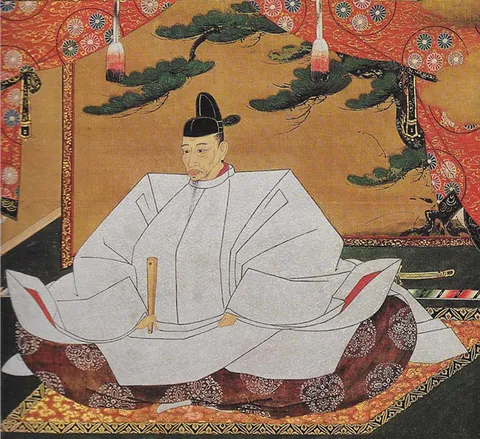
Tokugawa Ieyasu

Founder of the Edo shogunate, who won at Sekigahara in 1600, became shogun in 1603 and destroyed the Toyotomi house in 1615

Born into the Matsudaira, minor lords of Okazaki in Mikawa, he spent his childhood as a hostage of the Oda and Imagawa. Independent after Okehazama, he allied with Oda Nobunaga, and in 1590 Hideyoshi moved him to the Kantō, where he made Edo his base. During the invasion of Korea he went as far as Nagoya in Kyushu but never crossed the sea. After handing the shogunate to his son in 1605 he kept real power from Sunpu (today’s Shizuoka), where he died in 1616; he was enshrined as a deity at the Tōshōgū in Nikkō.
Where they went

OpenFreeMap © OpenMapTiles © OpenStreetMap contributors

7 related events

  1. 1
    1560Battle of Okehazamaparticipant

    Oda Nobunaga of Owari fell on the invading army of Imagawa Yoshimoto at Okehazama and killed Yoshimoto. The victory made Nobunaga’s name and let Tokugawa Ieyasu, until then bound to the Imagawa, strike out on his own.

  2. 2
    1575Battle of Nagashinocommander

    The allied army of Oda Nobunaga and Tokugawa Ieyasu crushed Takeda Katsuyori, who was besieging Nagashino Castle, with muskets and palisades at Shitaragahara. The Takeda lost many famous generals and went into decline.

  3. 3

    Hashiba (Toyotomi) Hideyoshi fought the allied forces of Nobunaga’s son Oda Nobukatsu and Tokugawa Ieyasu across Owari. Ieyasu won at Nagakute, but when Nobukatsu made a separate peace, Hideyoshi came out politically on top.

  4. 4

    Toyotomi Hideyoshi surrounded the Hōjō stronghold of Odawara with an army said to exceed 200,000 and forced its surrender. The northern daimyo then submitted, and Japan was united under a single power for the first time in over 120 years since the Ōnin War.

  5. 5

    In 1600 Tokugawa Ieyasu defeated Ishida Mitsunari’s Western Army at Sekigahara, and in 1603 he became shogun and established his government at Edo. The Edo shogunate lasted some 260 years, until 1867.

  6. 6
    1614 – 1615Siege of Osakacommander

    In two campaigns, winter and summer, Tokugawa Ieyasu attacked Osaka Castle and destroyed the Toyotomi. The great wars that had run since the Sengoku age ended — the “Genna peace” (Genna enbu), when weapons were laid down.

  7. 7

    The Edo shogunate built the bakuhan system, in which the shogun’s government (bakufu) and the daimyo domains (han) shared rule over land and people, and bound the daimyo with the Laws for Military Houses (1615) and alternate attendance (1635).

People who appear alongside

  • Oda Nobunaga1534 – 1582

    Sengoku-era daimyo who ended the Muromachi shogunate in 1573 and won at Nagashino with massed musketeers, opening the way to unification before his death in the Honnōji Incident

  • Toyotomi Hideyoshi1537 – 1598

    Unified Japan and launched the invasion of Korea

  • Imagawa Yoshimoto1519 – 1560

    Sengoku daimyo of Suruga, Tōtōmi and Mikawa who invaded Owari with a large army in 1560 and was killed in Oda Nobunaga’s surprise attack at Okehazama

  • Takeda Katsuyori1546 – 1582

    Son of Takeda Shingen and last head of the Takeda, crushed by the Oda–Tokugawa army at Nagashino in 1575; hunted down by Oda forces, he took his own life at Tenmokuzan in 1582

  • Hōjō Ujimasa1538 – 1590

    Fourth head of the Later Hōjō, who kept real power after yielding the headship to his son Ujinao and was made to commit suicide when Odawara Castle surrendered in 1590

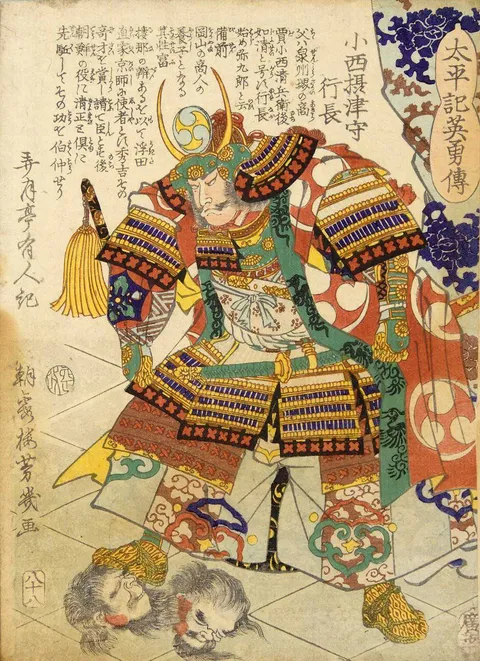
  • Konishi Yukinaga1558 – 1600

    Led the first Japanese division from the Busan landing up to Pyongyang

  • Toyotomi Hideyori1593 – 1615

    Son and heir of Toyotomi Hideyoshi, who held Osaka Castle until it fell in the Osaka campaign of 1615, when he took his own life with his mother Yodo-dono

  • Tokugawa Iemitsu1604 – 1651

    Third Tokugawa shogun (r. 1623–1651), who institutionalised alternate attendance and completed the ban on Christianity and the closed-country system

Themes this person appears in

  • Ming, Qing and Edo Japan1500 – 1800

    The age when the Ming, shaken by northern raiders, southern pirates and the silver economy, fell to Li Zicheng’s rebels, and the Manchu Qing reached its greatest extent and prosperity under Kangxi, Yongzheng and Qianlong — as Japan was unified out of the Warring States into the Edo shogunate’s bakuhan order and closed country, and Joseon, after two great wars, met its neighbours through embassies to Edo and the Northern Learning

  • The Sengoku Period and the Unification of Japan1467 – 1615

    From the Ōnin War to the siege of Osaka — 150 years in which Nobunaga, Hideyoshi and Ieyasu united a Japan torn by warring daimyo