Turkish War of Independence
Also called: National Struggle, Greco-Turkish War (1919–1922)
When the Ottoman Empire, defeated in the First World War, faced partition by the Allies, Mustafa Kemal organized resistance from Ankara, drove out the Greek army and overturned the Treaty of Sèvres.
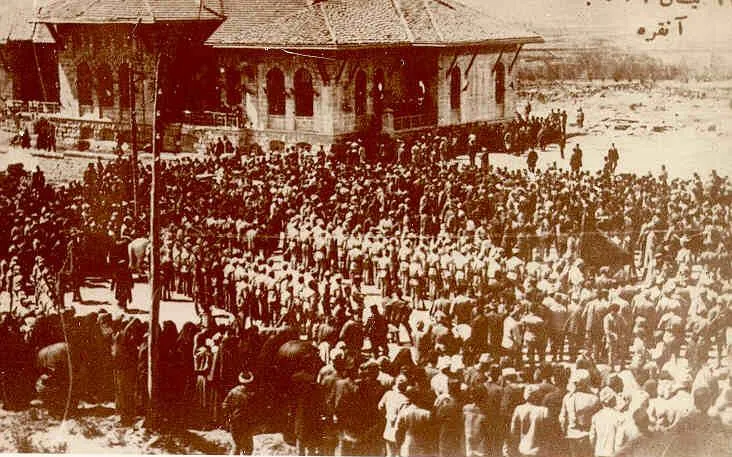
Image from www.arastiralim.net · CC BY-SA 3.0 · Source
After the 1918 armistice the defeated Ottoman Empire saw Istanbul occupied by the Allies, and on 15 May 1919 Greek troops landed at İzmir. Four days later Mustafa Kemal came ashore at Samsun on the Black Sea, rallied resistance groups across Anatolia, proclaimed in the National Pact that lands inhabited by Turks were indivisible, and on 23 April 1920 opened the Grand National Assembly in Ankara. In August 1920 the sultan’s government signed the Treaty of Sèvres, which would have carved much of Anatolia into Greek, Armenian and Kurdish areas and great-power spheres.
The Ankara government rejected the treaty and fought on. Having secured its eastern border through an understanding with Soviet Russia, in 1921 it halted the Greek advance at the Battle of the Sakarya. The Great Offensive of August 1922 broke the Greek army, and İzmir was retaken in September. The fighting brought tragedies such as massacres of civilians on both sides and the great fire of İzmir (Smyrna). The Armistice of Mudanya followed in October, and in November the assembly abolished the sultanate, ending the Ottoman Empire after more than six centuries.
Victory let Turkey overturn Sèvres at Lausanne in 1923, winning recognition of its present borders, and found a republic that year. It was almost the only case of a defeated power of the First World War revising its peace treaty by force, and it inspired other national movements in Asia.