Treaty of Lausanne
Peace treaty between Turkey and the Allies signed at Lausanne, Switzerland. Replacing the Treaty of Sèvres, it fixed the borders of modern Turkey and abolished the unequal privileges known as the capitulations.
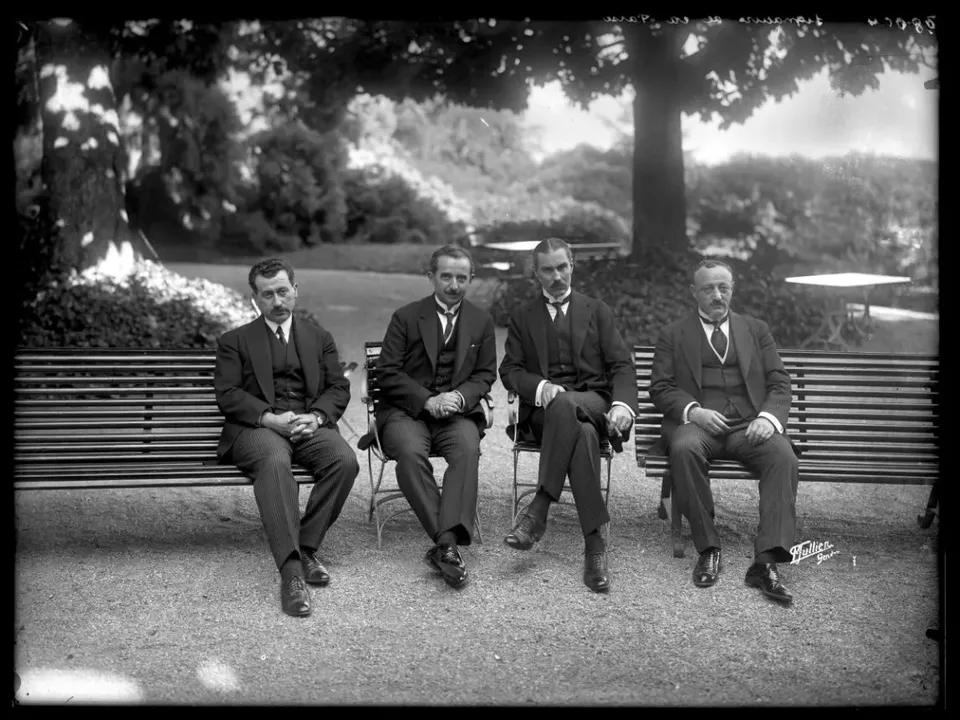
Frank-Henri Jullien · Public domain · Source
Victorious in the war of independence, the Ankara government sent İsmet Pasha to negotiate with Britain, France, Italy, Greece and others from November 1922, and the treaty was signed on 24 July 1923. Anatolia and Eastern Thrace were recognized as Turkish, and the capitulations that had given foreigners extraterritorial rights were abolished. The Straits were demilitarized under an international commission (Turkey regained control by the Montreux Convention of 1936).
Before the treaty Greece and Turkey had agreed on an exchange of populations, forcing more than a million Orthodox Christians in Turkey and some 400,000 Muslims in Greece to leave their homes. The Armenian and Kurdish states promised at Sèvres vanished. Lausanne was almost the only peace settlement of the First World War that a defeated power negotiated on equal terms.