Armenian Genocide
Also called: Armenian Massacres, Meds Yeghern
During the war the Ottoman government deported the Armenians to the Syrian desert; through massacres and death marches several hundred thousand to over a million people died.
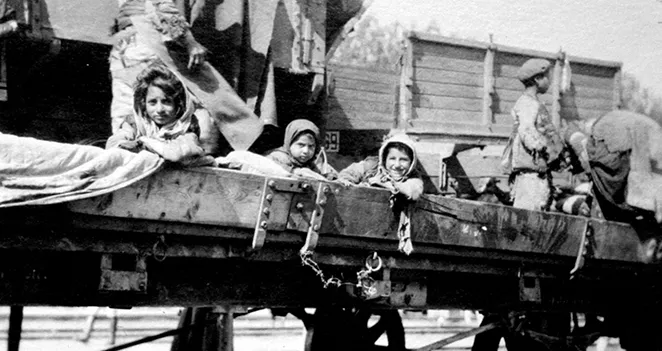
Armenian Genocide Museum · Public domain · Source
After defeats on the eastern front against Russia, the Young Turk government of the Ottoman Empire suspected the Christian Armenians of siding with Russia. Beginning with the arrest of several hundred Armenian intellectuals and community leaders in Istanbul on 24 April 1915, it deported Armenians from across Anatolia to the Syrian desert, to places such as Deir ez-Zor.
Men were often separated and killed, while women, children and the elderly were marched into the desert without food, and many died of hunger, disease and attacks along the way. Estimates of the dead range from about 600,000 to 1.5 million, with many scholars putting the figure at around one million. Assyrians and Greeks suffered similar violence.
Most scholars describe these events as genocide, and the governments or parliaments of many countries have recognized them as such. The Turkish government acknowledges that many people died during wartime relocations but rejects the characterization of a planned genocide. The events later influenced the coining of the word “genocide” and debates on punishing it under international law.