Cultural heritage2000 BC – 137412 events

Changes in Tombs

From dolmens to the tomb of King Gongmin — stone-mound, stone-mound wooden-chamber, stone-chamber and brick tombs, and how burial changed by kingdom and age

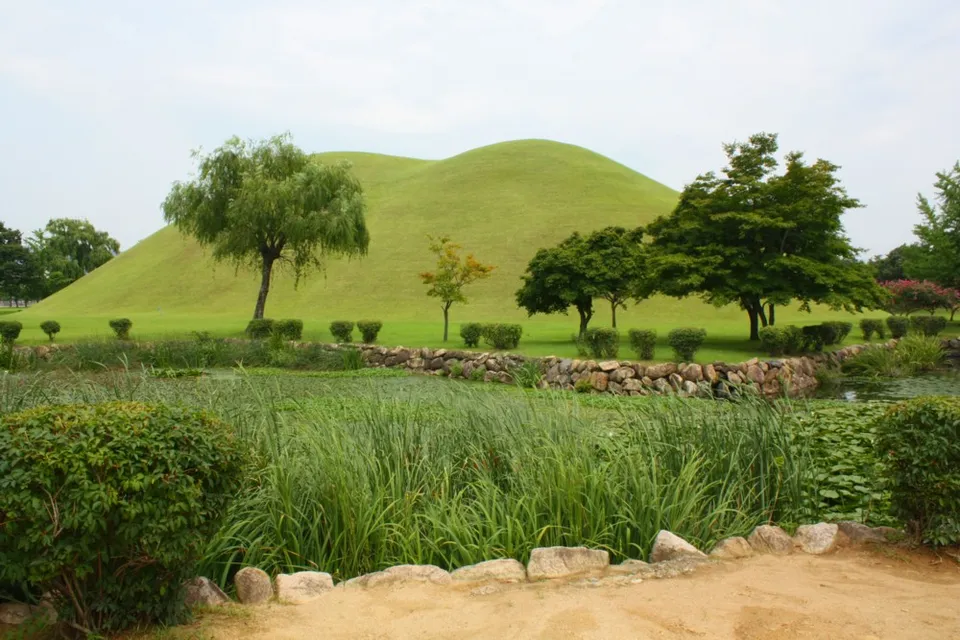
경주 대릉원의 황남대총 — 신라의 돌무지덧널무덤

J. Patrick Fischer · CC BY-SA 3.0 · Source

At a glance

TombPeriod · stateTypeFeatures
DolmensBronze AgeTable / go-board typeElite graves, rise of classes; Ganghwa, Gochang, Hwasun on World Heritage list
Daeseong-dong tombs, GimhaeGeumgwan Gaya, 3rd–5th c.Wooden-chamber pit tombIron ingots, armour, northern and Wa goods; Gaya Tumuli WHS
Seokchon-dong tombs, SeoulHanseong Baekje, 3rd–4th c.Stepped stone-mound tombSame as Goguryeo → founders of Goguryeo stock
General’s TombGoguryeo, c. 5th c. (Ji’an)Stepped stone-mound tombSeven granite tiers; held to be King Jangsu’s
Hwangnam DaechongSilla, 5th c.Stone-mound wooden-chamber (twin)Largest in Silla; gold crown, Western glass
CheonmachongSilla, late 5th – early 6th c.Stone-mound wooden-chamberHeavenly Horse saddle flap, gold crown; hard to rob, no murals
Jisan-dong tombs, GoryeongDaegaya, 5th–6th c.Pit-style stone-cist tombSacrificial burial in No. 44; gilt-bronze crown
Tomb of King MuryeongBaekje (Ungjin), 525Brick tombLiang influence; epitaph names the owner
Gangseo Great TombGoguryeo, late 6th – early 7th c.Stone-chamber tomb with passageFour Guardians murals; easily robbed
Tomb of Kim Yu-sinUnified SillaStone-chamber tomb (earth mound)Zodiac retaining stones → Gwaereung, Joseon royal tombs
Tombs of Princesses Jeonghye and JeonghyoBalhae, 780 · 792Stone chamber (corbelled lantern ceiling) · brickJeonghye in Goguryeo style, Jeonghyo in Tang style
Tombs of King GongminGoryeo, 1365–1374 (Kaesong)Twin royal tombsZodiac stones, civil and military statues → model for Joseon

The theme on the map

OpenFreeMap © OpenMapTiles © OpenStreetMap contributors

12 events in this theme

  1. Bronze came into use around 2000–1500 BCE. Rice farming began, private property and classes emerged, and chieftains came to rule.

  2. Tombs of the Geumgwan Gaya elite. Their wooden-chamber burials held iron ingots, armour and goods from the northern steppe and Wa.

  3. Royal-scale tombs of Hanseong-period Baekje. Their stepped stone-mound tombs, like those of Goguryeo, show that Baekje’s founders came from Goguryeo stock.

  4. A stepped stone-mound tomb at Gungnae, the Goguryeo capital (Ji’an, Jilin). Built of seven tiers of dressed granite, it is widely held to be the tomb of King Jangsu.

  5. Silla’s largest tomb, a double stone-mound wooden-chamber tomb. The northern mound held a gold crown, the southern one glass vessels from the West.

  6. A Silla stone-mound wooden-chamber tomb excavated in 1973. It yielded a gold crown and the Heavenly Horse painting on a birch-bark saddle flap.

  7. Tombs of the kings and elite of Daegaya. Tomb No. 44 is a sacrificial burial holding dozens of people.

  8. King Muryeong, who died in 523, was buried in a brick tomb at Songsan-ri, Gongju, in 525; it was found intact in 1971.

  9. A late Goguryeo stone-chamber tomb with a passage, its four walls painted with the Four Guardian Deities.

  10. A Unified Silla tomb said to be Kim Yu-sin’s. Its retaining stones are carved with the twelve zodiac guardians in civilian dress holding weapons.

  11. Tombs of King Mun’s daughters Jeonghye (buried 780) and Jeonghyo (buried 792), which show Goguryeo and Tang culture side by side.

  12. Twin tombs of King Gongmin and Princess Noguk. Gongmin himself built his queen’s tomb, and its zodiac retaining stones and civil and military statues became the model for Joseon royal tombs.

Key people

  • King JangsuAD 394 – AD 491

    Twentieth king of Goguryeo, who moved the capital to Pyongyang and took the Han River basin

  • King MuryeongAD 462 – AD 523

    Twenty-fifth king of Baekje, who sent royal kin to the 22 damno districts and revived the kingdom

  • Kim Yu-sinAD 595 – AD 673

    Silla general of Geumgwan Gaya royal descent who defeated Gyebaek and led the unification wars

  • Princess JeonghyeAD 737 – AD 777

    King Mun's second daughter, buried in a stone-chamber tomb in the Liudingshan cemetery

  • Princess JeonghyoAD 757 – AD 792

    King Mun's fourth daughter, buried in a brick tomb with figure murals in the Longtoushan cemetery

  • King Mun (Dae Heum-mu)AD 793

    Balhae's third king, who used the era name Daeheung, made peace with Tang, set up the Three Departments and Six Ministries, moved the capital to Sanggyeong and opened the Silla Road

  • King Gongmin1330 – 1374

    Thirty-first king of Goryeo, who led anti-Yuan reforms, recovered the Ssangseong Commandery and backed Sin Don’s reforms