Culture525

Tomb of King Muryeong

King Muryeong, who died in 523, was buried in a brick tomb at Songsan-ri, Gongju, in 525; it was found intact in 1971.
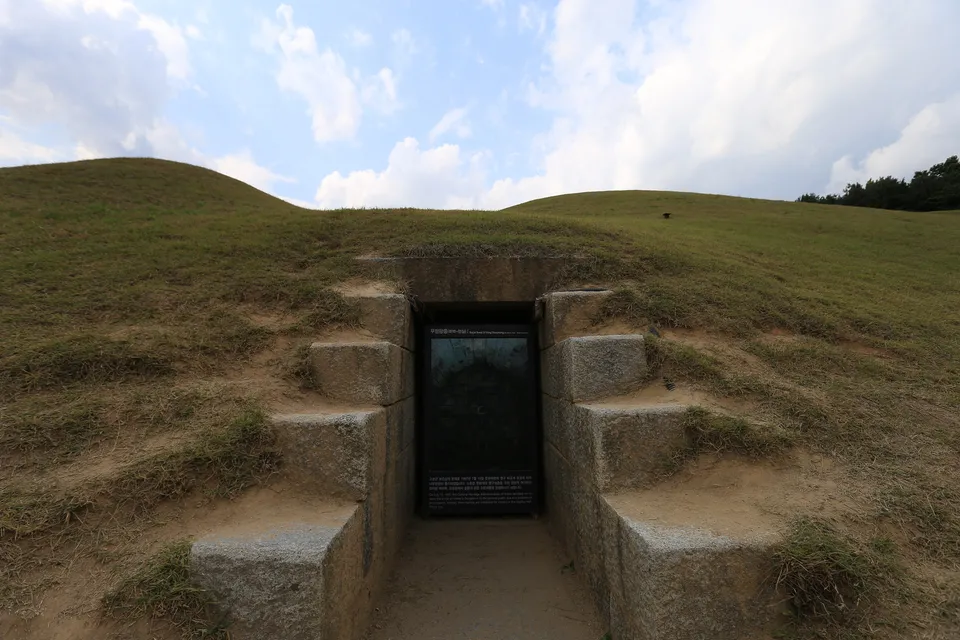
Entrance to the Tomb of King Muryeong, Songsan-ri tombs, Gongju

Paulsbgo · CC BY-SA 4.0 · Source

Built in the brick style of Liang China, it held epitaph stones naming its occupants — almost the only Three Kingdoms royal tomb whose owner is certain. The coffins were made of Japanese umbrella pine, found only in Japan.

Some 4,600 objects, including gold crown ornaments and a stone guardian beast, show Baekje’s close ties with southern China and Wa.

The map in AD 525

OpenFreeMap © OpenMapTiles © OpenStreetMap contributors

States and rulers at the time
Baekje — King Seong
Places
Tomb of King Muryeong

People

  • King MuryeongAD 462 – AD 523

    related figure · Twenty-fifth king of Baekje, who sent royal kin to the 22 damno districts and revived the kingdom

Before and after

Themes that include this event

  • Changes in Tombs2000 BC – 1374

    From dolmens to the tomb of King Gongmin — stone-mound, stone-mound wooden-chamber, stone-chamber and brick tombs, and how burial changed by kingdom and age

  • Crafts and MetalworkAD 346 – 1392

    From the Seven-Branched Sword to mother-of-pearl lacquer — Three Kingdoms crowns, censers and daggers, the great bell of Unified Silla, Goryeo silver inlay and najeon

  • GongjuAD 475 – 1894

    From Ungjin, Baekje’s second capital, to Ugeumchi — the town on the Geum River that became the heart of Chungcheong