Politics520

King Beopheung’s Law Code

King Beopheung issued a law code and set official robes by rank; he also created a Ministry of War and a chief minister and used the era name Geonwon.
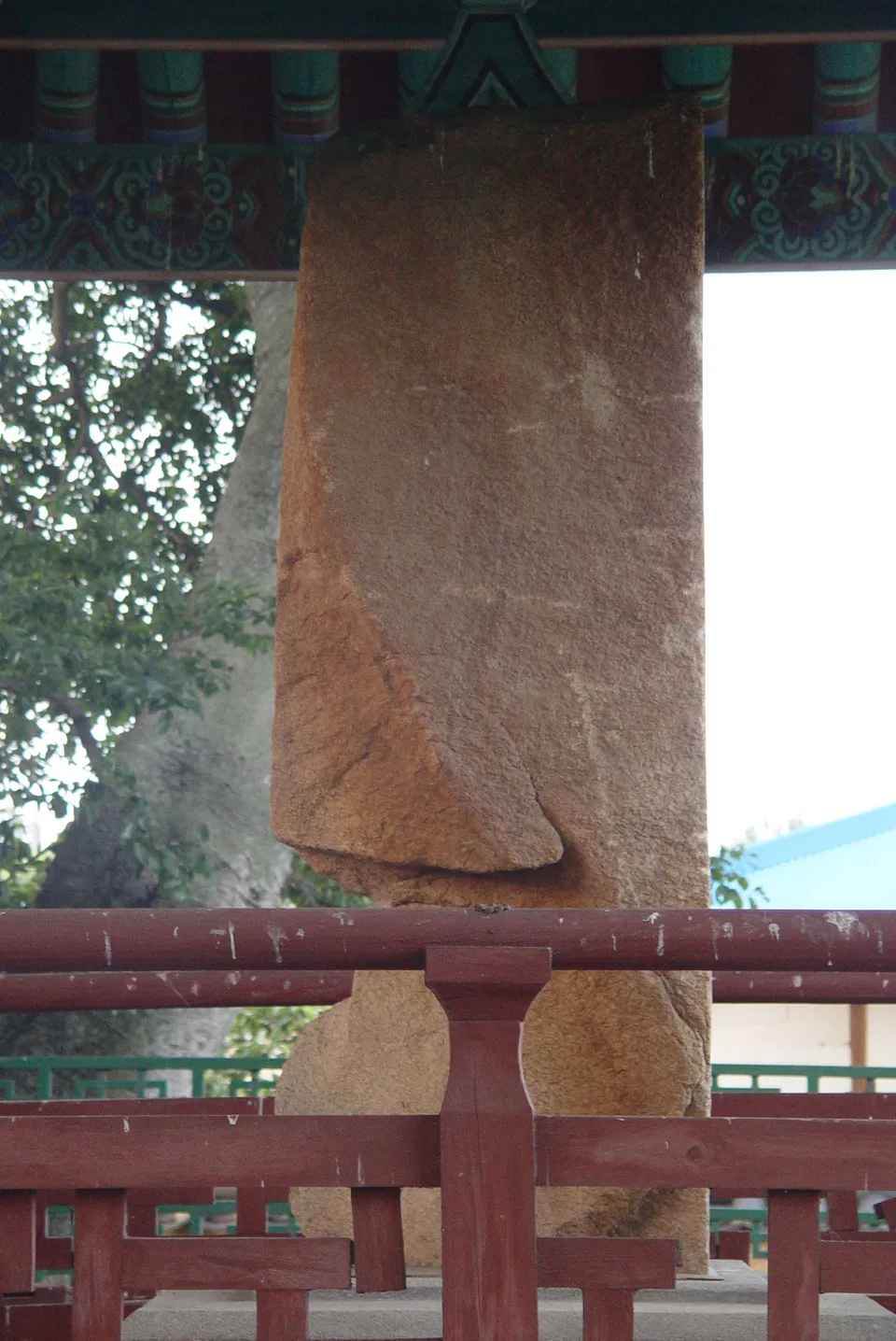
Uljin Bongpyeong-ri Silla Stele (524), from King Beopheung’s reign, recording punishments under the law code

Mansegmj · CC BY-SA 4.0 · Source

Beopheung set up the Ministry of War in 517, issued the code and robes for the seventeen ranks in 520, created the post of sangdaedeung to head the Hwabaek noble council in 531 and adopted Silla’s first era name, Geonwon, in 536. With Buddhism recognized in 527 and Geumgwan Gaya annexed in 532, Silla took shape as a centralized state.

The bone-rank system was organized around this time, fixing not only the highest office a person could hold but even the size of his house and the colour of his clothes.

The map in AD 520

OpenFreeMap © OpenMapTiles © OpenStreetMap contributors

States and rulers at the time
Silla — King Beopheung
Places
Seorabeol (Gyeongju)

People

  • King BeopheungAD 540

    monarch · Twenty-third king of Silla, who issued a law code, recognized Buddhism and annexed Geumgwan Gaya

Before and after

Themes that include this event

  • Central Government Through the AgesAD 250 – 1899

    From the noble councils of the Three Kingdoms to the State Council, the Border Defense Council and the Gabo cabinet — how central government shifted between aristocratic consensus and royal power