Cultural heritageAD 346 – 13928 events

Crafts and Metalwork

From the Seven-Branched Sword to mother-of-pearl lacquer — Three Kingdoms crowns, censers and daggers, the great bell of Unified Silla, Goryeo silver inlay and najeon
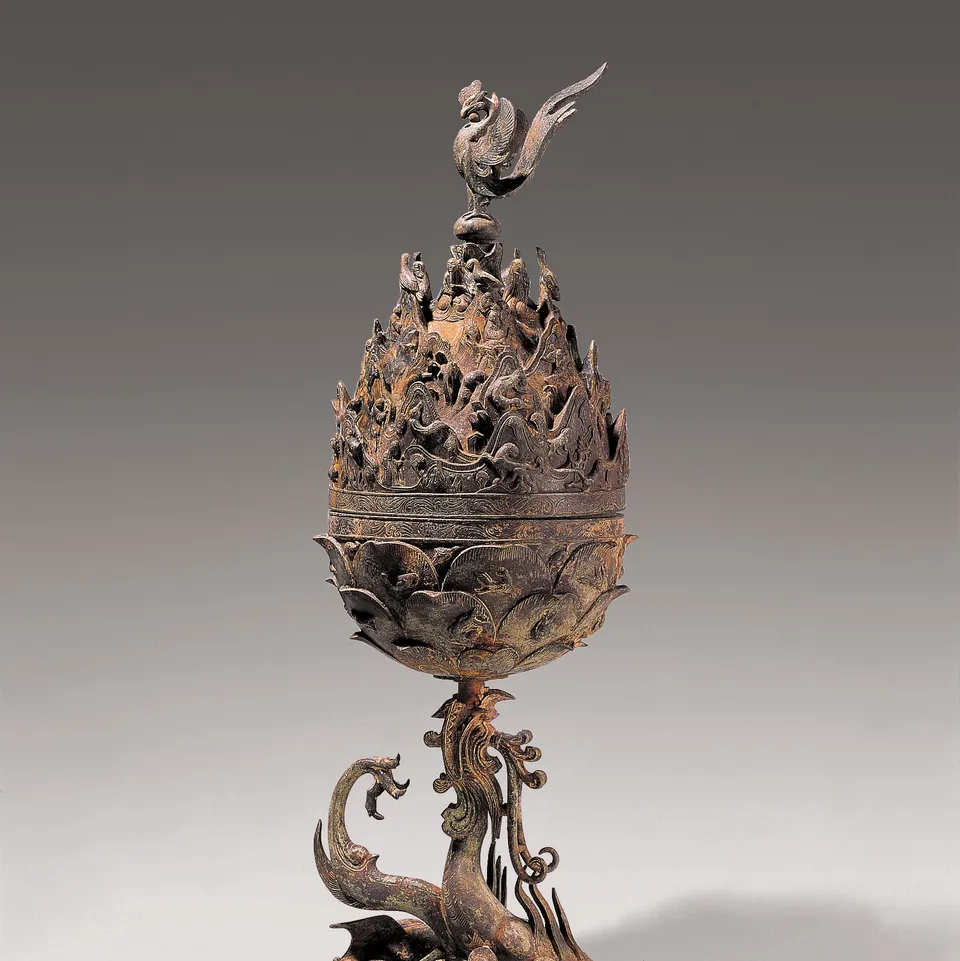
백제 금동 대향로 — 봉황과 신선의 산을 새긴 백제 금속 공예의 걸작

국립중앙박물관(National Museum of Korea) · CC BY-SA 4.0 · Source

At a glance

ObjectPeriod · kingdomFeatures
Seven-Branched SwordBaekje, 4th c. (Geunchogo)Seven-pronged iron sword sent to Wa; Isonokami Shrine, Japan
Silla gold crownsSilla, 5th–6th c.Tree- and antler-shaped uprights; jades and spangles
Gyerim-ro daggerSilla, 5th–6th c.Garnets in gold; contact with Western Asia
Gold crown ornaments, Tomb of King MuryeongBaekje, 525Flame-like gold ornaments; brick tomb in Southern Liang style
Gilt-bronze incense burnerBaekje, late 6th c. (Buyeo)Dragon base, phoenix top; Buddhist and Daoist worlds
Divine Bell of King SeongdeokUnified Silla, 771Flying celestials; sound tube; largest surviving Korean bell
Silver-inlaid bronze kundikaGoryeo, 12th c.Silver wire inlaid in bronze; waterside scene
Mother-of-pearl lacquer (sutra boxes, etc.)Goryeo, 12th–14th c.Shell and tortoiseshell inlaid in lacquer; praised by Xu Jing

The theme on the map

OpenFreeMap © OpenMapTiles © OpenStreetMap contributors

8 events in this theme

  1. King Geunchogo absorbed Mahan and attacked Goguryeo’s Pyongyang, opening Baekje’s golden age and trading by sea with Eastern Jin and Wa.

  2. Gold crowns from Silla’s stone-mound tombs, with tree-shaped (出-shaped) and antler-shaped uprights hung with curved jades and spangles.

  3. A gold-decorated dagger from a tomb on Gyerim-ro, Gyeongju — garnets set in gold in a Western Asian style, evidence of Silla’s contact with distant lands.

  4. King Muryeong, who died in 523, was buried in a brick tomb at Songsan-ri, Gongju, in 525; it was found intact in 1971.

  5. A Baekje censer found in 1993 at a temple site in Neungsan-ri, Buyeo — held up by a dragon and crowned by a phoenix, its lid carved with an immortals’ paradise.

  6. King Hyegong completed the great bell begun by Gyeongdeok in memory of his father Seongdeok; it is also known as the Emille Bell.

  7. A Goryeo bronze ritual ewer whose surface is cut and inlaid with silver wire to show a waterside of willows, reeds and waterfowl — the same principle as inlaid celadon.

  8. Lacquered ware inlaid with thin pieces of abalone and shell cut into patterns — so fine that a Song envoy singled it out for praise.

Key people

  • King GeunchogoAD 375

    Thirteenth king of Baekje, who absorbed Mahan and attacked Pyongyang in its golden age

  • Go Heung

    Baekje erudite under King Geunchogo who is said to have compiled the history Seogi

  • King MuryeongAD 462 – AD 523

    Twenty-fifth king of Baekje, who sent royal kin to the 22 damno districts and revived the kingdom

  • King HyegongAD 780

    36th king of Silla, enthroned at eight and killed amid aristocratic revolts, ending the direct line of King Muyeol

  • King GyeongdeokAD 765

    35th king of Silla, who sinicized official titles and place names but restored the nogeup stipend villages; Bulguksa and Seokguram were begun in his reign

  • King SeongdeokAD 737

    33rd king of Silla, who granted jeongjeon fields to commoners and restored relations with Tang