Silla Gold Crowns
Also called: Gold crown of Silla
Gold crowns from Silla’s stone-mound tombs, with tree-shaped (出-shaped) and antler-shaped uprights hung with curved jades and spangles.
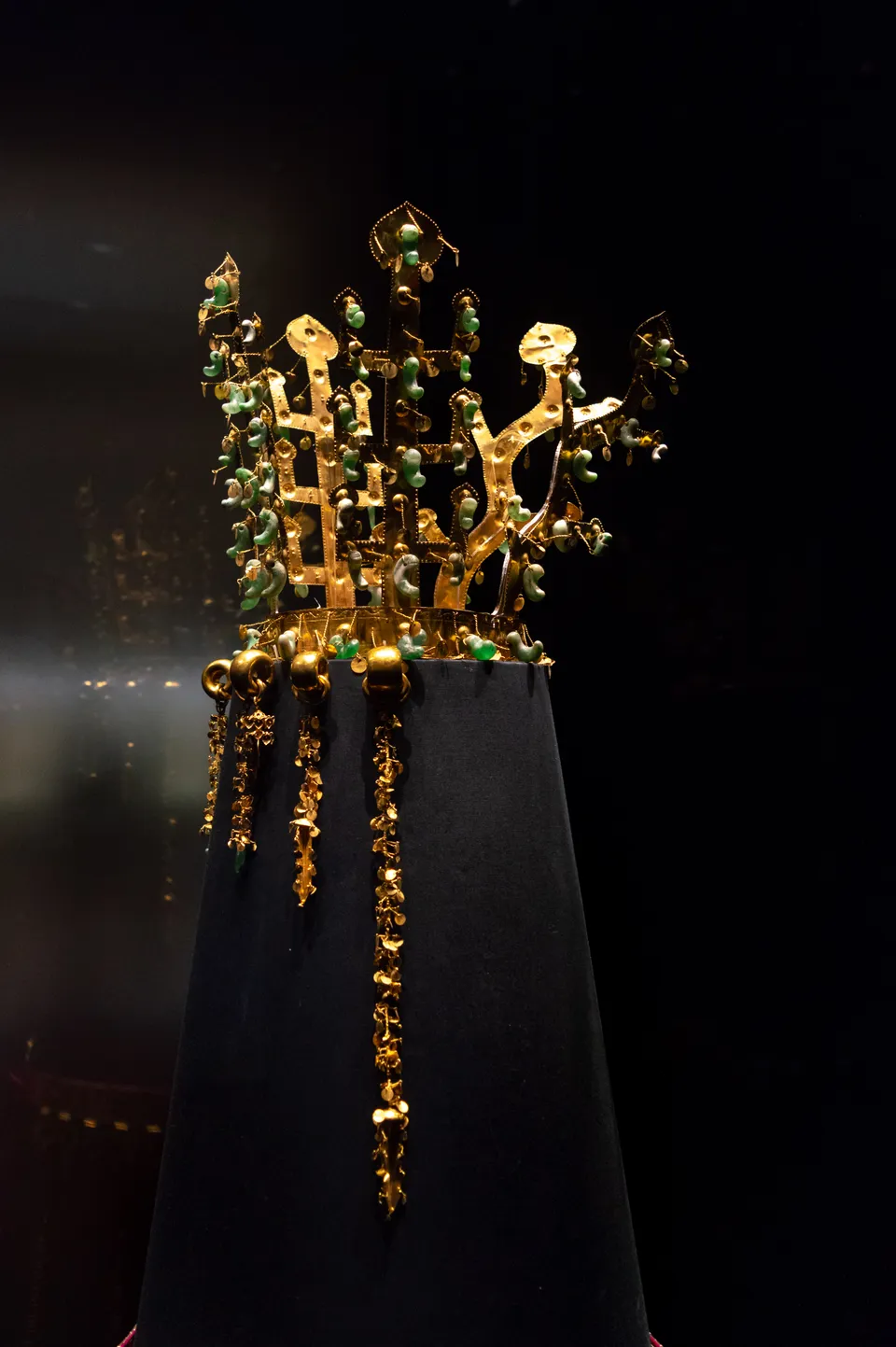
Tristan Surtel · CC BY-SA 4.0 · Source
Above a circular headband rise uprights shaped like the character 出 (stylised trees) and like antlers, densely hung with curved jades (gogok) and thin gold spangles that shimmer as they move. Many scholars link the tree and antler motifs to the shamanism of northern Eurasia.
The crowns come from Gyeongju’s stone-mound wooden-chamber tombs of the Maripgan period — Geumgwanchong, Geumnyeongchong, Seobongchong, the north mound of Hwangnam Daechong and Cheonmachong. Such tombs were hard to rob, so their grave goods survived. The crowns of Hwangnam Daechong (north mound), Cheonmachong and Geumgwanchong are National Treasures. Whether they were worn in life or made for burial is debated.