Culturelate 6th – early 7th century

Gangseo Great Tomb

Also called: Great Tomb of Gangseo

A late Goguryeo stone-chamber tomb with a passage, its four walls painted with the Four Guardian Deities.
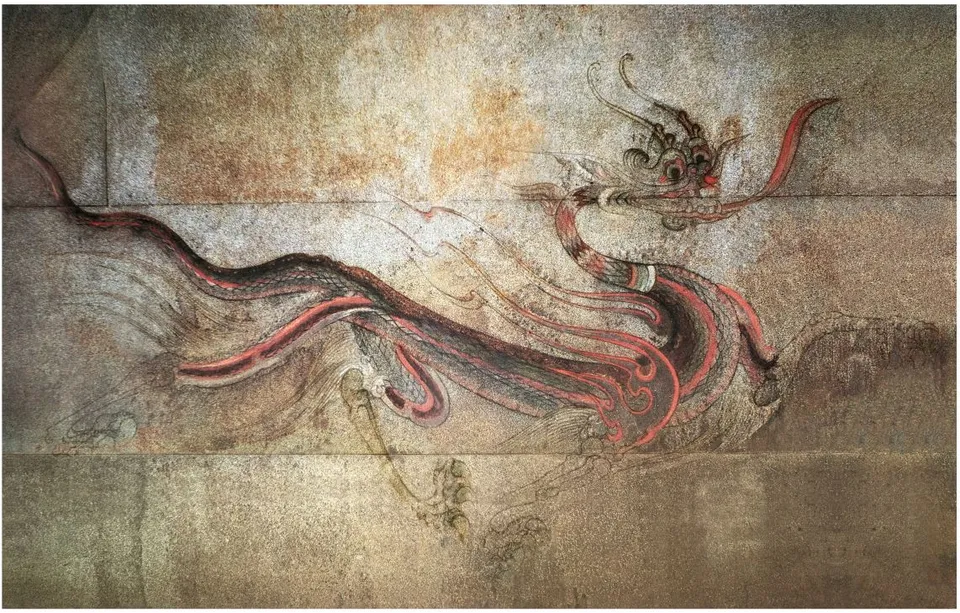
Blue Dragon on the east wall of the Gangseo Great Tomb — a late Goguryeo Four Guardians mural

Public domain · Source

The largest of the three tombs at Sammyo-ri, Gangseo, South Pyongan (now Gangseo District, Nampo). It is a stone-chamber tomb of large dressed stones covered with earth, entered through a passage.

Its four walls bear the Four Guardians: the Blue Dragon (east), White Tiger (west), Red Phoenix (south) and Black Tortoise (north). Early Goguryeo murals showed the life of the dead (dancing and hunting in Muyongchong, the procession in Anak Tomb No. 3); later ones, under Daoist influence, centred on these guardians of the directions, and the Gangseo Great Tomb’s are judged the finest.

With an entrance, stone-chamber tombs were easily robbed, and almost no grave goods remain. In 2004 it became part of the UNESCO World Heritage Site "Complex of Koguryo Tombs".

The map in AD 600

OpenFreeMap © OpenMapTiles © OpenStreetMap contributors

States and rulers at the time
Goguryeo — King Yeongyang

Before and after

Earlier
AD 598 Goguryeo–Sui Wars

Themes that include this event

  • Changes in Tombs2000 BC – 1374

    From dolmens to the tomb of King Gongmin — stone-mound, stone-mound wooden-chamber, stone-chamber and brick tombs, and how burial changed by kingdom and age

  • The Course of Korean PaintingAD 450 – 1897

    From Goguryeo tomb murals to Jang Seung-eop — daily life and guardian deities, Goryeo Buddhist painting, early Joseon landscapes, true-view landscapes and genre painting, literati and folk painting

  • Intangible and World Heritage2000 BC – 1850

    From the dolmens to Namhansanseong on the World Heritage List, from Jongmyo ritual music to ssireum on the Intangible Heritage lists — where each came from and when it was inscribed