Seokchon-dong Tombs, Seoul
Royal-scale tombs of Hanseong-period Baekje. Their stepped stone-mound tombs, like those of Goguryeo, show that Baekje’s founders came from Goguryeo stock.
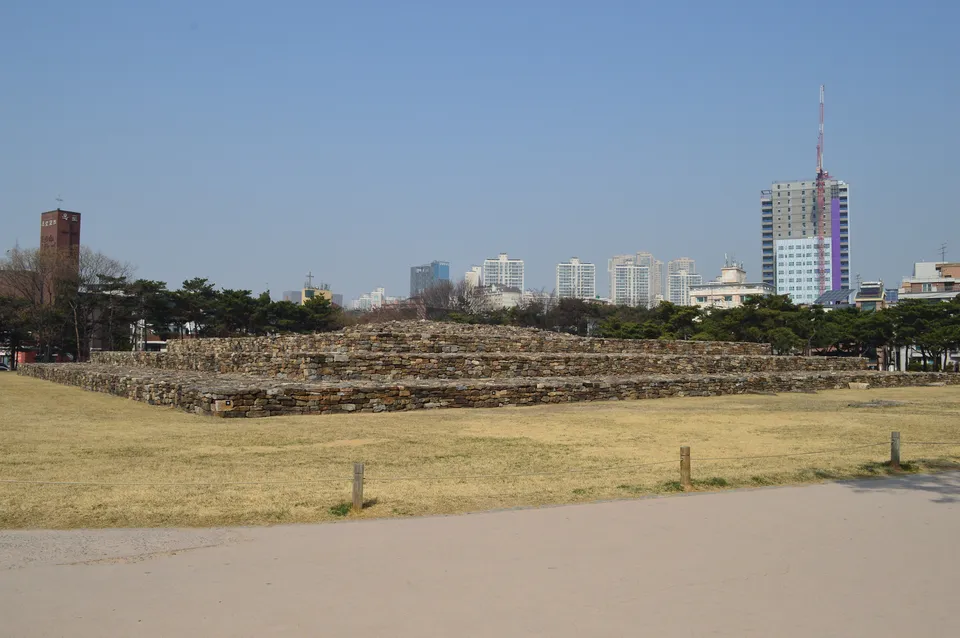
These Baekje tombs of the Hanseong period stand in Seokchon-dong, Songpa-gu, Seoul. The largest, Tomb No. 3, is a stepped stone-mound tomb built up in tiers, nearly 50 m on a side — the same style as early Goguryeo tombs on the Yalu (such as the General’s Tomb).
So the Seokchon-dong tombs back the founding story in which Onjo came south from Goguryeo: Baekje’s founders shared the Buyeo–Goguryeo lineage. Some see Tomb No. 3 as the tomb of King Geunchogo.
In the Ungjin period Baekje built stone-chamber tombs and brick tombs influenced by southern China (the Tomb of King Muryeong), and in the Sabi period small, refined stone-chamber tombs (the Neungsan-ri tombs in Buyeo).