General’s Tomb (Janggunchong), Ji’an
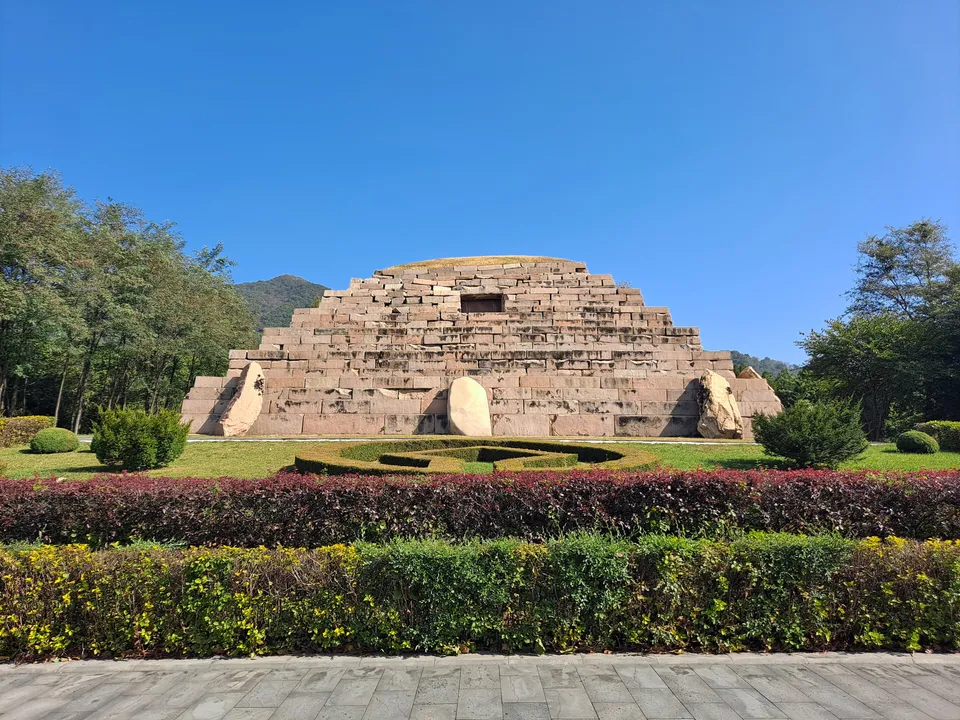
A stepped stone-mound tomb at Gungnae, the Goguryeo capital (Ji’an, Jilin). Built of seven tiers of dressed granite, it is widely held to be the tomb of King Jangsu.
EditQ · CC BY-SA 4.0 · Source
Dressed granite blocks are stacked in seven stepped tiers, about 31 m on a side and 13 m high. The burial chamber sits in the upper tiers, and large stones lean against the base to keep it from spreading. The best preserved of Goguryeo’s stone-mound tombs, it is called the "Pyramid of the East".
Most see it as the tomb of King Jangsu; some, of King Gwanggaeto. The Gwanggaeto Stele and the Taewang Tomb stand nearby. In 2004 it became part of the UNESCO World Heritage Site "Capital Cities and Tombs of the Ancient Koguryo Kingdom".
Goguryeo first built stone-mound tombs, then turned to earth-covered stone-chamber tombs with a passage, whose walls and ceilings were painted with murals (Muyongchong, Gangseo Great Tomb and others).