Hunting Scene, Muyongchong Tomb
Also called: Tomb of the Dancers hunting mural
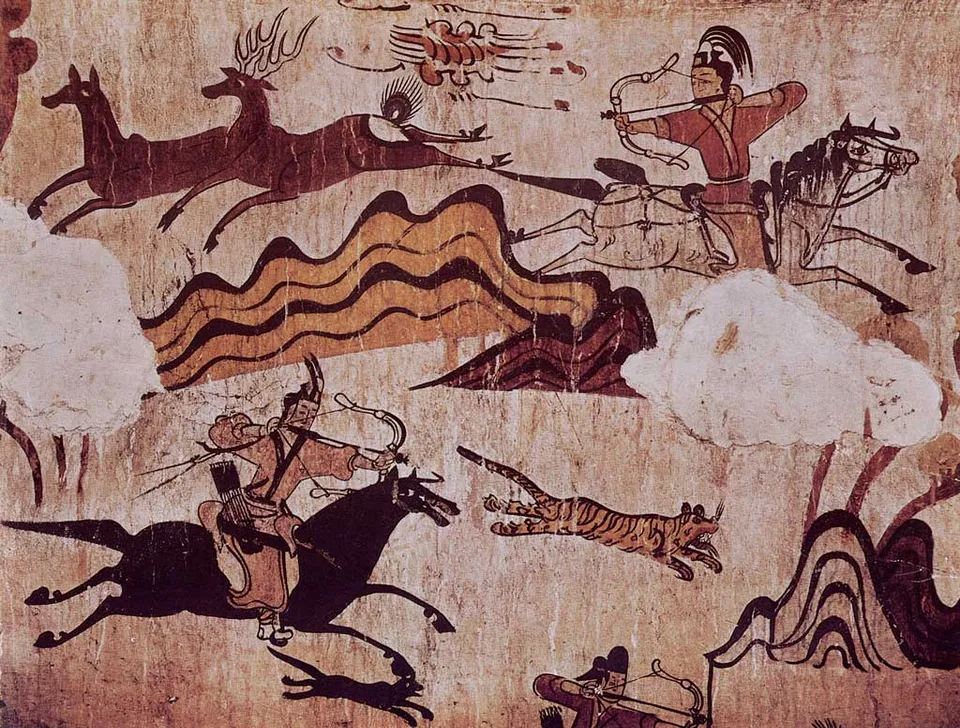
A mural in the Goguryeo Tomb of the Dancers: mounted warriors twist back to shoot at fleeing tigers and deer — an image of Goguryeo vigour.
Unknown author · Public domain · Source
Muyongchong (the Tomb of the Dancers) is a stone-chamber tomb with a passage near Gungnae, Goguryeo’s second capital (today’s Ji’an, Jilin, China). It is named after the dancing figures painted on its walls; stone-chamber tombs offered walls and ceilings that could be painted.
The hunting scene on the west wall shows riders turning in the saddle to shoot backwards (the “Parthian shot”) as tigers and deer flee, with mountains drawn as bold wavy bands. The lively, forceful style captures a people famed for riding and archery.
Early Goguryeo murals depicted the daily life of the tomb owner — hunting, dancing, receiving guests — while later ones, such as the Gangseo Great Tomb, centre on the Four Guardian Deities under Daoist influence. The Goguryeo sites around Ji’an became a UNESCO World Heritage Site in 2004.