Politics13 September 1971

Lin Biao Incident

Also called: September 13 Incident, Project 571, Criticize Lin, Criticize Confucius

On 13 September 1971 Lin Biao, Mao Zedong’s designated successor, fled China by air with his family; the plane crashed near Öndörkhaan in Mongolia, killing all on board. The Chinese government announced that he had fled after a coup plot was exposed, but much about the affair remains unclear.
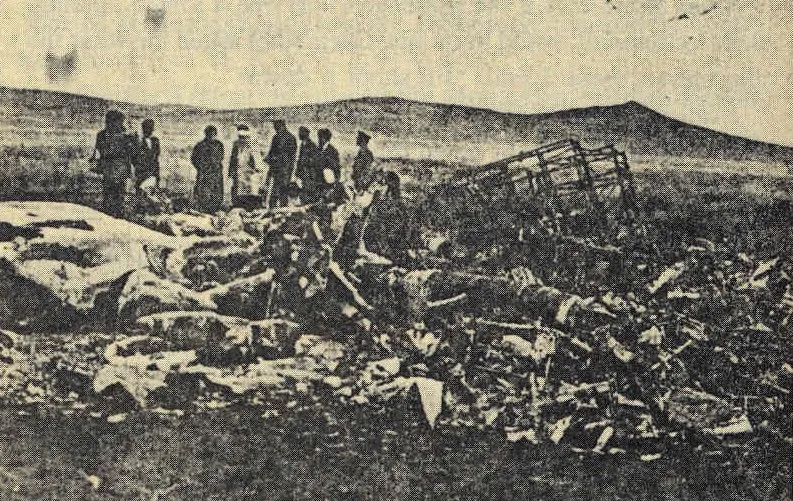
Wreckage of Lin Biao’s Trident airliner near Öndörkhaan, Mongolia — Mongolian photographer, September 1971

unknown Mongolian photographer · Public domain · Source

At the Ninth Party Congress in 1969 Lin Biao was written into the party constitution as Mao’s “close comrade-in-arms and successor”. But at the 1970 Lushan plenum he fell out with Mao over a proposal to revive the post of head of state, and Mao then criticised and curbed the generals around him. According to the Chinese government, Lin’s son Lin Liguo drafted a coup plan, the “Outline of Project 571”, and plotted to assassinate Mao.

On the night of 12 September 1971 Lin, staying at Beidaihe, boarded a Trident airliner at Shanhaiguan airport with his wife Ye Qun and Lin Liguo; it took off in the early hours of the 13th, flew north and crashed on the steppe north-east of Öndörkhaan in Mongolia, killing all nine aboard. The Chinese government said it had run out of fuel while attempting a forced landing. The affair was at first disclosed only within the party and was made public in 1972.

The flight and death of the designated successor badly damaged the legitimacy of the Cultural Revolution and left many disillusioned with it. Deng Xiaoping was rehabilitated in 1973, the year the “Criticise Lin, Criticise Confucius” campaign began.

The map in 1971

OpenFreeMap © OpenMapTiles © OpenStreetMap contributors

States and rulers at the time
People's Republic of China — Paramount leader Mao Zedong
Mongolia

People

  • Lin Biao1907 – 1971

    key figure · PLA marshal who led the Liaoshen and Pingjin campaigns and, as defence minister, spread the “Little Red Book”; named Mao’s successor in the 1969 party constitution, he died in a plane crash in Mongolia in 1971

  • Mao Zedong1893 – 1976

    related figure · Chairman of the Chinese Communist Party who won the civil war and founded the People’s Republic in 1949, and launched the Great Leap Forward and the Cultural Revolution

  • Zhou Enlai1898 – 1976

    related figure · First premier of the People’s Republic of China (1949–1976), long in charge of diplomacy, who arranged Nixon’s 1972 visit

Before and after

Earlier
1966 Red Guards

Themes that include this event

  • From the Chinese Civil War to the Cultural Revolution1927 – 1976

    From the collapse of the United Front in 1927, through rural bases, the Long March and Yan’an, to the Communists’ victory in the civil war and the founding of the People’s Republic — then land reform, the Great Leap Forward and famine, the Sino-Soviet split and the Cultural Revolution, up to Mao’s death and the arrest of the Gang of Four in 1976, while the Nationalist government withdrew to Taiwan