PoliticsOctober 1927 – October 1934

Jinggangshan and the Jiangxi Soviet

Also called: Chinese Soviet Republic, Jiangxi Soviet, Jinggangshan base, Autumn Harvest Uprising

After the failed Autumn Harvest Uprising, Mao Zedong built a rural base in the Jinggang Mountains in 1927, and on 7 November 1931 the Chinese Soviet Republic was proclaimed at Ruijin in Jiangxi. After five Nationalist encirclement campaigns the base was abandoned in 1934 at the start of the Long March.
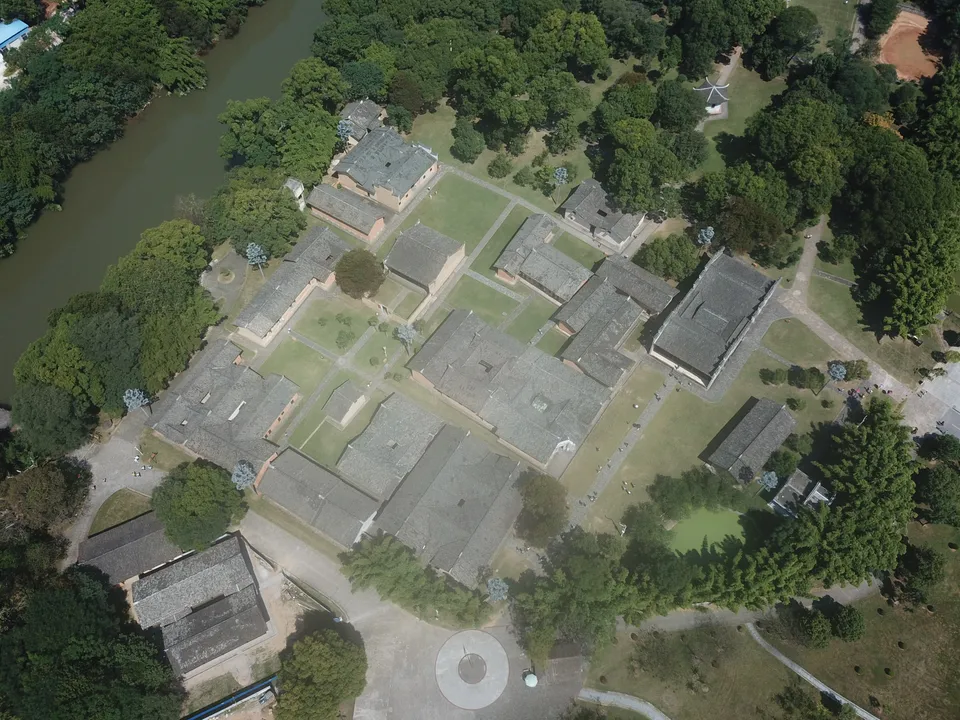
Yeping in Ruijin, where the provisional central government of the Chinese Soviet Republic was set up in 1931 — 2018

Zhangzhugang · CC BY-SA 4.0 · Source

When the Autumn Harvest Uprising in Hunan failed in September 1927, Mao Zedong led the survivors in October into the Jinggang Mountains on the Jiangxi–Hunan border. In April 1928 Zhu De arrived with the remnants of the Nanchang Uprising, forming the Fourth Red Army (the “Zhu–Mao” army), which expanded the base through guerrilla warfare and an agrarian revolution that seized and shared out landlords’ land. Early in 1929 the army left Jinggangshan for southern Jiangxi and western Fujian.

Uniting these base areas, a provisional central government of the Chinese Soviet Republic was set up at Yeping in Ruijin on 7 November 1931, with Mao as chairman of its Central Executive Committee. From 1930 Chiang Kai-shek launched five encirclement campaigns. The Red Army beat off the first four with mobile warfare, but the fifth, begun in 1933, slowly tightened a ring of blockhouses, and the positional defence insisted on by the party leadership and the Comintern adviser Otto Braun failed.

In October 1934 the main Red Army abandoned the Ruijin area and broke out westward. Within the base areas, internal purges such as the campaign against the “AB League” also took many lives.

The map in 1927

OpenFreeMap © OpenMapTiles © OpenStreetMap contributors

States at the time
Republic of China
Places
Jinggang Mountains, Ruijin

People

  • Mao Zedong1893 – 1976

    key figure · Chairman of the Chinese Communist Party who won the civil war and founded the People’s Republic in 1949, and launched the Great Leap Forward and the Cultural Revolution

  • Zhu De1886 – 1976

    commander · Commander-in-chief of the Red Army and the People’s Liberation Army; he joined Mao Zedong at Jinggangshan in 1928 (“Zhu–Mao”) and was made a marshal in 1955

  • Chiang Kai-shek1887 – 1975

    related figure · Leader of the Chinese Nationalist Party who unified China through the Northern Expedition and led the Nanjing government through the war with Japan; after losing the civil war he moved to Taiwan and ruled the Republic of China there

Before and after

Earlier
1927 Nanchang Uprising

Themes that include this event

  • From the Chinese Civil War to the Cultural Revolution1927 – 1976

    From the collapse of the United Front in 1927, through rural bases, the Long March and Yan’an, to the Communists’ victory in the civil war and the founding of the People’s Republic — then land reform, the Great Leap Forward and famine, the Sino-Soviet split and the Cultural Revolution, up to Mao’s death and the arrest of the Gang of Four in 1976, while the Nationalist government withdrew to Taiwan