Manchurian Incident
Also called: Mukden Incident, September 18 Incident
On 18 September 1931 Japan’s Kwantung Army blew up a section of the South Manchuria Railway at Liutiaohu near Shenyang, blamed Chinese troops, and launched an offensive that occupied most of Manchuria within six months.
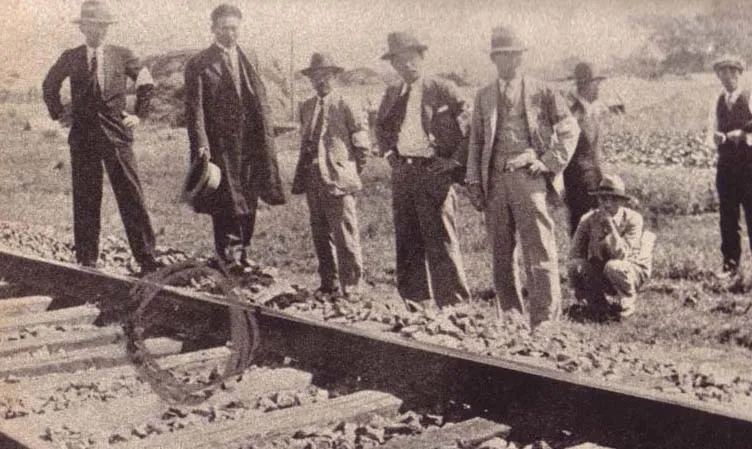
Unknown author · Public domain · Source
As the Depression wrecked the economy, Japan’s military and right wing argued that seizing resource-rich Manchuria would lift the country out of crisis. On the night of 18 September 1931 Kwantung Army staff officers including Ishiwara Kanji and Itagaki Seishirō blew up the railway at Liutiaohu and used it as a pretext to attack Zhang Xueliang’s barracks at Beidaying and the city of Shenyang (Mukden).
The Wakatsuki cabinet announced that the conflict would not be widened, but the Kwantung Army ignored the government, received reinforcements from the Japanese army in Korea, and by early the next year held most of Manchuria. Chiang Kai-shek, who put the suppression of the Communists first, appealed to the League of Nations rather than fight, and Zhang Xueliang’s troops withdrew without resistance. In January 1932 Japanese and Chinese troops also clashed in Shanghai (the Shanghai Incident).
The Manchurian Incident marked the start of fifteen years of Japanese wars of aggression. China remembers 18 September as a day of national humiliation, and in Manchuria Korean independence armies fought alongside Chinese volunteer forces. Relations between Koreans and Chinese, soured by the Wanbaoshan Incident of 1931, changed markedly after Yun Bong-gil’s attack in 1932.