CultureJuly 1377(Lunar)

Printing of the Jikji

The Jikji was printed with metal type at Heungdeoksa in Cheongju; it is the oldest extant book printed with movable metal type.
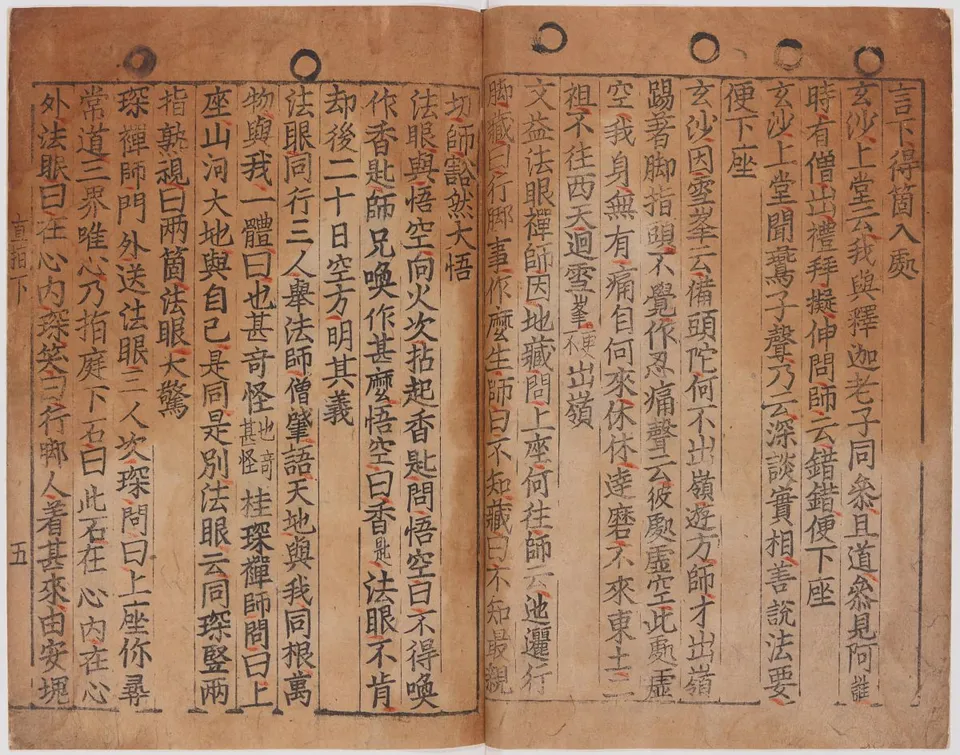
Jikji, vol. 2 — printed with metal movable type at Heungdeoksa, Cheongju, in 1377; Bibliothèque nationale de France

Unknown author · Public domain · Source

Its full title is Baegun hwasang chorok buljo jikji simche yojeol, an anthology of the essentials of Seon compiled by the monk Baegun Gyeonghan. Its colophon states that it was "printed with cast type at Heungdeoksa outside Cheongju in the seventh month of 1377", some seventy years before Gutenberg’s 42-line Bible.

Only the second of its two volumes survives, in the Bibliothèque nationale de France. Collected by the French envoy Collin de Plancy in the late 19th century, it was identified as the world’s oldest metal-type book by the librarian Park Byeong-seon at the 1972 International Book Year exhibition. It became Memory of the World in 2001.

The map in 1377

OpenFreeMap © OpenMapTiles © OpenStreetMap contributors

States and rulers at the time
Goryeo — King U
Places
Heungdeoksa Temple Site, Cheongju

Before and after

Themes that include this event

  • Late Medieval Europe and the Renaissance1077 – 1517

    From Canossa to the eve of the Reformation — papal power at its height and in decline, towns and parliaments, royal power growing through the Hundred Years’ War and the Black Death, and the Renaissance and printing

  • Printing and Documentary HeritageAD 751 – 2011

    From the Dharani Sutra to the May 18 archives — woodblock and metal-type printing, and the records inscribed on the Memory of the World

  • Cheongjuc. 700,000 years ago – 1728

    From the Heungsu child of Durubong Cave to the Jikji — Silla’s secondary capital Seowon, where the oldest surviving metal-type book was printed