Conflict1930s – 1945
Japanese Military "Comfort Women"
In its wars of aggression Japan set up military "comfort stations" and forcibly mobilized women from Korea and other countries as "comfort women" for the Japanese army. The women suffered grievously and their human rights were violated.
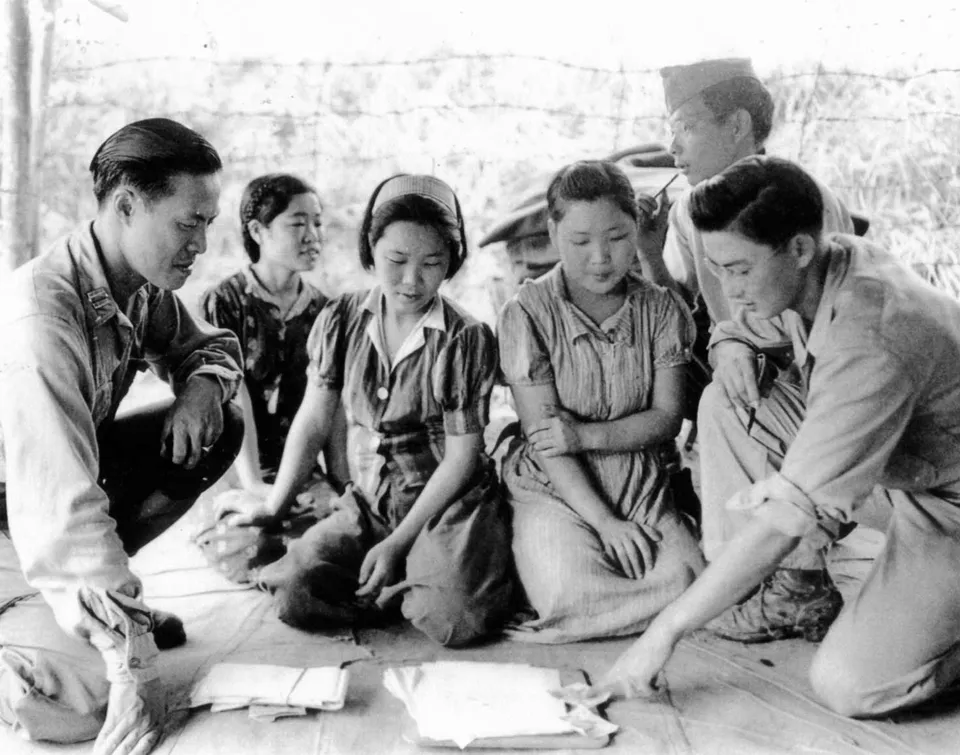
U.S. Army · Public domain · Source
The Japanese army set up comfort stations from the early 1930s and multiplied them after the war with China began. Women taken by false promises of work, threats or abduction suffered at fronts across China, Southeast Asia and the Pacific.
It became widely known in 1991 when Kim Hak-sun first testified publicly. In 1993 the Japanese government acknowledged the military’s involvement and coercion in the Kōno Statement. The Wednesday Demonstrations begun in 1992 continue.