Formation of the Axis and the Anti-Comintern Pact
Also called: Rome–Berlin Axis, Anti-Comintern Pact, Axis powers
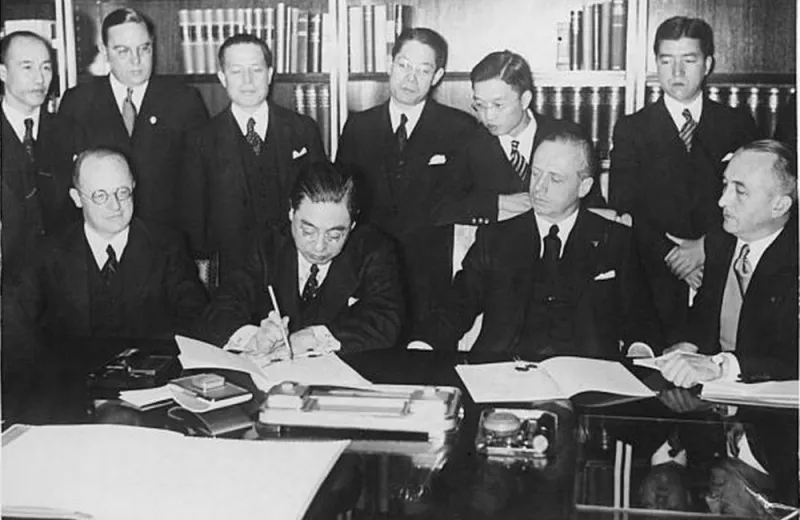
Germany and Italy formed the Rome–Berlin Axis, and Germany and Japan signed the Anti-Comintern Pact against communism. Italy joined the following year, binding the three powers together.
Unknown author · Public domain · Source
Italy, isolated over Ethiopia, and Germany, out of the League of Nations, drew together as they both aided Franco in the Spanish Civil War. In October 1936 the two agreed to cooperate, and in a speech on 1 November Mussolini declared that Europe would revolve around an “axis” joining Rome and Berlin — the origin of the name “Axis powers”.
On 25 November Germany and Japan concluded the Anti-Comintern Pact, pledging joint action against the Communist International, with a secret protocol on mutual support against the Soviet Union. Italy joined in November 1937 and left the League in December, so that all three were outside it and bent on overturning the status quo. Their alignment hardened into the German–Italian Pact of Steel in 1939 and the Tripartite Pact of 1940.