CultureFrom around the 10th century BCE

Bronze Age Culture of Gojoseon

Mandolin-shaped bronze daggers, table-type dolmens and Misong-ri pottery spread across Liaoning and northern Korea, tracing the reach of Gojoseon.
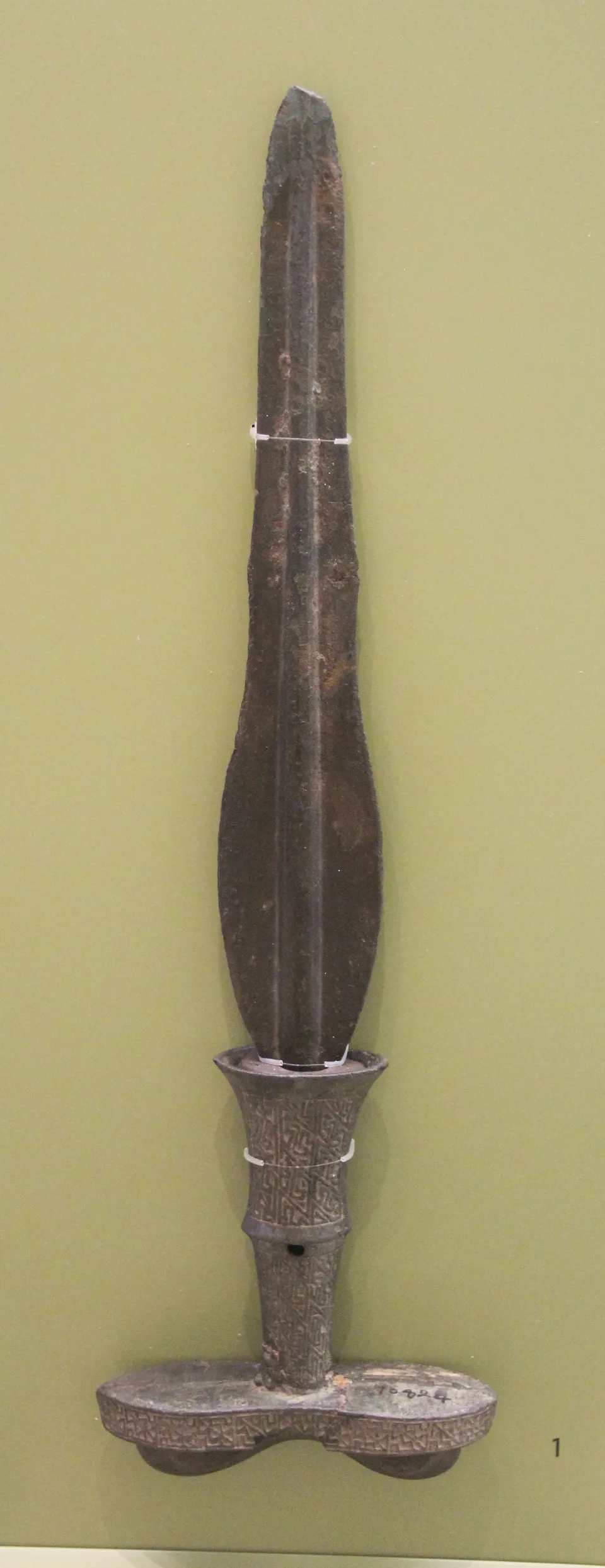
Liaoning-type (mandolin-shaped) bronze dagger from Sincheon, South Hwanghae — National Museum of Korea

Prof. Gary Lee Todd · CC BY-SA 4.0 · Source

The Bronze Age brought rice farming, private property and social rank. Dolmens, the tombs of the elite, show rulers able to mobilize many people to move their capstones. Korea holds nearly half the world’s dolmens; the Gochang, Hwasun and Ganghwa sites became World Heritage in 2000.

The mandolin-shaped dagger later gave way to the slender Korean dagger, and stone moulds show they were cast locally.

The map in 1000 BC

OpenFreeMap © OpenMapTiles © OpenStreetMap contributors

States at the time
Gojoseon
Places
Bugeun-ri Dolmen, Ganghwa

Before and after

Themes that include this event

  • Early Civilizations and Empires3500 BC – 486 BC

    From the first civilizations in the great river valleys to the first empires of the Near East, India and China — comparing their writing, law, religion and rule

  • Ganghwa Island1000 BC – 2011

    From dolmens to the Treaty of Ganghwa — Goryeo’s refuge capital and the stage of Korea’s opening, the island the kingdom fell back on in every crisis