Founding of Manchukuo
Also called: Manchoukuo, Empire of Manchuria
On 1 March 1932 Japan’s Kwantung Army set up the puppet state of Manchukuo with its capital at Changchun (Xinjing), installing the last Qing emperor Puyi as chief executive; in 1934 Puyi became emperor.
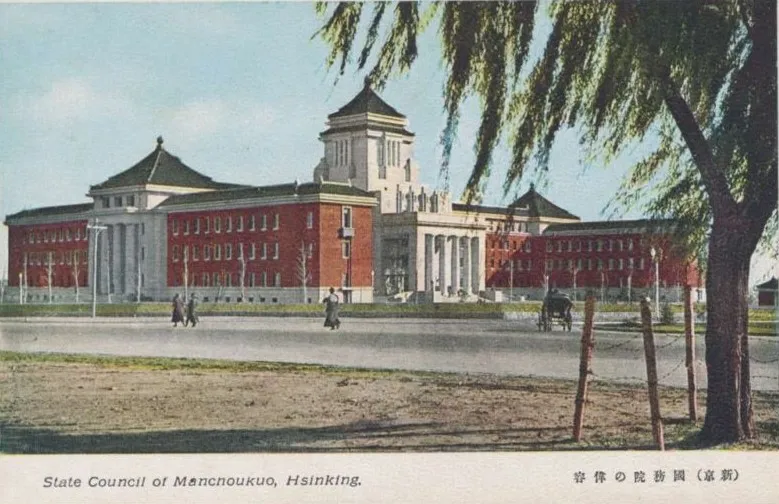
Unknown author · Public domain · Source
Having occupied Manchuria, the Kwantung Army chose the form of an “independent state” rather than outright annexation to deflect international criticism. Manchukuo was proclaimed on 1 March 1932 under the slogans “harmony of the five races” and “paradise of the kingly way”, and Puyi, who had been living in the Japanese concession at Tianjin, became chief executive. In September Japan recognized Manchukuo in the Japan–Manchukuo Protocol and gained the right to station troops there, and in 1934 the state became a monarchy with Puyi enthroned as the Kangde Emperor.
Real power lay with the commander of the Kwantung Army and Japanese officials. Japan developed coal and iron through the South Manchuria Railway Company and Manchuria Heavy Industries, and settled large numbers of Japanese and Korean farmers. Manchukuo’s forces and the Kwantung Army hunted down armed anti-Japanese resistance, and Unit 731 carried out human experiments near Harbin. Manchukuo collapsed when Soviet troops entered in August 1945.