Politics21 January 1793

Execution of Louis XVI

Also called: Trial of Louis XVI, Regicide

The National Convention sentenced “Citizen Louis Capet” to death for treason, and the king was guillotined in the Place de la Révolution.
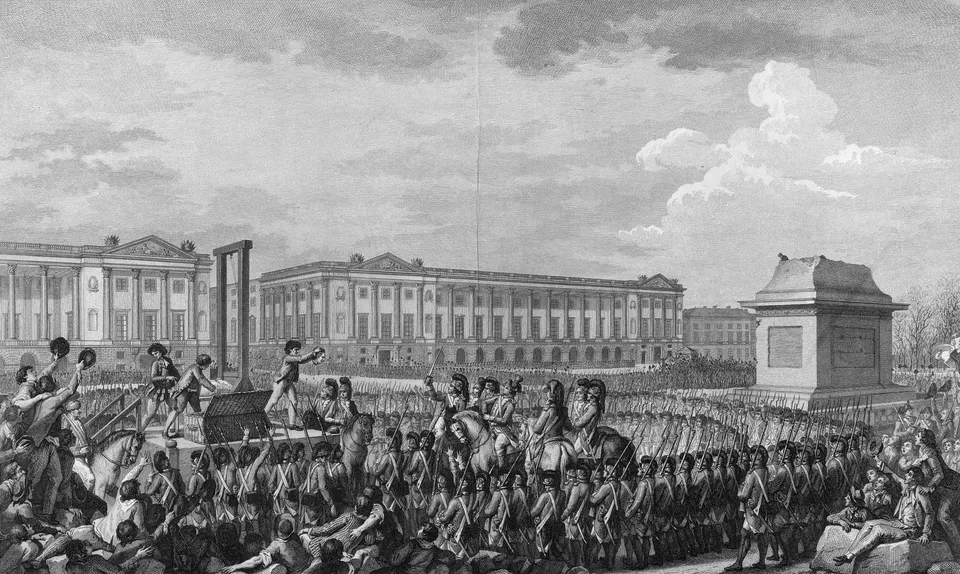
The execution of Louis XVI in the Place de la Révolution, 21 January 1793 — engraving by Isidore-Stanislas Helman after Charles Monnet, 1794

Isidore Stanislas Helman / After Charles Monnet · Public domain · Source

After the king’s correspondence with foreign courts and émigrés was found in a secret iron chest at the Tuileries in November 1792, the Convention put “Louis Capet” on trial in December. On 15 January 1793 it found him guilty almost unanimously, and in the vote of 17 January 361 of 721 deputies voted for death without conditions, a bare majority. A reprieve was rejected on 19 January.

On the morning of 21 January Louis XVI was guillotined in the Place de la Révolution (today the Place de la Concorde). The regicide shocked the monarchs of Europe; France declared war on Britain and the Dutch Republic in February and on Spain in March, and the First Coalition took shape. At home the Vendée rose in revolt.

The map in 1793

OpenFreeMap © OpenMapTiles © OpenStreetMap contributors

States at the time
France
Places
Place de la Concorde

People

  • Louis XVI1754 – 1793

    related figure · King of France, executed during the Revolution

  • Maximilien Robespierre1758 – 1794

    related figure · Jacobin leader who dominated the Committee of Public Safety during the Reign of Terror and was guillotined after the Thermidorian Reaction of 1794

Before and after

Themes that include this event

  • The French Revolution1787 – 1799

    From the Assembly of Notables and the Estates-General to the coup of 18 Brumaire — twelve years that toppled the absolute monarchy, founded a republic, passed through Terror and reaction, and ended with Napoleon