EconomyMay 1608(Lunar)

Daedong law

Tribute in local goods was replaced by a tax in rice levied on land; begun in Gyeonggi, it took a century to cover the whole country.
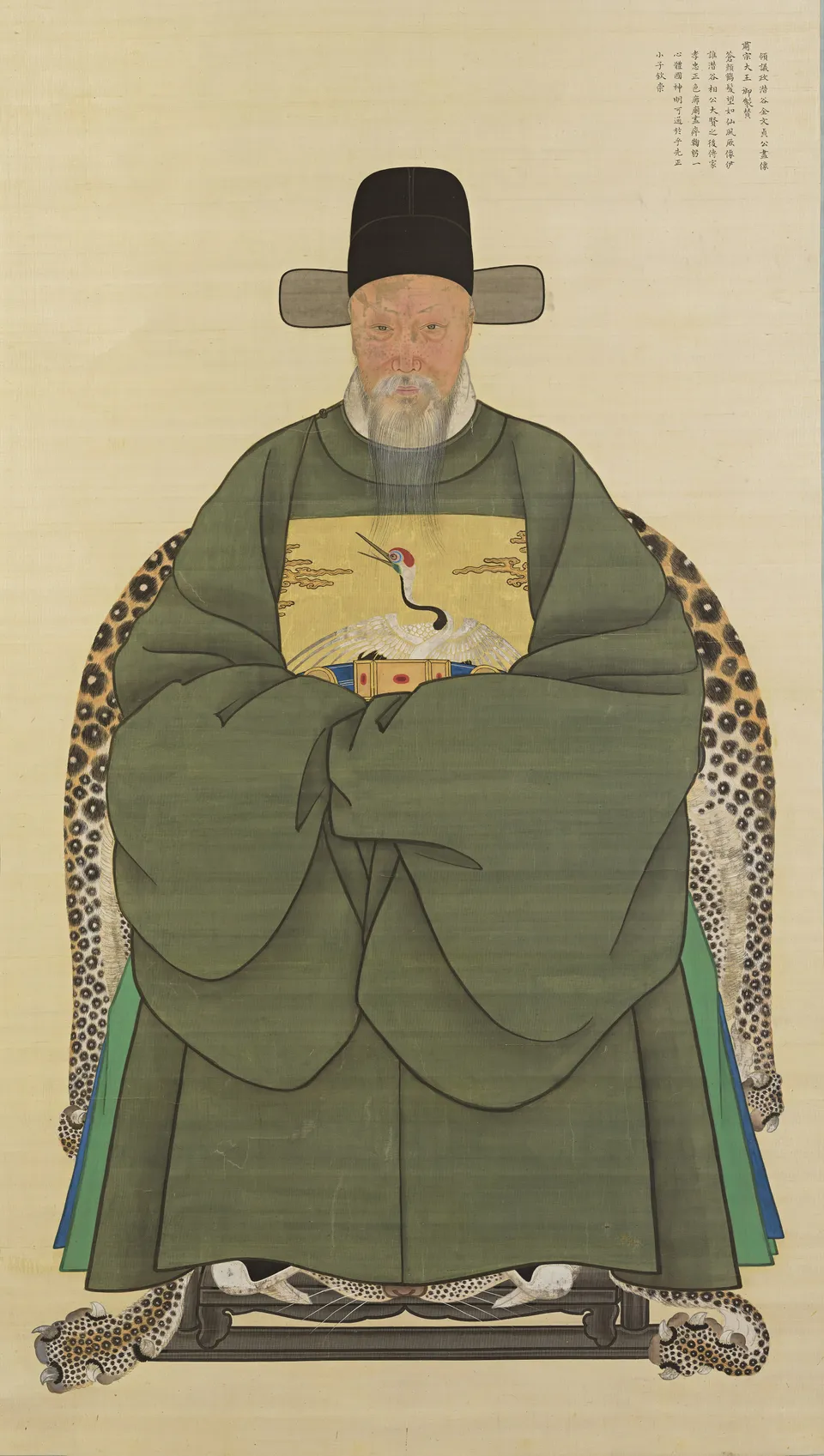
Portrait of Kim Yuk, champion of the Uniform Land Tax Law, 17th century

Unknown author · Public domain · Source

Tribute in kind fell unevenly on households, and officials and merchants who paid it on others’ behalf and then charged several times the cost (bangnap) made it worse. On Yi Won-ik’s advice, Gwanghaegun applied the new law in Gyeonggi in the year he took the throne and set up the Seonhyecheong to run it.

It levied 12 du of rice per gyeol of land, payable also in cloth or coin. Opposition from landholding yangban slowed its spread: Gangwon under Injo, Chungcheong and coastal Jeolla under Hyojong at Kim Yuk’s urging, Gyeongsang early in Sukjong’s reign, and finally Hwanghae in 1708, covering every province except Pyeongan and Hamgyeong.

The burden on peasants with little or no land fell. The state used the rice to buy goods through licensed purveyors (gongin), whose trade helped a commercial, money-based economy grow. Royal tribute (jinsang) and special levies remained, so payments in kind did not disappear entirely.

The map in 1608

OpenFreeMap © OpenMapTiles © OpenStreetMap contributors

States and rulers at the time
Joseon — Gwanghaegun

People

  • Gwanghaegun1575 – 1641

    monarch · Fifteenth king of Joseon who began the Daedong law and balanced Ming and the Later Jin; deposed in 1623

  • Yi Won-ik1547 – 1634

    leader · Chief state councillor who proposed the Daedong tax reform

  • Kim Yuk1580 – 1658

    leader · Chief State Councillor under Hyojong who extended the Uniform Land Tax Law and urged adoption of the Shixian calendar and minting of coins

Before and after

Later
1609 Treaty of Giyu

Related works

  • TV episode: The Day: History Journal Episode 57: For the People's Livelihood: Kim Yuk Defends the Daedong LawTV episode · 2014 · KBS1

Themes that include this event

  • Changes in TaxationAD 755 – 1894

    From land tax, tribute and labour to cash taxes in the Gabo Reform — burdens shifting from people and households to land