The Yan’an Period and the Rectification Movement
Also called: Yan’an Rectification Movement, Yenan, Talks at the Yan’an Forum on Literature and Art
After the Long March the Communist leadership made Yan’an in northern Shaanxi its capital for ten years from January 1937. There the Rectification Movement (1942–1945) bound the party to Mao Zedong, and the Seventh Party Congress of 1945 made “Mao Zedong Thought” its guiding ideology.
Unknown author · Public domain · Source
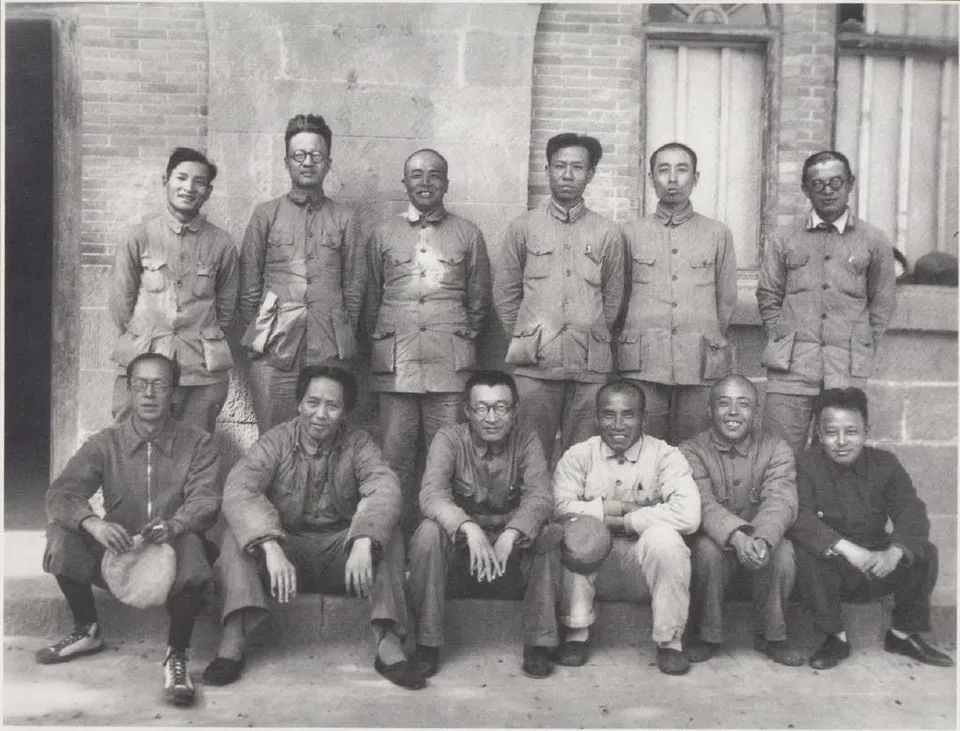
Having settled in northern Shaanxi after the Long March, the party centre moved to Yan’an in January 1937 and stayed until 1947. During the war with Japan, Yan’an was the capital of the Shaan-Gan-Ning Border Region and the hub of the base areas that the Eighth Route and New Fourth Armies built across north and central China, and many young intellectuals made their way there. Foreign visitors included journalists such as Edgar Snow and, in 1944, a US Army observer group (the Dixie Mission).
From February 1942 Mao launched a Rectification Movement against “subjectivism, sectarianism and formalism”, reducing the influence of Moscow-trained leaders, and in May his Talks at the Yan’an Forum on Literature and Art laid down that art must serve workers, peasants and soldiers. In the 1943 “rescue campaign” led by Kang Sheng many party members were accused of spying and forced to confess, which Mao later admitted had been a mistake. Mao became chairman of the Politburo in 1943, and the Seventh Party Congress of April–June 1945 wrote Mao Zedong Thought into the party constitution.
After the civil war began, Hu Zongnan’s Nationalist army took Yan’an in March 1947, but the leadership had already left; the Communists recovered the town in April 1948. In China today the Yan’an pagoda and cave dwellings (yaodong) stand as symbols of the revolution.