Politics1479

Union of Castile and Aragon

Also called: Catholic Monarchs, Unification of Spain

Isabella I of Castile and Ferdinand II of Aragon married in 1469, and when Ferdinand became king of Aragon in 1479 the two crowns were joined, creating the Kingdom of Spain.
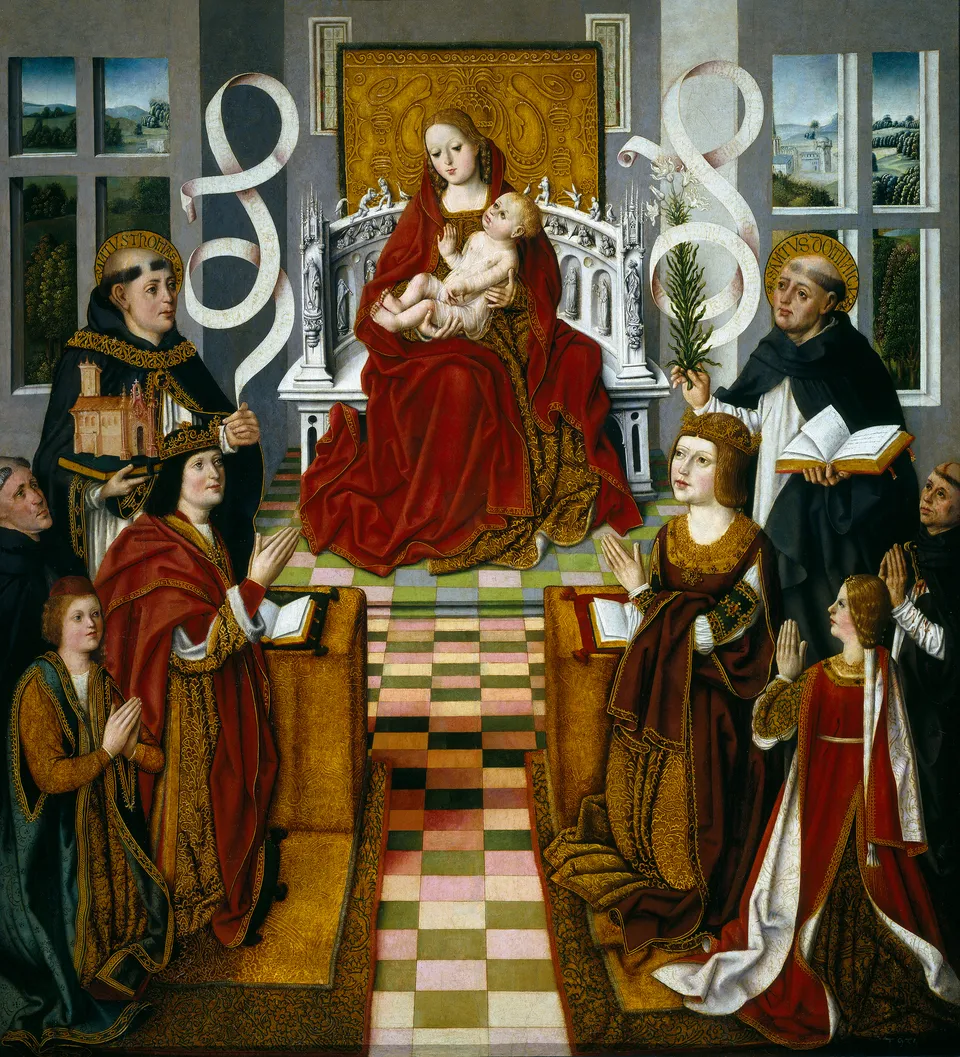
The Virgin of the Catholic Monarchs — Ferdinand (left) and Isabella (right) kneeling before the Virgin, 1491–1493, Prado Museum

Unknown author · Public domain · Source

Castile and Aragon, the largest Christian kingdoms of the Iberian Peninsula, drew together when Isabella and Ferdinand married at Valladolid in October 1469. Isabella became queen of Castile in 1474 and won the ensuing war of succession, and when Ferdinand inherited the crown of Aragon in 1479 the two kingdoms came under the same royal couple. Each kept its own laws and assemblies, but this is regarded as the beginning of the Kingdom of Spain.

The monarchs curbed the nobles and sought to unite the country through Catholicism. They founded the Spanish Inquisition in 1478, and in 1492 conquered Granada and sponsored Columbus’s voyage. The pope granted them the title “the Catholic Monarchs” (1496). At this time King Seongjong ruled Joseon and was refining the Gyeongguk daejeon.

The map in 1479

OpenFreeMap © OpenMapTiles © OpenStreetMap contributors

States at the time
Spain · established
Kingdom of Castile
Crown of Aragon

People

  • Isabella I of Castile1451 – 1504

    monarch · Queen of Castile who, ruling Spain with Ferdinand II of Aragon, conquered Granada and sponsored Columbus’s voyage

  • Ferdinand II of Aragon1452 – 1516

    monarch · King of Aragon who, married to Isabella I of Castile, united Spain and completed the Reconquista by conquering Granada

Before and after

Themes that include this event

  • Late Medieval Europe and the Renaissance1077 – 1517

    From Canossa to the eve of the Reformation — papal power at its height and in decline, towns and parliaments, royal power growing through the Hundred Years’ War and the Black Death, and the Renaissance and printing