Conflict21 August 1415

Portuguese Conquest of Ceuta

Also called: Capture of Ceuta

John I of Portugal seized Ceuta, a Muslim port across the Strait of Gibraltar — often counted as the first step in Europe’s overseas expansion.
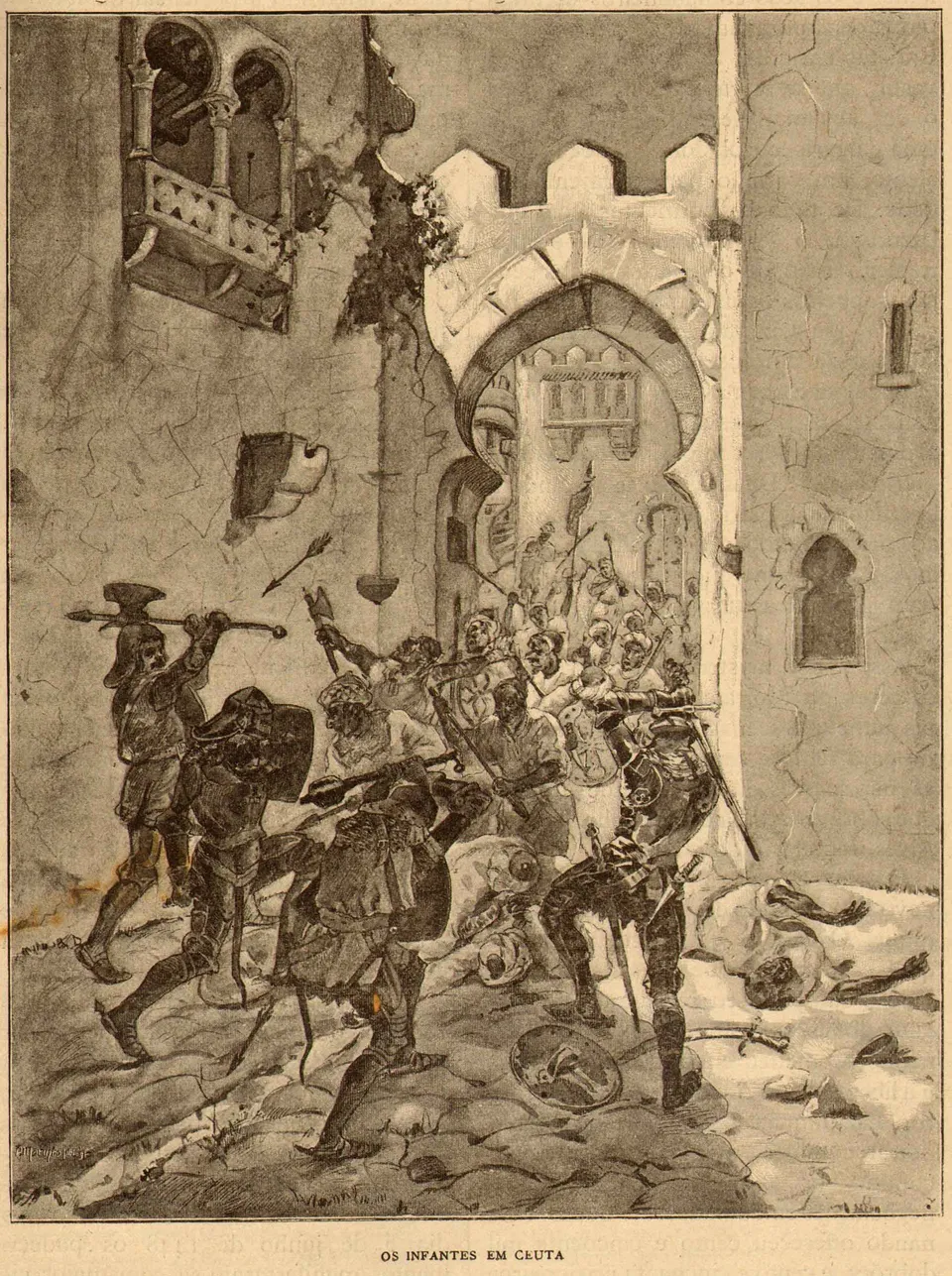
The Portuguese princes at Ceuta — illustration from a 19th-century History of Portugal

Roque Gameiro · Public domain · Source

On 21 August 1415 a Portuguese fleet led by John I and his sons, including Prince Henry, took the Marinid (Moroccan) port of Ceuta in a single day. Ceuta was an entrepôt for trans-Saharan gold, slaves and spices; there Henry is said to have heard of the gold trade of the African interior and turned his interest to the West African coast. Religious motives — continuing the war against Islam (the Reconquista) — went hand in hand with the hope of commercial gain.

The map in 1415

OpenFreeMap © OpenMapTiles © OpenStreetMap contributors

States at the time
Portugal · conqueror
Marinid Sultanate · conquered
Places
Ceuta

People

  • John I of Portugal1357 – 1433

    monarch · Founder of Portugal’s House of Aviz, who led the expedition to Ceuta in 1415

  • Prince Henry the Navigator1394 – 1460

    participant · Portuguese prince, son of John I, whose sponsorship of voyages down the West African coast opened the Age of Discovery

Before and after

Themes that include this event

  • The Age of Discovery1415 – 1600

    From Ceuta to the Manila galleons — two centuries in which European ships crossed the oceans and bound the world together by sea